

Original Broadcast Date: 1/18/26
Presented by Commvault & Carahsoft
Carter Farmer, Chief Information Officer at the Environmental Protection Agency, offers a clear message during his interview on Fed Gov Today: artificial intelligence should not be treated as a universal solution. Instead, agencies must slow down, define the problem they are trying to solve, and understand their data before selecting any technology. AI, he says, is simply one tool in the toolbox, and using it without the right foundation often leads to poor outcomes.
Farmer begins by urging leaders to step back from the technology itself and focus on problem-solving. He compares the process to assembling a puzzle without a reference image. Rather than jumping to a solution, teams need to understand how the pieces fit together. That means identifying what problem needs to be solved, what data is involved, and how existing processes actually work. Only after that analysis should agencies decide whether AI—or any other technology—is the right tool.
A key point Farmer emphasizes is the importance of clearly defining the desired end result. He notes that agencies often know what outcome they want, but then try to force-fit a technology to get there. In his view, this reverses the proper approach. Technology should follow the problem, not the other way around. Without clarity around outcomes, even advanced tools like AI can introduce inefficiencies instead of improvements.
At EPA, this thinking drives a data-first mindset across IT projects. Farmer explains that the agency looks closely at how data is created, shared, and used before modernizing or building new systems. EPA operates a wide range of systems across offices such as Air and Radiation, Water, and Land and Emergency Management. These systems must interact with each other, making data integration a constant challenge. Rather than creating isolated, bespoke solutions, the agency focuses on designing systems that work together from the start.
Farmer also addresses the long-standing issue of decentralization in government IT. He acknowledges that this structure is influenced by how agencies are funded and how they evolved before modern IT organizations existed. While decentralization presents challenges, EPA is working to centralize services where it makes sense and improve coordination across offices. The goal is to have teams “paddling in the same direction” when solving problems, which helps create efficiencies and reduces duplication.
Organizational change is another major theme in Farmer’s remarks. He describes how EPA is rethinking how IT teams work together. Traditionally, functions such as security, operations, and data operated in a waterfall model, handing work off from one group to another. EPA is moving away from that approach in favor of more integrated teams. Farmer describes these as fusion teams or agile tiger teams that bring all stakeholders together from the beginning of a project.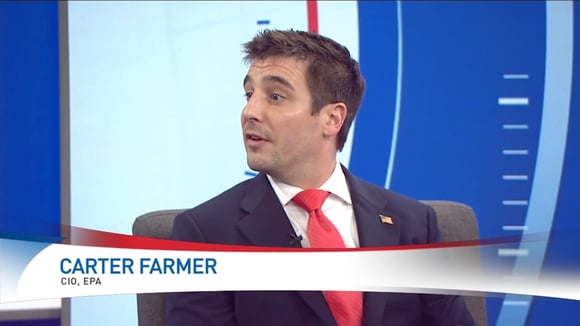
These teams work collaboratively from “cradle to grave,” staying involved from initial design through deployment and eventual decommissioning. By having security, data, and operations at the table from day one, EPA avoids surprises later in the process. Farmer notes that this approach reduces the risk of discovering missed requirements months into a project, when changes become more costly and disruptive.
Data quality and consistency are also central to Farmer’s view of modernization. EPA is a highly data-driven organization, collecting information from many internal and external sources, including nonprofits, academia, and national labs. That data is used to monitor conditions, inform decisions, and report results. Farmer stresses that AI depends entirely on the quality of underlying data. If data is inconsistent or poorly defined, AI will only amplify those issues.
He gives an example of how different offices may use the same data points but define them differently. Aligning those definitions and coalescing data across the organization is essential if EPA wants AI systems to generate meaningful insights. This work requires careful coordination and shared understanding, not just new technology.
When asked about an end state for EPA’s IT modernization, Farmer is cautious. He describes modernization as an ongoing journey rather than a fixed destination. Trying to define a final end state, he says, is like changing an airplane engine mid-flight. Instead, EPA focuses on preparing its systems and data so they can adapt to future technologies, including emerging capabilities like agentic AI.
Rather than rigid timelines for every initiative, Farmer explains that EPA uses a mix of approaches. Some projects have strict deadlines and accelerated schedules, while others focus on measurable improvement rather than a finished product. Raising the bar and improving processes, he suggests, can be a better indicator of success than checking a box on completion.
Throughout the interview, Farmer reinforces a consistent theme: thoughtful planning, strong data foundations, and collaboration matter more than chasing the latest technology trend. By asking the right questions first, EPA aims to modernize in a way that delivers real value to its mission and to taxpayers.