Beyond Governance: The New CDO Agenda
Data is no longer simply something federal agencies collect and govern—it is becoming the foundation for mission decisions, operational modernization and artificial intelligence. In this episode of Modernizing Government: The EY Insight, Marseta Dill, Acting Chief Data Officer at the Federal Aviation Administration, and Kamna Bohra, Senior Manager at EY, join Fed Gov Today host Francis Rose to examine the expanding role of the chief data officer. They discuss breaking down organizational silos, treating data as an enterprise asset, unlocking knowledge hidden in unstructured information and preparing agencies to use AI responsibly. The conversation reveals why the new CDO agenda extends far beyond governance—and into the design of the federal organization of the future.
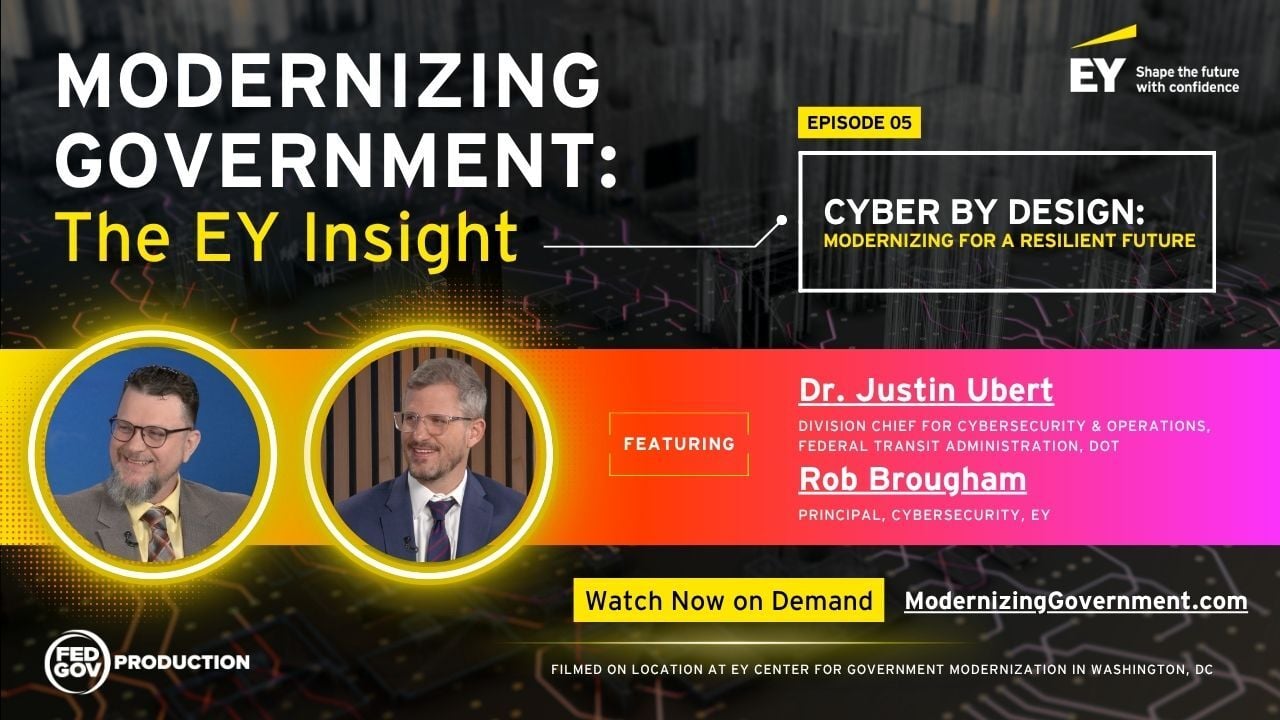
Cyber by Design: Building Security and Resilience Into Government Modernization
Cybersecurity is becoming inseparable from the way federal agencies modernize technology, processes and mission delivery. In the latest episode of “Modernizing Government: The EY Insight,” Dr. Justin Ubert, Division Chief for Cybersecurity & Operations at the Federal Transit Administration, Department of Transportation, and Rob Brougham, Principal of Cybersecurity at EY, joined Fed Gov Today host Francis Rose at the EY Center for Government Modernization to discuss why agencies must move beyond treating cybersecurity as a compliance exercise and instead design security into modernization from the beginning.
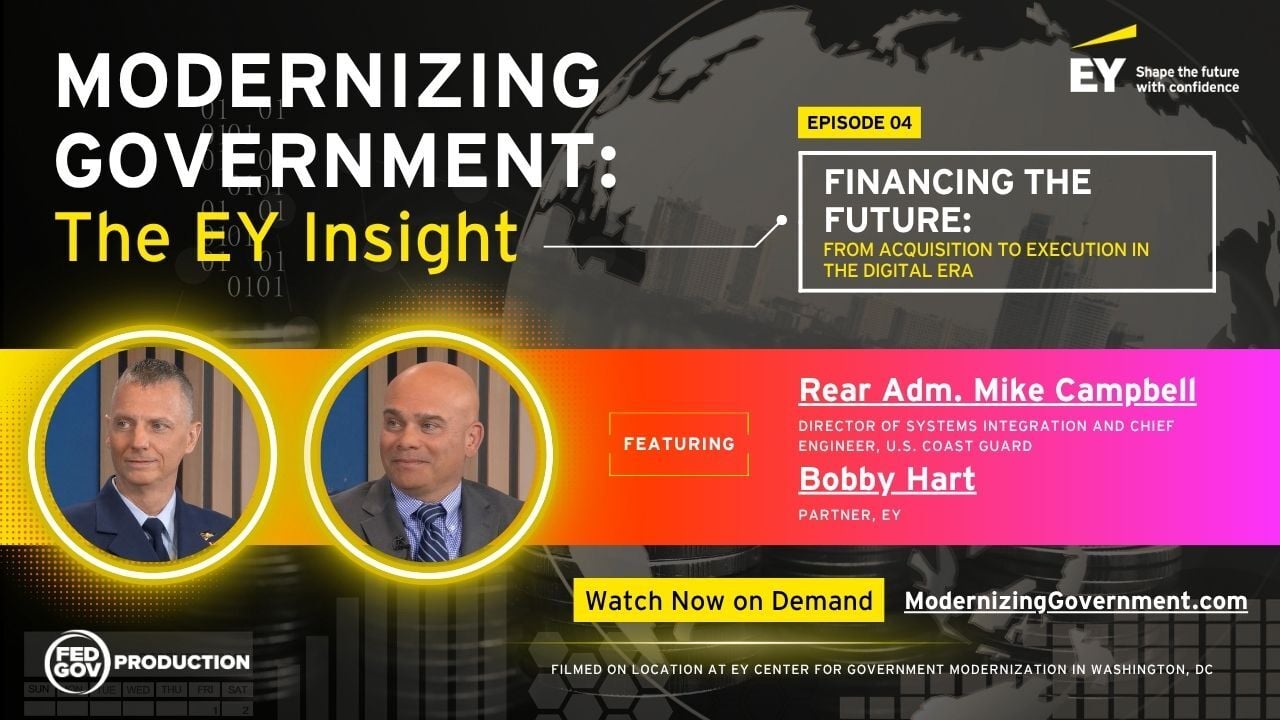
Financing the Future: From Acquisition to Execution in the Digital Era
This episode of Modernizing Government: The EY Insight, examines the full modernization journey—from establishing operational requirements and securing funding to acquisition, deployment and long-term sustainment. Rear Adm. Mike Campbell, Director of Systems Integration and Chief Engineer for the U.S. Coast Guard, explains how the service is reorganizing around complete system life cycles while managing a historic investment in cutters, aircraft, technology and infrastructure. Bobby Hart, Partner at EY, then explores how leadership, governance, workforce engagement and reliable data can help agencies turn large-scale technology investments into lasting enterprise transformation.
Transforming the CFO Function: From Back Office to Mission Driver
Federal agencies are undergoing a fundamental shift in how they approach financial management. What was once viewed primarily as a back-office function is now emerging as a strategic driver of mission success, operational efficiency, and accountability. In a conversation with Francis Rose, Sherlonda Goode-Jones, Government and Public Sector Growth and Solutions Leader at EY, outlined how consolidation, shared services, and modern technology are reshaping the role of the Chief Financial Officer across government.
Turning Data into Defense: How Agencies Are Strengthening Fraud Prevention
Federal agencies are undergoing a significant shift in how they approach risk, fraud, and program integrity. What was once largely a reactive process—focused on audits, investigations, and recovering funds after the fact—is now evolving into a proactive, technology-enabled strategy aimed at preventing issues before they occur. Scott Nemeroff, Executive Director of Fraud and Integrity Services at EY, and Megan Kennedy, Executive Director of Risk Management Services at EY, are working closely with government organizations navigating this transition. Their perspective highlights a broader transformation underway across the federal landscape.
Smashing Silos: The Law Enforcement Intelligence Revolution
Smashing Silos: The Law Enforcement Intelligence Revolution explores how federal law enforcement agencies are transforming their operations through advanced data management, modern technology, and organizational innovation. Presented by EY and hosted by Francis Rose, the program features insights from Mike Pingley, Executive Director of AI & Data at EY, and Tim Ferguson, Assistant Director of the FBI’s Criminal Justice Information Services (CJIS) Division.
AI or Die: Why Government Can’t Afford to Fall Behind
Artificial intelligence is no longer a futuristic aspiration—it's now an operational necessity in government. In the premiere episode of “Modernizing Government: The EY Insight,” Francis Rose explores how AI is driving transformation across federal agencies. featuring Amy Jones, EY’s U.S. Public Sector AI Lead, and Charles Worthington, Chief Technology Officer and Chief AI Officer at the Department of Veterans Affairs.
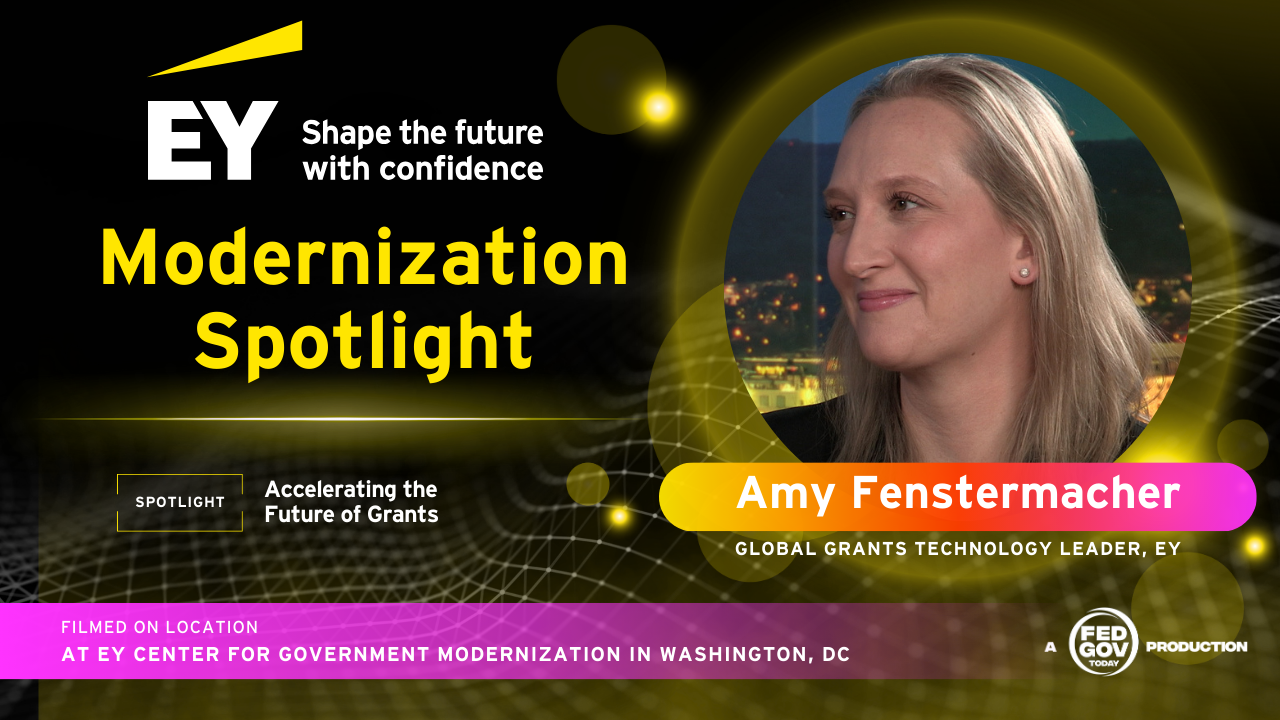
From Paperwork to Progress: Rethinking the Future of Grants
Amy Fenstermacher, Global Grants Technology Leader at EY, shares how the Grants Accelerator is transforming grants management with speed, transparency, and impact.
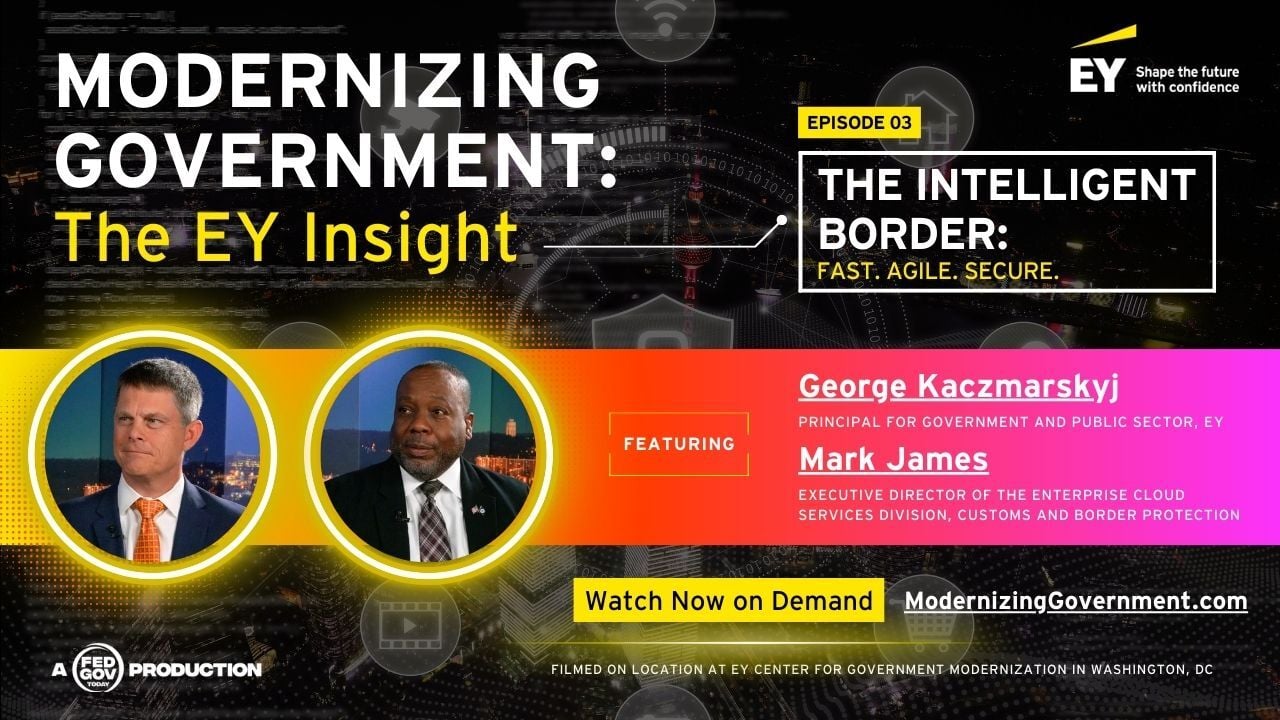
The Intelligent Border: Fast. Agile. Secure
The latest episode of Modernizing Government: The EY Insight explores how data, cloud, and emerging technologies are reshaping the mission of U.S. Customs and Border Protection (CBP) and the federal government at large. Francis Rose hosts discussions with George Kaczmarskyj, Principal for Government and Public Sector at EY, and Mark James, Executive Director of the Enterprise Cloud Services Division at CBP.
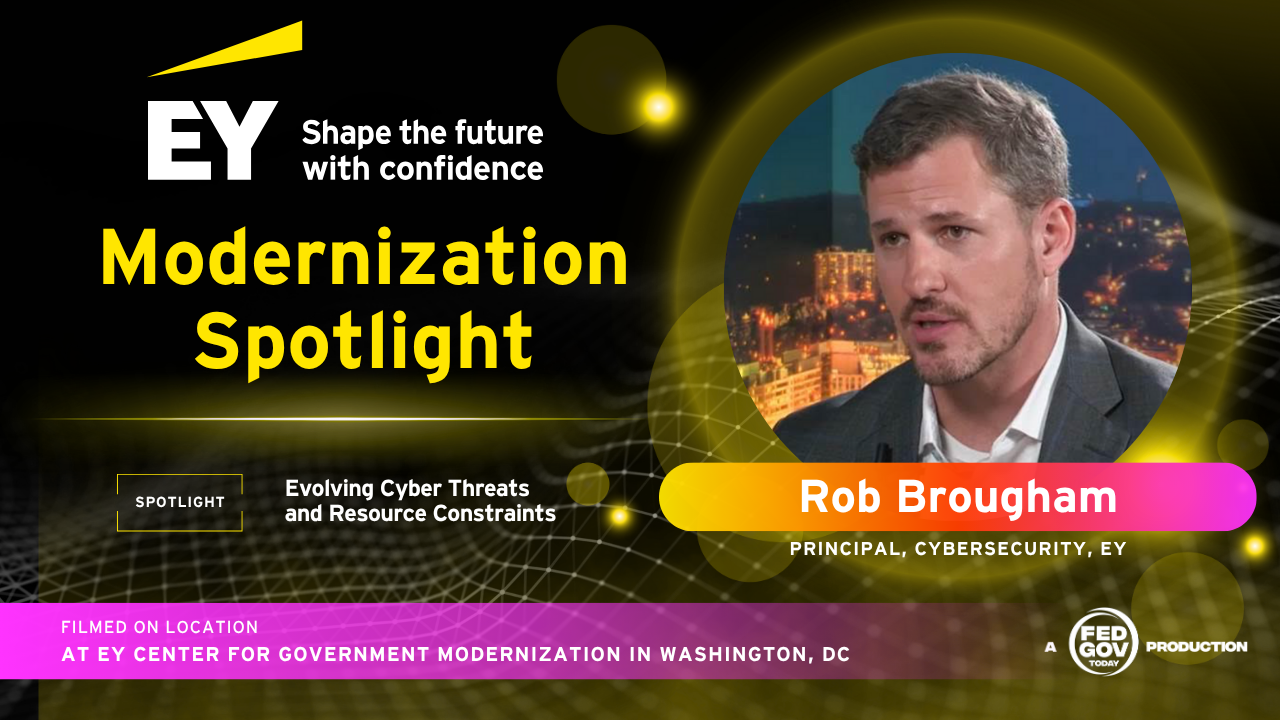
Cyber Resilience in a Constantly Evolving Threat Landscape
EY’s Rob Brougham outlines a practical strategy for cybersecurity resilience, emphasizing threat awareness, simplification, and rigorous validation in an increasingly complex risk environment.
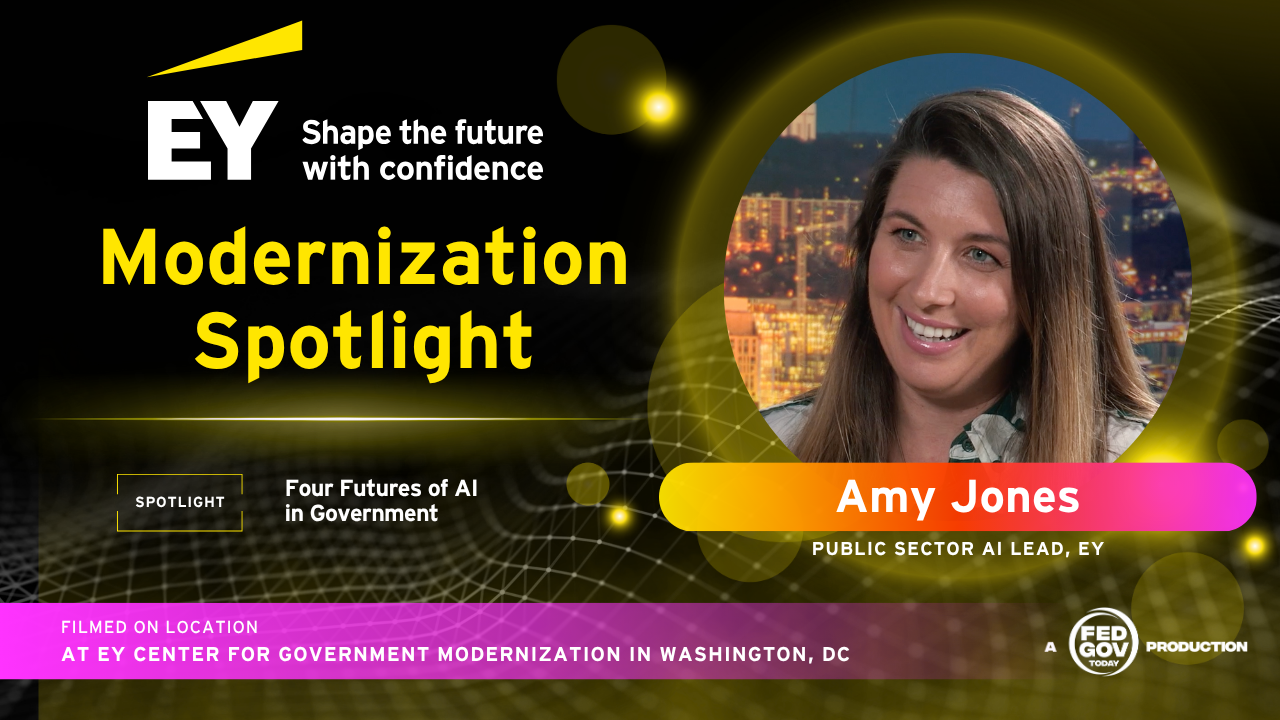
Navigating the Four Futures of Government AI
EY’s Amy Jones outlines four possible futures for AI in government—Growth, Transform, Constrain, and Control—and explains why intentional decisions today will define the path agencies take by 2030.
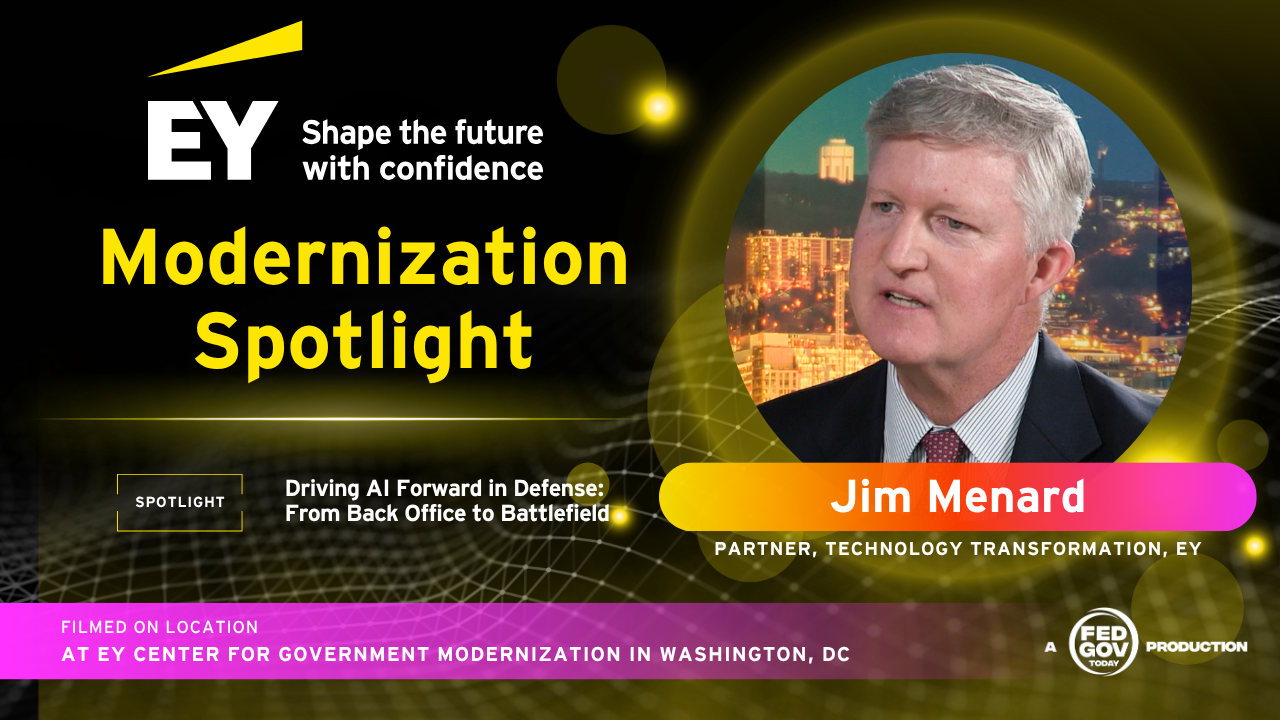
Building a Factory Approach for AI in Defense
EY’s Jim Menard explains how a structured “factory approach” to AI—with the right data, governance, and sustainment model—can help the Defense Department unlock long-term mission impact.