

Original Broadcast Date: 05/10/2026
Presented by Workday Government
The Interior Department is putting automation to work in a very visible way — and the newest members of the acquisition workforce are not people. During an interview on Fed Gov Today, Andrea Brandon, deputy assistant secretary for budget, finance, grants and acquisitions at the Interior Department, explains how robotic process automation bots are transforming contracting operations, reducing administrative burdens and helping acquisition professionals focus on higher-value work.
The department’s automation program centers around three bots named Bob, Bobby and Oz. Brandon says the names are intentionally personal because it helps employees connect with the technology and encourages cultural acceptance throughout the workforce. Staff members even help name the bots themselves, creating a sense of ownership and familiarity around automation projects.
The most well-known of the group is “Bob the Closer,” a bot designed to handle acquisition closeouts. Brandon says Bob has already become something of a celebrity within the department after winning three awards for his work. More importantly, Bob delivers measurable operational results. According to Brandon, the bot has closed out more than 100,000 contracts and processes acquisition closeouts at a pace of 29 contracts per hour — significantly faster than a human employee could complete manually. She says the automation effort has saved the department more than $29 million.
Another automation project, “Oz the Bot,” supports the department’s Office of Small and Disadvantaged Business Utilization. Brandon explains that Interior must regularly track and report contracting data tied to small business goals established by the Small Business Administration. Previously, employees gathered and analyzed that information manually, a process that could take several days each month. Oz now delivers the information in real time, dramatically improving reporting speed and visibility into small business contracting performance. Brandon says the department has seen a 1,396% increase in recency of data because of the bot’s capabilities, allowing leaders to make faster decisions and better track compliance requirements.
The newest member of the team is “Bobby the Modifier,” which focuses on contract modifications and administrative updates. Brandon says Bobby can instantly insert clauses into thousands of contracts at once, a task that would otherwise require substantial manual effort from acquisition personnel. The automation helps standardize contract administration while significantly reducing processing time.
Brandon emphasizes that the purpose of the bots is not to replace federal employees. Instead, she says the technology frees contracting professionals from repetitive administrative work so they can spend more time on oversight, monitoring and mission-focused responsibilities. Employees are now able to concentrate on ensuring contractors meet deliverables, managing spending and maintaining compliance rather than spending hours processing paperwork.
The department is already looking at expanding automation into other areas. Brandon says Interior is exploring how the same robotic process 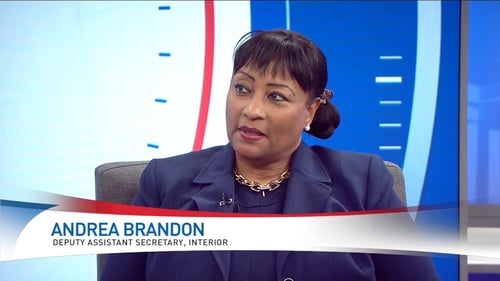 automation capabilities used for acquisition closeouts can support grants management. Since grants and acquisitions share many similar business processes, the department is adapting the technology to handle grant closeout activities as well. Brandon jokes that the future grants bot may need a new name like “Bobette” or “Roberta,” but the effort reflects a broader strategy to identify repetitive processes that automation can streamline across multiple lines of business.
Beyond the operational benefits, Brandon says one of the most important lessons the department learns is that organizational culture plays a critical role in successful technology adoption. She describes how, at a previous federal agency, employees resisted robotic process automation but were more interested in artificial intelligence initiatives. At Interior, she experiences the opposite dynamic, where employees first embrace automation and later become more comfortable with AI after seeing the success of the bots.
That experience convinces Brandon that agencies must evaluate whether their workforce culture is ready for advanced technologies before rolling them out broadly. She says employees become more open to AI once they understand that automation tools are designed to assist them rather than eliminate jobs. According to Brandon, that trust-building process becomes essential as agencies expand into artificial intelligence and other emerging technologies.
To manage these efforts, Interior relies on an executive steering committee that includes representatives from bureaus, information technology offices and mission organizations across the department. Brandon says the committee regularly reviews ongoing IT modernization projects and discusses future opportunities involving AI, robotic process automation, blockchain and other emerging technologies. The structure also allows the department to gather feedback from external stakeholders, including vendors and grant recipients, to ensure modernization initiatives align with operational needs and mission goals.
For Interior, the success of Bob, Bobby and Oz demonstrates that automation can produce measurable savings while improving workforce efficiency and strengthening mission delivery. Brandon presents the bots not as replacements for people, but as digital teammates helping federal employees focus on the work that matters most.