

Original Broadcast Date: 02/08/2026
Presented by EY
Modernizing healthcare is about far more than upgrading systems—it’s about improving access, restoring trust, and delivering better outcomes for the people who rely on federal programs every day. That message came through clearly in a wide-ranging conversation with Tom Engels, Administrator of the Health Resources and Services Administration (HRSA), as he outlined how the agency is reshaping healthcare delivery across the country.
HRSA plays a unique role within the Department of Health and Human Services, touching patients directly through programs that serve some of the nation’s most vulnerable populations. From federally qualified health centers to the Ryan White HIV/AIDS Program and rural health initiatives, HRSA supports care for more than 32 million people annually. Many of those individuals live in medically underserved or economically disadvantaged communities where access to healthcare options is limited.
Engels emphasized that modernization at HRSA starts with people. Technology is a critical enabler, but the ultimate goal is expanding access to care while preserving dignity, equity, and quality. Federally qualified health centers alone operate more than 15,000 sites nationwide, often serving as the only point of care for entire communities. As patient volumes grow, HRSA is focused on ensuring these providers have the tools they need to keep pace.
One of the biggest challenges is electronic health record interoperability. Health centers across the country use a wide variety of EHR systems, many of which don’t easily communicate with one another. Engels noted that while platforms like Epic offer strong capabilities, cost remains a major barrier—especially for rural and small providers operating on tight budgets. HRSA is working to identify scalable, cost-effective models that allow providers to share systems, reduce expenses, and improve coordination of care without sacrificing functionality.
Telehealth has emerged as another critical piece of the modernization puzzle. HRSA oversees the only office within HHS dedicated solely to rural health and is also home to the department’s telehealth expertise. Engels pointed out that telehealth has transformed access for patients who might otherwise miss appointments due to geography, weather, or transportation challenges. For rural communities—where a snowstorm or long drive can delay care—virtual services ensure continuity and better health outcomes.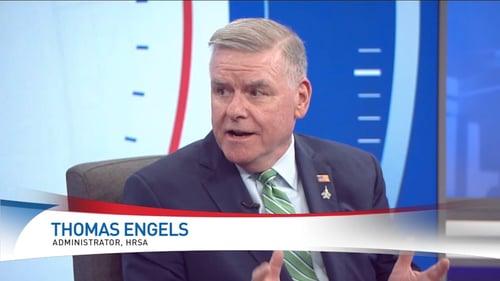
Modernization efforts are also closely aligned with broader administration priorities including maternal health and rural healthcare investment. HRSA’s programs support nutrition education, mental health services, substance use treatment, and maternal and newborn care, often through community-based providers that understand local needs. Engels highlighted resources like the national maternal mental health hotline, emphasizing HRSA’s commitment to supporting patients beyond traditional clinical settings.
One of the most significant modernization efforts underway is the overhaul of the Organ Procurement and Transplantation Network (OPTN). Engels acknowledged growing concerns about integrity, transparency, and ethics within the organ allocation system and underscored the administration’s commitment to restoring trust. For the first time in U.S. history, an organ procurement organization was decertified following serious performance and oversight issues—a move Engels described as necessary to protect patients and families.
Modernizing OPTN is about more than compliance; it’s about building a system rooted in fairness, accountability, and respect. Families who choose to donate organs deserve confidence that their decision will be honored ethically, while patients awaiting transplants deserve assurance that allocation decisions are based on need, not administrative failure. New technology, better data sharing, and stronger oversight are central to achieving that goal.
Artificial intelligence is also playing a growing role across HRSA’s operations. As one of the federal government’s largest grant-making organizations, HRSA is using AI tools to help evaluate applications, identify efficiencies, and ensure funding aligns with national priorities. Engels noted that these technologies are helping break long-standing patterns where the same recipients repeatedly receive funding, opening the door for innovative programs that may have been overlooked in the past.
Throughout the interview, Engels returned to a consistent theme: modernization must be intentional. There is no single technology or platform that solves every problem, and success depends on collaboration—within HRSA, across HHS, and with industry partners. By aligning people, processes, and technology, HRSA aims to be a better steward of taxpayer dollars while delivering measurable improvements in healthcare access and outcomes.
As HRSA continues its modernization journey, the focus remains clear: use technology to strengthen trust, expand access, and ensure that federal healthcare programs meet the needs of today—and tomorrow.