

Original Broadcast Date: 05/03/2026
Presented by Samdesk
The Air Force is taking a major step toward transforming how it acquires and delivers capabilities, and Lt. Gen. Luke Cropsey is helping lead that charge. In his conversation on Fed Gov Today, Cropsey lays out a vision centered on speed, accountability, and smarter risk-taking—anchored by the introduction of Portfolio Acquisition Executives (PAEs).
At its core, the shift to PAEs is about moving faster and delivering more. Cropsey explains that under the leadership of Secretary Hegseth, the Air Force is focused on increasing the speed of acquisition, expanding the volume of systems delivered, and strengthening competition across the defense industrial base. These goals reflect a broader recognition that traditional acquisition approaches are no longer sufficient in a rapidly evolving threat environment.
To address this, the Air Force establishes PAEs as a new layer of empowered leadership. Unlike the previous Program Executive Officer (PEO) structure, where decision-making authority is distributed across multiple functional chains, PAEs are given consolidated authority. That includes contracting, engineering, and financial decision-making—key levers that determine how quickly programs can move. By placing these authorities directly in the hands of the PAE, the Air Force aims to reduce delays and enable more agile execution.
Importantly, Cropsey emphasizes that this transformation is less about changing organizational charts and more about shifting where authority and accountability reside. PAEs are not necessarily expanding their scope beyond acquisition, but they are gaining the ability to act decisively within that domain. This change is intended to streamline processes and eliminate the need to navigate multiple approval layers for critical decisions.
The Air Force begins this effort with five PAEs out of a planned 18, selecting them as “pathfinders” to test and refine the model. These initial portfolios represent a cross-section of mission areas, including traditional aircraft platforms, software-centric capabilities, propulsion systems, and nuclear command and control. Each is chosen to reflect different types of acquisition challenges, from hardware-heavy programs to rapid software iteration cycles.
Cropsey notes that this diversity is intentional. For example, aircraft programs involve human safety considerations and long development timelines, while software efforts demand rapid, iterative updates—sometimes on a 90-day cadence. Propulsion systems, meanwhile, cut across multiple platforms and require enterprise-wide coordination. By testing the PAE model across these varied environments, the Air Force is building a framework that can scale effectively.
While the structural changes are significant, Cropsey underscores that success ultimately depends on the workforce. He highlights the need for teams that can take “smart risk” as the Air Force accelerates program timelines. Moving faster inherently introduces more acquisition risk, even as it reduces operational risk associated with delayed capabilities. The challenge is finding the right balance.
To illustrate this, Cropsey points to recent work on collaborative combat aircraft. Even with a crash during testing, the program continues to move forward because it is designed with guardrails that allow for failure without catastrophic consequences. The incident does not result in loss of life, and the system is recoverable—demonstrating how risk can be managed effectively while still pushing the pace of innovation.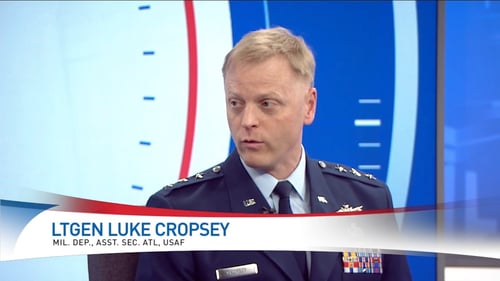
This approach reflects a broader shift in mindset. Rather than avoiding risk altogether, the Air Force is learning to tailor its risk management strategies to different types of programs. Systems involving human operators require stricter safeguards, while unmanned or software-based programs may allow for more flexibility. Understanding the operational impact of each system is key to determining how risk should be managed.
Cropsey also highlights the importance of aligning acquisition reform with changes in the requirements process. He notes that transforming acquisition alone is not enough; it must be integrated with how requirements are generated and refined. The Air Force is working closely across these functions to ensure a more cohesive and efficient process overall.
Looking ahead, the transformation effort continues to evolve. The Air Force is actively reviewing how additional authorities—such as engineering, financial management, and testing—can be further streamlined and delegated. These changes are expected to roll out incrementally, building on the foundation established by the initial PAE implementation.
When it comes to measuring success, Cropsey signals a departure from traditional metrics. While cost, schedule, and performance remain important, the ultimate focus is shifting toward operational outcomes. The question is no longer just whether a program meets its benchmarks, but whether it delivers meaningful capability to the warfighter when it is needed.
That shift ties directly into what Cropsey identifies as the hardest part of the transformation: culture. Encouraging teams to take risks and move faster requires more than policy changes—it requires consistent leadership behavior. Cropsey emphasizes that how leaders respond to failure will set the tone. If early setbacks are met with hesitation or reversal, the workforce will revert to old habits. But if leaders demonstrate that calculated risk-taking is truly supported, that mindset can spread across the organization.
In the end, the move to PAEs represents more than a structural adjustment—it signals a fundamental change in how the Air Force approaches acquisition. By empowering leaders, embracing risk intelligently, and focusing on operational impact, the service is positioning itself to deliver capabilities at the speed demanded by today’s challenges.