Original Broadcast 3/8/26
Presented by Workday Government
HR Transformation as a Mission Enabler
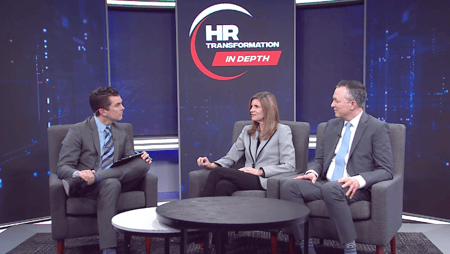
On HR Transformation: In Depth presented by Workday Government, George Jackson, Host of Fed Gov Today, leads a discussion with Katharine Kelley, Deputy Chief of Space Operations for Personnel at the U.S. Space Force, and Cliff Purkey, Vice President of Product at Workday Government, examining how modern HR systems are becoming essential to mission success across the federal government.
The conversation frames HR modernization not as a back-office upgrade, but as a strategic initiative tied directly to readiness, workforce agility, and long-term talent competitiveness. Kelley outlines how workforce management intersects with the Space Force mission to secure U.S. interests in and from space, while Purkey discusses how commercial technology platforms are reshaping the way agencies approach data integration and talent management.
The Federal HR Reality: Fragmented Systems and Siloed Data
 A central theme of the discussion is the long-standing fragmentation of HR systems across government. Workforce data is often distributed across hundreds of platforms, maintained in separate silos, and governed by different authorities. As a result, even basic workforce questions can require manual intervention, spreadsheets, and institutional knowledge to answer accurately.
Kelley explains that this is not merely a historical challenge but an ongoing operational reality. Senior leaders regularly request information that exists across multiple systems, requiring time-consuming reconciliation. The process frequently depends on individuals who understand not just the data fields themselves, but what those fields actually represent in practice.
An example highlighted during the discussion illustrates the complexity: determining how many acquisition professionals exist within the Space Force can require parsing multiple definitions—job roles, certifications, time in position, and whether individuals are currently performing acquisition duties or have done so in the past. Without unified data, workforce planning becomes slower and less precise.
Workforce Data as a Strategic Asset
Both Kelley and Purkey emphasize the importance of treating workforce data as a strategic asset. Historically, many HR decisions have relied heavily on resumes and managerial judgment. While those inputs remain important, they often do not provide a comprehensive understanding of an individual’s full capabilities.
Integrated data sets allow organizations to make more informed talent decisions, improve employee experience, and reduce administrative burden. Kelley notes that modern HR transformation requires visibility into the data underpinning workforce decisions, particularly in environments where both military and civilian personnel operate within the same ecosystem.
Purkey describes this evolution as a shift from systems built to manage transactions to systems designed to manage people. Clean, unified, and accurate data enables proactive workforce planning rather than reactive staffing decisions.
Change Management as the Critical Success Factor
 Technology alone does not guarantee successful transformation. A major focus of the discussion is change management and the importance of sustained communication throughout implementation.
Purkey stresses the value of strategic partnership between agencies and solution providers. Alignment must occur not only at the leadership level but across practitioners who rely on HR systems daily. Clear expectations, shared objectives, and ongoing collaboration are essential to prevent gaps between system capabilities and operational needs.
Kelley expands on this by noting that HR professionals have spent years mastering legacy systems and delivering results under challenging circumstances. Transitioning to new platforms requires deliberate attention to user adoption, training, and continuous communication. She describes change management as daily work rather than a one-time announcement or milestone.
Technical Integration and Data Governance Challenges
Beyond cultural barriers, the discussion addresses technical integration hurdles. Kelley identifies API interfaces and system interoperability as key near-term obstacles. Data is often housed within systems controlled by different authorities, requiring data exchange agreements and governance alignment before meaningful integration can occur.
These structural complexities can slow modernization efforts, particularly in large organizations where multiple stakeholders control different components of the HR ecosystem. Establishing a federated data model requires coordination across functional, technical, and legal domains.
The Evolution of Commercial Off-the-Shelf Technology
 Purkey explains how commercial off-the-shelf (COTS) solutions have evolved in ways that make them increasingly viable for federal adoption. Historically, agencies purchased systems that they customized extensively and maintained internally. Over time, these customizations made updates difficult and contributed to fragmented code lines and inconsistent functionality.
Software-as-a-service (SaaS) delivery models change this dynamic by offering standardized platforms with continuous updates. All users operate on the same code base and benefit from regular enhancements. This reduces maintenance burdens and helps prevent the accumulation of technical debt that can occur in heavily customized environments.
The result is greater consistency, improved innovation cycles, and more reliable access to unified data.
Security and Zero Trust Considerations
HR systems contain sensitive information, including personally identifiable data and workforce details relevant to national security. As modernization efforts move forward, cybersecurity remains central.
Purkey notes that while legacy systems may be secure individually, fragmented environments create additional complexity. Unified platforms can embed security within the core architecture and align more closely with federal zero trust initiatives. Modern HR transformation must therefore balance accessibility and integration with robust security controls.
Automation and Administrative Efficiency
Automation is presented as a means to reduce administrative burden and streamline processes. Modern HR platforms can simplify workflows for practitioners and enable employees to resolve issues more efficiently.
Purkey describes a future state in which employees can enter a system, address a need, and return to mission work without extended delays. Reduced friction in HR processes supports overall organizational speed.
Kelley underscores that automation should complement—not replace—the human element of talent management. Effective workforce leadership still requires judgment, mentorship, and personalized engagement. The optimal balance combines automated efficiency with professional human oversight.
Skills-Based Workforce Planning
A key forward-looking theme is skills-based workforce management. Rather than focusing solely on job titles or educational credentials, organizations must understand certifications, language capabilities, technical competencies, and performance histories across their workforce.
Purkey explains that modern systems can make this information readily available, allowing leaders to identify specialized talent quickly. Integrated analytics can also reveal trends, such as increased attrition within specific skill areas, enabling proactive retention strategies.
Kelley adds that many employees possess capabilities beyond their assigned roles. Without integrated visibility into those skills, organizations risk overlooking internal talent that could address emerging needs. Skills inventory management allows agencies to move ahead of workforce gaps rather than responding after they appear.
Flexible Workforce Models and Retention
The Space Force example illustrates how HR modernization can enable new service models. Kelley notes that the Space Force has legislative authorities permitting full-time and part-time service within a single component structure. This flexibility can help retain mid-career personnel who might otherwise leave due to family or caregiving responsibilities.
By supporting more agile service options within a unified HR ecosystem, the organization can preserve critical expertise while adapting to modern workforce realities. The Space Force also relies heavily on civilian personnel working alongside military Guardians, further reinforcing the need for integrated systems capable of managing diverse workforce categories.
Driving Adoption Through Clear Outcomes
In closing, the discussion highlights the importance of demonstrating results. Purkey emphasizes that leaders must clearly articulate objectives, invite participation, and show measurable improvements. Visible progress builds trust and sustains workforce engagement.
Overall, the conversation presents HR transformation as an operational and strategic initiative with direct implications for mission performance. Unified data, secure and modern platforms, automation, and skills-based management collectively support faster decision-making and stronger workforce planning. However, sustained leadership commitment, effective change management, and practitioner adoption ultimately determine whether modernization efforts deliver meaningful outcomes.

.png)