Original Broadcast Date: 03/15/2026
Presented by Maximus
Government agencies are rethinking the role of contact centers as technology, citizen expectations, and artificial intelligence reshape how services are delivered. Mike Owens, vice president for the federal civilian market at Maximus, says agencies that treat contact centers as strategic assets—not just support functions—can significantly improve both customer experience and mission outcomes.
Owens explains that the concept of a contact center has evolved significantly since the General Services Administration released its contact center playbook nearly six years ago. At that time, many agencies still viewed contact centers primarily as voice-based operations where citizens called for assistance. Today, the landscape looks very different.
“The need is to look at contact centers as more than just voice and more than just calling our government for services,” Owens says.
Modern contact centers must incorporate digital channels alongside traditional phone support. Citizens increasingly expect the same kinds of experiences from government that they receive from private companies—quick answers, digital self-service, and seamless transitions between communication channels. As agencies move into 2026, Owens says they must think about contact centers as a broader service ecosystem that includes online forms, web interactions, email, chat, and voice support.
A mature contact center, he explains, is defined by how agencies use the information flowing through it. Rather than acting as a reactive cost center that simply answers questions, the most effective contact centers function as proactive sources of insight.
“I think what shows a mature contact center would be one that's not looking at it as a reactive cost center, but rather a proactive mission intelligence engine,” Owens says.
The data coming through these systems can reveal valuable information about how government programs operate and where citizens encounter problems. Every interaction—whether it is a call, message, or digital request—offers insight into how services are working from the public’s perspective.
Owens points to a simple example. If an agency receives hundreds of calls about a confusing form, the problem likely does not originate in the contact center. Instead, it signals a broader issue in how the program itself is designed.
“If you're seeing 500 calls coming in about a confusing form, that's not just a contact center problem,” he says. “That's a problem in your program setup.”
By analyzing these patterns, agencies can identify issues earlier and fix them at the source, reducing the number of calls while improving the overall experience for citizens.
However, Owens notes that many agencies still miss opportunities to use this data effectively. Too often, organizations focus on analyzing past performance rather than using insights to anticipate future needs.
“I think where they're missing is a lot of agencies are still looking backwards where they should be looking forward,” he says.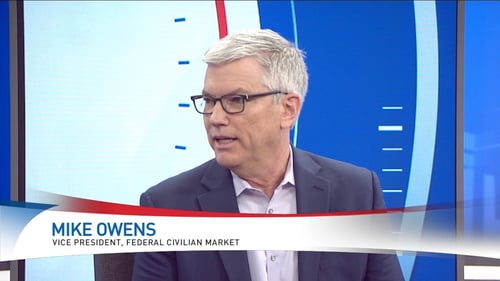
Looking ahead allows agencies to identify risks and opportunities earlier. It also helps them design services that are easier to use, reducing frustration for citizens and lowering operational costs.
Artificial intelligence is playing an increasingly important role in that transformation. When the GSA contact center playbook was written, AI was only mentioned briefly. Today, Owens says it represents one of the biggest opportunities for improving both efficiency and customer experience.
One of the most immediate uses for AI is in helping citizens navigate services before they even reach a human representative. Owens describes this as “tier zero” support, where automated systems guide users through common questions or problems.
“If you haven't got through the online form and you are having problems and you reach out, oftentimes AI could help you get to the answer you're looking for,” he says.
This approach benefits both agencies and the public. Citizens can resolve routine issues more quickly, while agencies reduce the workload on contact center staff. At the same time, Owens emphasizes that human oversight remains critical.
“You have to leave the human in the loop,” he says. “It's very important to make sure that we are looking after the solutions that are being offered.”
Agencies are still learning how to strike the right balance between automation and human support. Owens describes the process as iterative, with organizations gradually expanding their use of AI as they gain experience and confidence.
“I think it's a crawl, walk, run,” he says. “We're just getting started.”
The pace of change is rapid, and Owens believes the conversation around contact center technology will look very different in the near future. Artificial intelligence will continue to mature, enabling more advanced forms of assistance and data analysis.
But the real transformation, he says, lies in how agencies bring all communication channels together.
For years, government organizations have discussed the importance of “omnichannel” service—providing support through multiple platforms. The next step, according to Owens, is ensuring those channels work together seamlessly.
He describes this concept as “omnichannel orchestration.” Maximus refers to it as the “digital front door,” a unified system that connects self-service tools, websites, chat platforms, phone support, and email into a single experience.
The goal is simple: citizens should not have to start over each time they switch channels. Whether they begin with a web form, move to chat, or call a contact center, the agency should already understand their request and provide continuity throughout the interaction.
“It's bringing all the pieces together,” Owens says.
As agencies modernize their contact centers, he believes this integrated approach will play a key role in improving both efficiency and public trust. By combining digital tools, data insights, and human expertise, government organizations can create service experiences that are faster, more responsive, and easier for citizens to navigate.