Presented by Zoom and Carahsoft
The Department of Defense faces a massive hurdle in overcoming decades of technical debt tied to aging IT systems on bases, camps, and stations. Chris Boyd, Head of U.S. Federal Sales for Zoom, observes that military leadership, particularly within the Navy and Marine Corps, is desperately trying to figure out how to transition away from legacy telephony systems. The primary challenge is doing so "without making such a heavy investment in the middle so you can continue to innovate," Boyd notes.
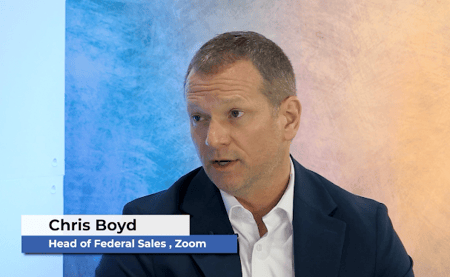 The ideal end-state for these military branches is a "hybrid cloud" environment. To get there safely, agencies must make smart, incremental investments that integrate seamlessly with the tools they already use, rather than throwing the baby out with the bathwater. "I've got to take what I have figure out how to innovate it, and as you move through that path, we can figure out a way to give you that true hybrid technology while integrating with the existing systems," Boyd says. He notes that modern solutions can integrate directly with existing platforms like Microsoft Teams and current CRM systems, ensuring investment protection.
Because federal budgeting cycles operate four to five years in the past, timing these incremental steps correctly is vital for long-term success. Boyd notes that organizations must "see over that horizon" and make small investments so they do not accidentally "engineer yourself into a corner" by making a bad, investment-heavy decision today.
The government is actively improving this modernization posture by consolidating its buying power at the enterprise level. By moving away from disjointed purchasing and operating at an enterprise scale, the military is successfully reducing rampant IT sprawl. "By reducing the it sprawl, leveraging their buying power and bringing everything to an enterprise solution, you don't have those sort of shadow IT elements that are out there," Boyd explains. This unified approach is especially vital for the Navy and Marine Corps, which face unique tactical challenges in delivering reliable communications to disparate systems on ships and in highly bandwidth-challenged areas.
This interview appeared in the program Innovation in Government at WEST 2026