Presented by Vector Solutions & Carahsoft
Mark Eisel, Vice President of Federal Sales at Vector Solutions, discussed the challenges agencies face as they attempt to modernize legacy systems while integrating emerging technologies such as artificial intelligence. Speaking at Sea-Air-Space, Eisel explained that many federal organizations continue struggling with fragmented systems, manual processes, and incomplete operational visibility that limit readiness and efficiency.
Eisel noted that many agencies initially approach modernization efforts by simply attempting to place new graphical interfaces on top of aging systems instead of fundamentally addressing the underlying operational problems. Budget limitations and resource constraints often drive those decisions, but they can leave organizations with the same inefficiencies and integration challenges that existed before modernization efforts began.
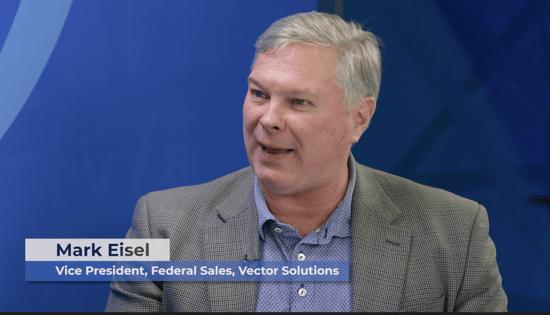 According to Eisel, the most important first step is helping customers clearly define the actual problems they are trying to solve. Many organizations lack a complete understanding of their operational environments, technology dependencies, and readiness gaps. Leadership turnover and changing mission requirements can further complicate that process.
Vector Solutions works closely with federal customers to identify operational gaps and implement solutions that improve readiness management and training oversight. Eisel highlighted the company’s work within the federal law enforcement community, where organizations often struggle to manage certifications, testing records, and training requirements across multiple disconnected systems.
One of the biggest challenges agencies face is the sheer number of systems involved in managing readiness and workforce training. Eisel explained that many customers rely on ten or more separate systems, forcing personnel to manually consolidate information to assess readiness posture. This fragmentation creates delays, inconsistencies, and reduced situational awareness.
The conversation also focused on the importance of integration and data visualization. Eisel emphasized that agencies need centralized visibility into workforce qualifications, certifications, and operational readiness in order to make informed decisions quickly. Modern training management platforms can help automate these processes and eliminate many of the manual steps that currently slow organizations down.
Looking ahead, Eisel advised agencies to focus not only on current modernization requirements but also on future scalability and interoperability. Organizations that fail to address these foundational issues today may face even greater operational challenges as emerging technologies continue evolving.
Key Takeaways
- Many agencies still struggle with fragmented legacy systems.
- Understanding operational requirements is critical before modernization begins.
- Integrated readiness and training systems improve operational visibility.