

Episode 1: The Federal IT Moment: Mission Meets Innovation
The federal government is entering an era where technology is no longer just a support function—it is central to mission delivery, national resilience, and public trust. In the first episode of Mission Forward: A Video Podcast Series from SAP on Government Efficiency and Innovation, Joe Ditchett, Industry Executive Advisor at SAP, explains why this moment stands apart from past waves of modernization. Federal agencies aren’t simply looking for better tools or faster systems. They are operating in an environment shaped by strategic competition, heightened expectations, and a growing need for adaptable infrastructure that can withstand disruption.
Ditchett frames today’s environment as “the Federal IT moment,” a time when mission demands are colliding with rapidly advancing technology, forcing leaders to think differently about cybersecurity, data, logistics, and the pace of innovation. Rather than treating modernization as a periodic initiative, agencies are increasingly being pushed toward continuous improvement—because the risks, challenges, and opportunities facing government do not pause.
A “Contested Future” That Has Already Arrived
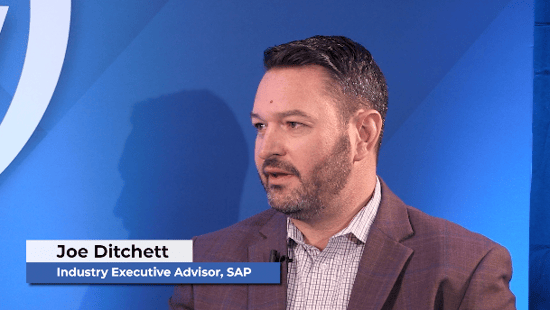 One of the most powerful ideas Ditchett introduces is the concept of the contested future. While the phrase may sound like it belongs in a distant horizon, he emphasizes that it is “right on our doorstep.” In his definition, the contested future is a world where strategic competition is unfolding in real time—nation to nation, region to region, and across entire hemispheres.
This is not theoretical. It’s visible daily through political uncertainty, global tension, and shifting alliances. And that strategic competition puts pressure on the United States and its partners to maintain security, protect access to resources, stabilize the economy, and safeguard critical infrastructure.
In this environment, Ditchett argues that IT systems, business systems, and government infrastructure have become a critical backbone. They power everything from energy and fuel access to medical and food supply chains. They enable continuity in public services and ensure operational stability across the most essential functions of government.
But that dependence also creates risk. As Ditchett notes, if IT is foundational to national function and readiness, it becomes a prime target. In a contested future, government leaders must assume that their systems will face constant challenge—whether through cyber threats, disruption, or strategic pressure—and must build infrastructure designed to hold up under those conditions.
Cybersecurity: The Baseline for Modern Infrastructure
Given the nature of the contested future, one implication is obvious: cybersecurity will continue to become more critical over time. But Ditchett’s perspective goes deeper than the standard call for “more cyber.” He stresses that agencies need to move from defensive posture to proactive design—especially in how they build and deploy systems.
A key part of this shift is strengthening the software supply chain. Rather than building solutions quickly and then trying to add security later, Ditchett emphasizes the need to design security into software development and deployment from the start. That includes knowing where developers are coming from, validating development models, and incorporating security frameworks early in the process.
This “build security up front” mindset helps agencies get ahead of threats rather than reacting after vulnerabilities are discovered. It also reflects a broader reality: cybersecurity can’t be a bolt-on capability. It must be integrated into technology decisions, procurement strategy, and operational planning.
Ditchett also connects cybersecurity to resilience. In his view, security isn’t only about preventing breaches—it’s also about ensuring continuity. That means building infrastructure with redundancy and resilience as core principles, especially when government services and mission operations depend on constant availability.
Distributed Operations Are Changing the Architecture of Government IT
Beyond cybersecurity, Ditchett highlights another major shift shaping the Federal IT moment: distributed operations.
For years, agencies often built and managed IT through a structured, linear process. Requirements were gathered, contracts were written, teams were assembled, solutions were delivered, data was collected, and the cycle repeated. Ditchett describes this model as lengthy and slow—built for an era when government could afford to work through modernization on extended timelines.
But today’s environment demands a different approach. Federal missions increasingly operate across dispersed locations and rely on real-time data movement. Ditchett argues that agencies must shift toward an execution-level model where decision-making becomes faster, more dynamic, and interconnected.
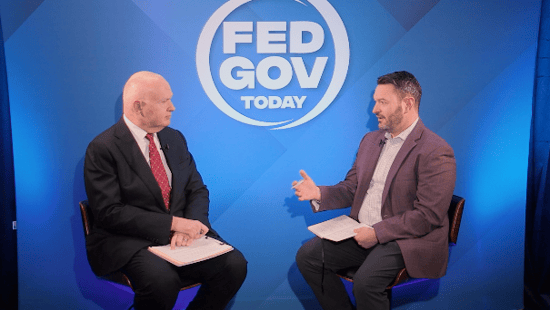 Instead of long linear cycles, organizations need a web of decision-making. Every participant becomes part of the mission environment and contributes to the operational picture. This is especially easy to understand within defense operations, where sensors and “shooters” share data and decisions occur rapidly. But Ditchett points out that civilian agencies face a similar need.
Civilian government is massive. It operates globally and domestically across countless mission areas. From food supply chains to national parks and fisheries, government employees and systems operate in distributed environments every day. The challenge is connecting those environments in a way that allows agencies to share data effectively and act with speed.
This shift has direct implications for the architecture of federal networks. Systems must support dispersed operations, enable secure collaboration, and handle large volumes of data being transmitted back and forth. They must be built not just for efficiency, but for resilience and responsiveness.
“Need to Share” Becomes the New Operating Principle
As government embraces distributed operations, Ditchett notes a cultural change underway: agencies are moving from a “need to know” mindset to a “need to share” mindset.
That shift has enormous implications.
Historically, many agencies and organizations restricted information flow, sharing data only when absolutely necessary. But the modern mission environment requires collaboration. Decision-makers need access to real-time information. Teams operating across dispersed locations must be connected. And systems must be designed to support shared awareness while still preserving security and governance.
“Need to share” is not simply a philosophical change—it is a practical requirement. It enables agencies to coordinate faster, respond to challenges sooner, and improve mission effectiveness across both defense and civilian operations.
Data Gravity: Trust, Context, and Transactional Truth
When the conversation turns to data, Ditchett introduces another term that helps explain why agencies sometimes struggle to scale analytics and AI: data gravity.
He acknowledges the explosion of interest in AI, noting that it feels like “everyone became an expert on AI overnight.” But for agencies trying to turn AI into operational advantage, the real challenge isn’t just adopting new tools. The challenge is building trust in the insights those tools produce.
That trust, Ditchett argues, comes from contextualized data, especially data tied to transactional sources. As data moves between systems, it is redesigned, transformed, and changed. Over time, confidence in the origin and meaning of that data can erode. That’s why being close to the transactional source matters—because it preserves context and strengthens reliability.
Ditchett describes data gravity as the idea that the closer you are to core transactional environments—finance, supply chain, health systems, and other mission-critical operations—the stronger the trust in the data. That trusted core then becomes a hub that pulls decision-making and insight toward it, allowing agencies to extend and scale with greater confidence.
In this model, data becomes more than an asset. It becomes a strategic foundation. It supports better decisions, enables faster learning, and strengthens the organization’s ability to operate effectively in a complex and uncertain environment.
Innovation Must Be Built Into Daily Operations
Ditchett believes agencies are increasingly aligned on the importance of data as a strategic asset. But recognizing the value of data is different than operationalizing it—and that is where many agencies face their toughest challenge.
The biggest hurdle is legacy technology. Government has decades of systems, data models, and constructs that were built for a different era. The question agencies face now is how to bridge from “yesteryear” to “future year” without losing continuity or mission performance.
Ditchett points to cloud as a central component of that transition. Cloud delivery models support faster innovation cycles and provide a path toward more resilient, adaptable systems. But moving from legacy on-prem environments to cloud-native design requires agencies to rethink how they manage and transform long-standing data sets.
The challenge isn’t throwing away decades of information—it’s transforming it. Agencies must find ways to carry forward what they’ve built while re-architecting systems that can support today’s speed and tomorrow’s needs.
This transition also changes the role innovation plays inside government. Innovation can no longer be a side initiative. It must be part of the daily process of doing business.
“Learn Fast” Instead of “Fail Fast”
Innovation in the private sector is often associated with the phrase “fail fast.” But Ditchett argues that government needs a different framing—one that fits the reality of mission responsibility and taxpayer stewardship.
His recommendation is for agencies to adopt a “learn fast” mindset.
Federal acquisition and appropriations processes exist to protect taxpayer dollars, ensure accountability, and provide structure. But Ditchett believes the government must still accelerate the pace of learning and adoption. That means leveraging lessons already learned, applying them faster, and ensuring that acquisition reform keeps pace with technology evolution.
Learning faster allows agencies to innovate responsibly—without compromising the safeguards that exist for good reason. It’s not about moving recklessly. It’s about moving intelligently, with momentum.
Escaping the “Services-Led Trap” Through Product Evolution
As the episode closes, Ditchett offers a clear warning: agencies need to move beyond what he calls the services-led trap.
In the past, many modernization efforts followed a build-and-maintain model. A system would be customized, delivered over a long cycle, and then maintained year after year. Over time, that model becomes costly, difficult to manage, and slow to evolve.
Ditchett argues that agencies looking to embrace innovation should aim to get as close as possible to a “clean core” product approach. Rather than depending on heavy customization and long-term maintenance cycles, agencies should leverage platforms and products designed to evolve continuously.
That shift matters because it changes the entire modernization mindset. Instead of viewing modernization as something done once every decade, Ditchett suggests agencies should think in terms of evolution—continuous improvement, ongoing updates, and regular innovation that keeps pace with mission demands.
In an era where technology changes rapidly, evolution is no longer a nice-to-have. It becomes essential.
The Federal IT Moment Demands Momentum
Episode 1 of Mission Forward captures a clear reality: federal IT is now inseparable from mission delivery. Agencies must prepare for a contested future by strengthening cybersecurity, enabling distributed operations, and building trust in data through strong transactional foundations.
At the same time, government must accelerate innovation without sacrificing accountability. That means modernizing legacy environments, embracing cloud delivery, learning faster through smarter acquisition, and shifting away from service-heavy models that slow progress.
Joe Ditchett’s message is direct: the Federal IT moment is here. And the agencies that treat innovation as part of daily mission execution—rather than a side project—will be best positioned to improve efficiency, increase resilience, and deliver outcomes that matter in a rapidly evolving world.