

Presented by Maximus
Modernizing Federal Health Care: Policy, Access, and Technology Driving Change
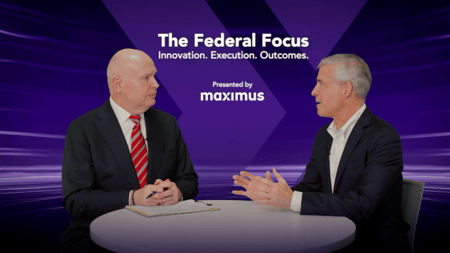
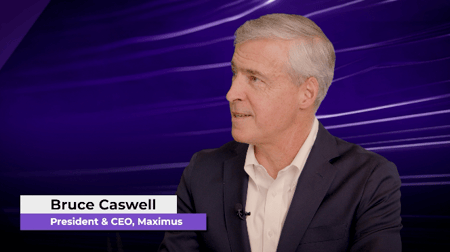 Federal healthcare programs are facing a period of rapid transformation as policymakers, technology leaders, and providers work to balance rising costs, expanding access to care, and the growing role of digital technology. In the opening segment of The Federal Focus: Health IT, Francis Rose speaks with Bruce Caswell, President & CEO of Maximus, about the forces reshaping federal healthcare delivery and how agencies are modernizing systems while continuing to serve millions of Americans.
Caswell describes several major trends influencing the future of federal health programs. At the highest level, the cost of healthcare remains a major national challenge. Healthcare systems across the country serve hundreds of millions of citizens, and the financial pressures associated with that scale continue to shape policy decisions. As lawmakers introduce new policies and oversight mechanisms, federal healthcare agencies must adapt their systems and operations to meet changing requirements.
Policy shifts often focus on improving accountability and ensuring taxpayer resources are used effectively. New payment models, stronger efforts to identify fraud and abuse, and broader changes to healthcare delivery structures all require agencies to modernize the technology and operational frameworks that support federal programs.
Another critical factor influencing healthcare delivery is access to services, particularly in rural communities. Expanding care into underserved areas requires both financial investment and modern digital infrastructure. Federal initiatives designed to strengthen rural health systems are helping improve access, but agencies must also ensure that their technology platforms can support the increased demand for services.
Technology itself represents perhaps the most visible catalyst for change. The COVID-19 pandemic dramatically accelerated the adoption of telehealth and remote care technologies. What once served as a niche capability quickly became a core method for connecting patients and providers. Telehealth demonstrated that care can be delivered efficiently and effectively through digital channels, especially for patients who face geographic or mobility barriers.
However, implementing new technology in federal healthcare environments is not as simple as replacing old systems with new ones. Healthcare agencies must modernize systems while they remain fully operational. Caswell compares this challenge to “changing the engine on a plane while it’s flying.” Systems supporting millions of citizens cannot be paused while upgrades occur.
 Cloud computing has become one of the most important tools for enabling this modernization. Many agencies are exploring cloud migration as a way to increase flexibility, improve system performance, and enhance scalability. At the same time, healthcare data is among the most sensitive information managed by government systems, making cybersecurity and data protection essential considerations throughout any modernization effort.
Security must be embedded throughout the architecture of modern health IT systems. Encryption, access control, and secure data management practices are necessary to ensure that sensitive healthcare information remains protected as it moves through digital systems.
Modernization also provides an opportunity to rethink the business processes that govern how healthcare services are delivered. Simply transferring outdated workflows into modern systems is rarely effective. Instead, agencies must reevaluate the underlying processes themselves and look for ways to simplify interactions and remove unnecessary complexity.
Caswell emphasizes the importance of focusing on the citizen experience when redesigning systems. By starting with the needs of patients and beneficiaries, agencies can build digital services that are easier to use and more responsive to real-world needs.
Digital applications are already demonstrating how this approach can improve access. In one example, a Medicaid program implemented a mobile application that allows beneficiaries to submit documentation and manage their eligibility through their phones. The result was a dramatic reduction in paper-based applications and a more convenient experience for participants.
As federal healthcare continues to evolve, the intersection of policy, technology, and citizen-focused design will determine how effectively agencies deliver care. With thoughtful modernization strategies, agencies can improve access, strengthen program integrity, and create better experiences for the millions of Americans who depend on federal healthcare services.
Data, AI, and Telehealth: How Health IT Is Enabling Patient-Centered Care
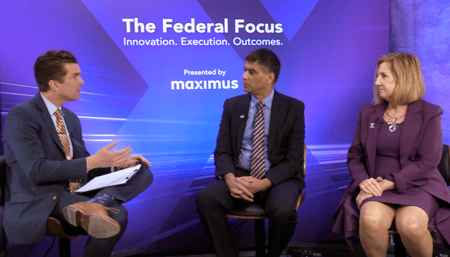
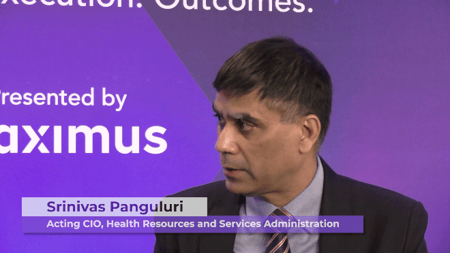
Delivering healthcare to millions of Americans requires more than strong policies and funding—it requires data, modern technology, and systems designed around the needs of patients. In the second segment of The Federal Focus: Health IT, Srinivas Panguluri, Acting Chief Information Officer at the Health Resources and Services Administration (HRSA), and Barbara Keating, Managing Director for Federal Health at Maximus, discuss how health IT modernization is helping federal agencies move toward a more patient-centered model of care.
 HRSA plays a central role in supporting healthcare access across the country, particularly for vulnerable and underserved populations. Through its grant programs and partnerships with healthcare providers, the agency helps deliver care to millions of Americans. One example is HRSA’s Bureau of Primary Health Care, which supports services for approximately 32 million people nationwide. With more than 100 million patient visits occurring across these programs each year, HRSA must rely heavily on technology and data to understand healthcare needs and improve outcomes.
Historically, much of the healthcare data collected by agencies was aggregated. Reports would show totals—how many patients were treated, how many services were delivered, or how many cases of a particular condition were recorded. While this type of data provided a broad overview of healthcare activity, it often lacked the detail necessary to guide more targeted interventions.
To improve insight into healthcare trends, HRSA has shifted toward collecting patient-level data while still protecting privacy. The agency gathers information in a de-identified format, removing personally identifiable details such as names, birthdates, and other markers that could reveal an individual’s identity. This approach allows analysts to study patterns across populations without exposing sensitive health information.
With more detailed data available, healthcare leaders can begin identifying trends that were previously hidden. Analysts can examine how chronic diseases develop across different regions, whether certain conditions are more prevalent in rural communities, and how outcomes vary among different demographic groups. These insights allow agencies and providers to design targeted programs that address specific healthcare challenges.
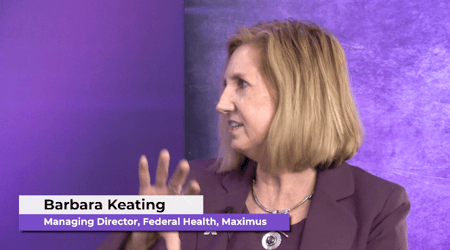 Achieving this level of analysis requires strong interoperability across health IT systems. Keating explains that modern healthcare systems rely on established data standards that allow information to move securely between organizations. Two key standards are shaping this effort.
HL7 standards support the exchange of administrative healthcare data, including billing and operational information. FHIR standards, a newer framework developed to support modern health applications, focus on clinical data such as patient records and treatment information. Together, these standards create a foundation that enables data sharing across systems while maintaining consistency and accuracy.
Security remains a critical element of this modernization effort. Healthcare organizations must protect extremely sensitive information, including protected health information and personally identifiable data. Modern cloud architectures now include governance frameworks that automatically apply security controls based on the type of data being processed.
These frameworks allow agencies to build secure environments where policies governing encryption, access control, and data protection are applied automatically. This “governance by design” approach ensures that security is embedded directly into the system architecture rather than added as an afterthought.
At the same time, organizations still need safe environments to test emerging technologies. Synthetic data—datasets designed to mimic real patient information without exposing actual records—allows developers to experiment with new tools while maintaining strict privacy protections.
 Artificial intelligence is already showing promise in several healthcare applications. Administrative tasks such as document processing, claims analysis, and case review often involve large volumes of unstructured information. AI systems can read and classify documents, organizing records into categories such as lab results, clinical notes, or administrative forms. This automation significantly reduces the time required for human reviewers to prepare cases for analysis.
Large language models can also support help desk functions and other support services by answering routine questions based on existing knowledge bases. While these capabilities are still evolving, they demonstrate how AI can help agencies operate more efficiently.
More advanced generative AI applications remain largely experimental. Because these systems can sometimes produce inaccurate or misleading responses, organizations are carefully testing them in controlled environments. Techniques such as retrieval-augmented generation limit AI outputs to trusted documents and verified sources, reducing the risk of incorrect information.
Health IT modernization also plays a role in addressing broader healthcare challenges, including pharmaceutical supply chain visibility. Drug shortages—particularly among generic medications—have become an increasing concern. Improved data tracking and analytics could help agencies better understand where shortages are occurring and how to respond more effectively.
Telehealth is another technology that continues to expand healthcare access. Virtual care platforms have proven particularly valuable for behavioral health and other consultative services. HRSA has supported programs designed to extend telehealth capabilities into rural areas, including networks that allow patients to receive emergency medical triage remotely before reaching a hospital.
Expanding broadband infrastructure is a key component of making telehealth effective. Reliable connectivity ensures that virtual consultations provide the same level of interaction and clarity patients would expect from in-person visits.
As healthcare technology continues to evolve, data, interoperability, artificial intelligence, and telehealth will play increasingly important roles in shaping care delivery. By responsibly integrating these technologies into secure and modern systems, federal agencies can deliver more efficient services while improving outcomes for the millions of Americans who rely on federally supported healthcare programs.