

Original Broadcast Date: 05/10/2026
Presented by Workday Government
The latest episode of Fed Gov Today explores how federal agencies are rapidly transforming operations through enterprise cloud modernization, artificial intelligence and automation. Commerce Department CIO Brian Epley reveals how NOAA’s urgent operational resilience needs sparked a sweeping $4 billion cloud strategy designed to unify procurement across the department and create a scalable “One Commerce” model. Rather than allowing individual bureaus to pursue separate contracts, Commerce partnered with GSA to establish a streamlined enterprise marketplace that connects agencies directly with major cloud providers while supporting long-term innovation in AI and quantum technologies.
The program also examines the expanding role of AI across government. Workday Government’s Matthew Cornelius discusses the Pentagon’s deployment of more than 100,000 AI agents and explains how agencies are shifting from viewing AI as a specialized function to treating it as a workforce-wide capability. Cornelius argues that AI agents must be managed like employees, complete with governance, cybersecurity controls, training and performance expectations. He highlights how agencies are increasingly focused on skills-based workforce management, where both humans and AI systems are evaluated by their ability to deliver mission outcomes.
Interior Department Deputy Assistant Secretary Andrea Brandon showcases another side of automation with award-winning robotic process automation bots named Bob, Bobby and Oz. These bots are handling acquisition closeouts, contract modifications and small business reporting at speeds impossible for human teams alone, saving millions of dollars while freeing employees to focus on higher-value oversight and strategic work. Brandon emphasizes that organizational culture and workforce trust are critical to successfully adopting automation and AI technologies.
Inside Commerce’s $4 Billion Cloud Gamble: Brian Epley’s Blueprint for OneGov AI and Enterprise Tech
Commerce Department CIO Brian Epley outlines an ambitious governmentwide technology strategy centered on a potential $4 billion enterprise cloud contract designed to modernize infrastructure, strengthen operational resilience and accelerate AI adoption across federal agencies. What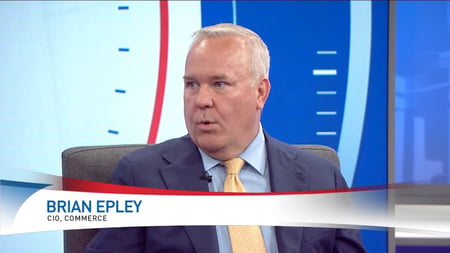 began as NOAA’s urgent need for scalable cloud capacity quickly evolved into a broader “One Commerce” initiative aimed at unifying procurement and reducing duplication across the department. Epley explains how Commerce partnered with GSA and adopted lessons from the Pentagon’s Joint Warfighter Cloud Capability model to create a marketplace connecting bureaus directly with major cloud providers while maintaining flexibility and scalability.
Beyond cloud modernization, Epley says the same collaborative strategy is now shaping Commerce’s approach to AI and quantum computing. By leveraging integrated product teams and shared AI use case inventories, Commerce became the first department to implement USAI through GSA, giving agencies access to multiple leading AI models instead of relying on a single platform.
Key Takeaways:
- Commerce is building a “One Commerce” enterprise cloud strategy to unify procurement and improve scalability across bureaus.
- NOAA’s operational resilience needs helped launch a potential $4 billion cloud modernization effort using direct partnerships with major cloud providers.
- Commerce is applying lessons from cloud modernization to AI and quantum initiatives through shared use cases and governmentwide collaboration.
The Pentagon Has 100,000 AI Agents — And They’re Already Replacing Office Work
Matthew Cornelius of Workday Government says artificial intelligence is no longer a future concept inside government — it is already reshaping how agencies operate every day. Discussing the Pentagon’s deployment of more than 100,000 AI agents through the GenAI.mil platform, Cornelius explains that agencies are now relying on autonomous systems to draft after-action reports, analyze images and process operational data at 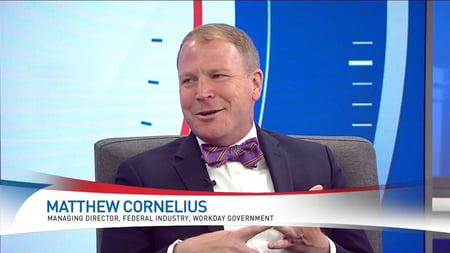 massive scale. But he argues the real transformation is not just technological — it is workforce-driven.
Cornelius says federal leaders must begin treating AI agents like employees by ensuring they have proper access controls, governance, cybersecurity protections and performance management. He compares today’s AI evolution to the governmentwide cybersecurity transformation of the past decade, where every employee eventually needed cyber awareness skills. Now, AI literacy is becoming essential across nearly every federal job, fundamentally changing hiring, workforce management and mission execution.
Key Takeaways:
- The Pentagon already has more than 100,000 AI agents supporting operational and administrative tasks across the department.
- Agencies must manage AI agents like employees by implementing governance, cybersecurity protections and performance oversight.
- AI literacy is quickly becoming a required skill across the federal workforce, much like cybersecurity awareness evolved over the past decade.
Meet Bob the Bot: The AI Workforce Saving Millions Inside the Interior Department
Interior Department Deputy Assistant Secretary Andrea Brandon explains how robotic process automation bots named Bob, Bobby and Oz are transforming federal contracting and grants management by taking over repetitive administrative work once handled manually by employees. The 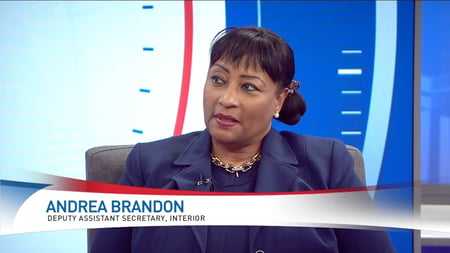 department’s best-known bot, “Bob the Closer,” has already closed more than 100,000 contracts, saves millions of dollars annually and processes acquisition closeouts at speeds far beyond human capability. Meanwhile, “Oz the Bot” delivers real-time small business contracting data, and “Bobby the Modifier” can instantly update thousands of contracts with new clauses and administrative changes.
Brandon says the bots are not replacing employees — they are freeing acquisition professionals to focus on oversight, compliance and mission-critical decision making. She also emphasizes that agency culture determines whether automation and AI initiatives succeed, arguing that workforce trust and stakeholder collaboration are essential before introducing advanced AI technologies across government operations.
Key Takeaways:
- Interior Department bots named Bob, Bobby and Oz are automating contract closeouts, modifications and small business reporting.
- Automation is saving millions of dollars and allowing acquisition professionals to focus more on oversight and mission delivery.
- Brandon says organizational culture and workforce trust are critical for successful AI and automation adoption.