

Original Broadcast Date: 02/22/2026
Presented by Symantec, Carbon Black, & Carahsoft
The Pentagon is racing toward one of the most ambitious accountability goals in its history: a clean financial audit by 2028. On this episode of Fed Gov Today, Performing Undersecretary of Defense Comptroller Jay Hurst lays out the scale of the challenge—managing oversight of $4.6 trillion in assets—while drawing inspiration from the Marine Corps’ three-year streak of clean audits. Unlike the Marines’ “brute force” approach, the broader Department of Defense is betting on technology, including artificial intelligence, to accelerate remediation, reconcile data across 1,400 business systems, and target high-risk financial areas like working capital funds. With senior leadership backing, new funding from Congress, and a surge in hiring data analysts and financial experts, Hurst describes the effort as a department-wide “mad dash” to modernize financial management and restore taxpayer confidence.
AI is also transforming operations beyond the balance sheet. Broadcom’s Garrett Lee warns that AI acts as a “risk multiplier,” expanding the attack surface and amplifying existing cybersecurity vulnerabilities. He emphasizes the need for strong data governance, real-time monitoring, and clear guardrails to prevent shadow AI and accidental data leakage.
Meanwhile, the Pentagon’s Chief Digital and AI Officer Cameron Stanley highlights the explosive rollout of GenAI.mil, which drew more than 550,000 users in its first week. Initially used for summarizing documents and drafting memos, the platform is now enabling more complex, mission-focused tasks. As AI adoption accelerates, Pentagon leaders say success hinges on balancing innovation with governance—turning data into decisive advantage while safeguarding trust and security.
The Pentagon’s $4.6 Trillion Audit Sprint: Inside the Race to 2028
Jay Hurst, Performing Undersecretary of Defense Comptroller, says the Pentagon is in a “mad dash” to achieve a clean financial audit by 2028—an unprecedented milestone for a department managing $4.6 trillion in assets. While the Marine Corps has earned three consecutive clean audits, Hurst acknowledges the broader department faces a far more complex challenge. Half of DoD’s assets already have clean opinions, and leadership is now zeroing in on high-risk areas like working capital funds to create momentum toward a consolidated opinion. Rather than relying solely on manpower, the department plans to leverage AI and advanced data tools to reconcile information, conduct substantive testing, and accelerate remediation across roughly 1,400 business systems. Backed by strong support from the Secretary and Deputy Secretary of Defense, Hurst is 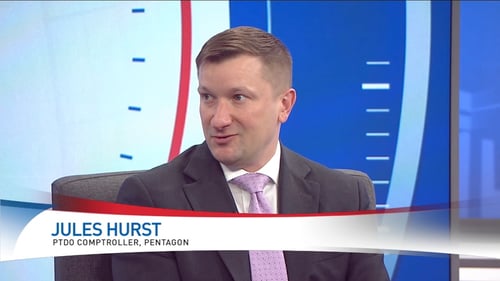 focused on aligning the services under a unified strategy, prioritizing the most critical fixes, and aggressively hiring financial managers, auditors, and data analysts to cross the finish line.
Key Takeaways:
- The Pentagon is in a full sprint to achieve a clean audit by 2028, targeting high-risk areas like working capital to build momentum.
- AI and advanced data tools are critical force multipliers, helping reconcile data and accelerate remediation across 1,400 business systems.
- Success depends on unified strategy and talent, with strong leadership backing and a surge in hiring auditors, financial managers, and data analysts.
The Hidden Danger of AI: Why Governance Will Decide the Outcome
Garrett Lee of Broadcom’s Enterprise Security Group warns that while artificial intelligence can be a force multiplier for government, it can also become a “risk multiplier” if not governed properly. AI doesn’t necessarily create new cyber threats, he explains—it amplifies existing ones by expanding the attack surface and accelerating how data moves through systems. With federal agencies handling vast amounts of sensitive information—from classified material to CUI, PII, PHI, and export-controlled data—Lee stresses that visibility and control over how AI models access and process data is critical. He highlights the growing challenge of “shadow AI,” where employees use AI tools without formal oversight, potentially leading to accidental data leakage. Lee argues that strong data governance, real-time monitoring, data loss prevention tools, and clear 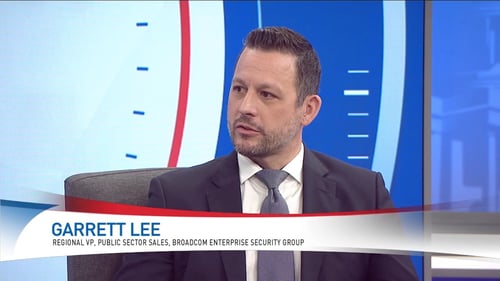 guardrails are essential to enabling responsible AI adoption—ensuring innovation moves forward without eroding public trust or increasing cyber risk.
Key Takeaways:
- AI amplifies cyber risk, expanding the attack surface and accelerating how sensitive data moves through systems.
- Shadow AI is a growing threat, with unauthorized or unmanaged AI use increasing the risk of accidental data leakage.
- Strong data governance enables safe AI adoption, requiring real-time monitoring, clear guardrails, and data loss prevention tools.
Inside GenAI.mil: How the Pentagon Is Scaling AI to a Million Users
Cameron Stanley, the Pentagon’s Chief Digital and Artificial Intelligence Officer, highlights the rapid success of GenAI.mil, the department’s custom generative AI platform approved for unclassified use. Launched earlier this year, the platform drew more than 550,000 users in its first week and now supports nearly a million users across the department. Initially used for basic tasks like summarizing documents and drafting memos, GenAI.mil is now enabling more complex, second- and third-order problem solving as users grow more comfortable with the technology. Stanley says the Pentagon is tracking usage trends—not individual users—to refine capabilities and expand functionality. Built with security guardrails and controlled data access, the platform allows safe experimentation while protecting sensitive information. Now operating under the Under Secretary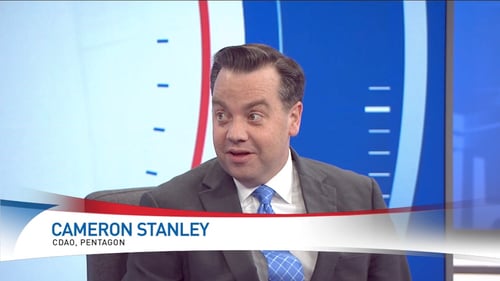 for Research and Engineering, the CDAO is more tightly integrated into the Pentagon’s innovation ecosystem, accelerating collaboration and operational AI adoption across the force.
Key Takeaways:
- GenAI.mil scaled fast, reaching over half a million users in its first week and rapidly expanding beyond basic productivity tasks.
- User behavior is shaping the roadmap, with increasingly complex queries driving future capability development.
- AI is now closer to the fight, as the CDAO’s move under Research and Engineering strengthens collaboration and speeds operational impact.