

Original Broadcast Date: 03/15/2026
Presented by Maximus
This episode of Fed Gov Today explores how emerging technologies and strategic partnerships are reshaping government operations—from weather forecasting to customer service and global supply chains.
First, NOAA reveals a major breakthrough in weather prediction powered by artificial intelligence. Senior scientist Vijay Tallapragada explains how new AI models can generate a 10-day weather forecast in under a minute—compared to roughly three hours with traditional models—while using only a fraction of the computing power. Rather than replacing existing systems like the Global Forecast System, the AI tools augment them, allowing forecasters to run hundreds of ensemble predictions faster and deliver more timely insights to emergency managers and the public. The effort, launched under Project Eagle, demonstrates how public-private collaboration and DevOps practices can accelerate innovation in government.
Next, Maximus’ Mike Owens discusses how agencies can transform contact centers from reactive call hubs into proactive “mission intelligence engines.” By analyzing data from citizen interactions across digital channels, agencies can uncover systemic issues—such as confusing forms—and improve both service delivery and cost efficiency. AI-powered self-service tools, paired with human oversight, are becoming central to this evolution.
Finally, USTDA Deputy Director Thomas Hardy highlights how public-private partnerships are strengthening global infrastructure and supply chains. Through early-stage investments and collaboration with U.S. industry, the agency helps turn promising international infrastructure projects into export opportunities that benefit American companies and workers.
NOAA’s AI Weather Revolution: From 3 Hours to 60 Seconds
NOAA is launching a new generation of AI-powered weather forecasting tools that dramatically accelerate prediction speed while reducing computing costs. Vijay Tallapragada, senior scientist at NOAA’s Environmental Modeling Center, explains that the new models can generate a 10-day forecast in under a minute—compared to roughly three hours with traditional systems—using just a fraction of the computing power. Rather 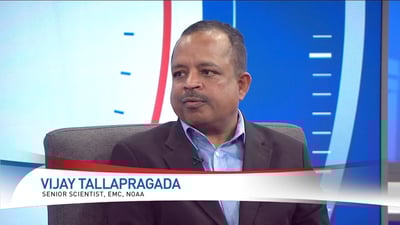 than replacing the Global Forecast System, the AI tools enhance it by running large ensemble forecasts more quickly and improving accuracy. Developed through Project Eagle and partnerships with the private sector, the initiative demonstrates how AI, DevOps practices, and public-private collaboration can rapidly modernize mission-critical government capabilities.
Key Takeaways:
- NOAA’s new AI forecasting models can generate a 10-day weather forecast in under a minute while using a fraction of the computing power required by traditional systems.
- The AI tools are designed to augment—not replace—the Global Forecast System, enabling faster ensemble forecasting and more accurate medium-range predictions.
- NOAA’s rapid rollout through Project Eagle and public-private partnerships shows how DevOps practices and AI collaboration can accelerate innovation in government operations.
Your Agency’s Contact Center Isn’t a Cost Center—It’s a Mission Intelligence Engine
Government contact centers are evolving from simple call hubs into powerful engines for improving citizen services. Mike Owens of Maximus explains that modern contact centers must integrate voice, digital, chat, and email into a unified “digital front door” experience. By analyzing the data from citizen interactions, agencies can identify systemic problems—like confusing forms or inefficient processes—and fix them upstream. 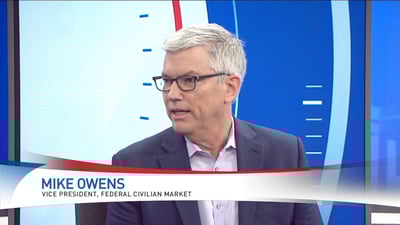 Artificial intelligence is also enabling self-service tools that answer routine questions while keeping humans in the loop for complex issues. Agencies that treat contact centers as strategic intelligence sources rather than reactive help desks can improve customer experience, reduce costs, and deliver services faster.
Key Takeaways:
- Modern contact centers should function as mission intelligence engines, using citizen interaction data to improve programs and services.
- AI-powered self-service tools can resolve routine inquiries quickly while maintaining human oversight for complex cases.
- True customer experience transformation requires omnichannel orchestration, integrating voice, chat, web, and email into a single seamless experience.
How U.S. Partnerships Abroad Are Fueling a $220-to-$1 Export Engine
The U.S. Trade and Development Agency is strengthening global infrastructure and supply chains through strategic public-private partnerships. Deputy Director Thomas Hardy explains that USTDA helps turn promising infrastructure concepts in emerging markets into bankable projects by partnering with U.S. industry and funding early-stage project development. These efforts support priorities such as critical minerals, energy 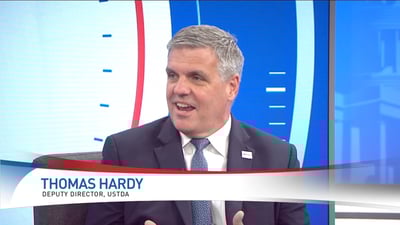 infrastructure, AI, and digital connectivity while expanding markets for American technology and services. By combining diplomatic engagement with industry expertise, USTDA helps partner countries make better infrastructure investments and delivers significant economic returns—generating more than $220 in U.S. exports for every dollar the agency invests.
Key Takeaways:
- USTDA helps transform infrastructure ideas in emerging markets into bankable projects that create export opportunities for U.S. companies.
- Public-private partnerships are critical to advancing strategic sectors like critical minerals, energy, AI infrastructure, and digital connectivity.
- The agency’s model delivers strong economic returns, generating over $220 in U.S. exports for every dollar invested.