

Original Broadcast Date: 04/05/26
This episode of Fed Gov Today dives into three major forces reshaping the federal landscape: energy innovation, fraud prevention, and real estate transformation.
First, DARPA’s ambitious “Fleetwood” program is rethinking how the military sources energy in contested environments. By converting globally abundant biomass—like agricultural and forestry waste—into fuel and critical materials, the initiative could reduce reliance on traditional supply chains. A key challenge lies in processing lignin, a tough plant polymer historically treated as waste. DARPA aims to unlock its value through advanced catalysts, potentially creating a resilient, dual-use bioeconomy that benefits both defense and civilian industries.
Next, the episode highlights the White House’s new fraud task force, tackling an estimated $250–$500 billion annual problem. Experts emphasize that fraud is evolving rapidly, fueled by technologies like AI, while government responses lag behind. The task force aims to improve coordination, data sharing, and prevention strategies, shifting focus from compliance to proactive fraud detection and stopping payments before they occur.
Finally, the General Services Administration’s push to sell underutilized federal buildings signals a broader shift in government real estate strategy. While faster disposals are underway, experts warn that piecemeal sales without a cohesive redevelopment plan could limit long-term value. Collaboration between federal and local governments will be key to maximizing economic and community impact.
Together, these stories reveal a federal government navigating supply chain resilience, financial integrity, and structural transformation in a rapidly changing world.
Turning Trash Into Tactical Power: DARPA’s Bold Plan to Fuel the Future Battlefield
DARPA’s “Fleetwood” program is aiming to revolutionize military logistics by transforming everyday biomass—like agricultural and forestry waste—into fuel and critical materials for warfighters operating in contested environments. Program manager William Mounfield explains that traditional supply chains may not hold up in future conflicts, driving the need for locally sourced, sustainable alternatives. The key lies in unlocking lignin, a complex plant polymer long considered waste, and converting it into valuable chemicals using advanced catalysts. By expanding beyond single-product solutions, DARPA hopes to create flexible production pathways tailored to different regions and biomass types worldwide.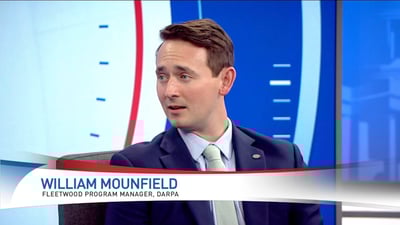
If successful, Fleetwood could dramatically expand the bioeconomy, reduce reliance on foreign resources, and deliver dual-use benefits—supporting both military operations and everyday commercial products like plastics and advanced materials.
Key Takeaways:
- DARPA is exploring how to convert globally abundant biomass into fuel and materials to support military operations in contested logistics environments.
- The program focuses on unlocking lignin, a traditionally discarded plant material, using advanced catalysts to create high-value products.
- If successful, Fleetwood could build a resilient, dual-use bioeconomy that reduces reliance on foreign supply chains.
The $500 Billion Problem: Inside Washington’s Urgent War on Fraud
A new White House fraud task force is taking aim at what experts estimate could be up to $500 billion in annual losses across the federal government. Robert Shea explains that while agencies have long been required to track and report fraud, many have fallen into a compliance mindset rather than actively preventing it. Meanwhile, fraudsters are evolving leveraging technologies like artificial intelligence to scale scams faster than government systems can keep up.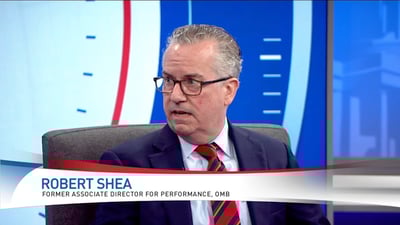
The task force, led by the Vice President, brings high-level attention and cross-agency coordination to the issue, with a focus on better data sharing, identity verification, and prevention tools like Treasury’s “Do Not Pay” system. Success won’t just be measured by fraud detected, but by how much is stopped before payments go out—ensuring taxpayer dollars are protected and directed toward legitimate programs.
Key Takeaways:
- The federal government may be losing up to $500 billion annually to fraud, highlighting the scale of the challenge.
- Agencies must shift from compliance-based reporting to proactive fraud prevention as fraudsters increasingly use advanced technologies like AI.
- The new task force aims to improve coordination, data sharing, and prevention tools to stop fraudulent payments before they occur.
Selling Off Washington: The High-Stakes Gamble Behind Federal Building Deals
The federal government is accelerating efforts to sell off underused office buildings, but experts warn speed shouldn’t come at the cost of long-term value. Norman Dong explains that while it’s a positive shift away from the government’s past “hoarder mentality,” current sales are often happening one-by-one without a broader redevelopment strategy. That piecemeal approach can limit both economic potential and buyer interest, especially when developers face high costs, regulatory hurdles, and years of uncertainty before seeing returns.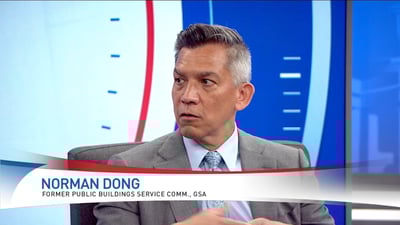
He argues that stronger coordination between federal and local governments is critical—aligning property sales with neighborhood-wide plans to maximize impact. Past examples show that when government entities work together, they can drive major urban revitalization. Without that alignment, however, these deals risk leaving value on the table for taxpayers and slowing the transformation of key areas in Washington, D.C.
Key Takeaways:
- The federal government is accelerating the sale of underutilized buildings, moving away from years of delayed action.
- Selling properties without a broader redevelopment strategy can limit long-term value and create challenges for buyers.
- Strong collaboration between federal and local governments is essential to maximize redevelopment potential and economic impact.