

Original Broadcast Date: 02/08/2026
Presented by EY
This episode of Fed Gov Today dives deep into how federal agencies are rethinking technology modernization—with speed, reuse, and trust at the center of the mission. Kicking things off, EY’s George Kaczmarskyj explains why low-code application platforms (LCAPs) are becoming a powerful tool for government transformation. Originally popularized in the financial sector, low-code platforms allow agencies to move faster from idea to production, address developer shortages, and deliver consistent user experiences across systems. Kaczmarskyj highlights how pre-built integrations can dramatically reduce risk in complex environments like HR and financial systems, where thousands of connections create opportunities for failure. Looking ahead, he points to artificial intelligence as a force multiplier—boosting productivity across the software development lifecycle and even reducing long-term vendor lock-in.
The conversation then shifts to healthcare modernization at the Department of Health and Human Services, with HRSA Administrator Tom Engels outlining the agency’s expansive mission. HRSA supports more than 32 million patients annually, many in rural, underserved, and medically vulnerable communities. Engels details how HRSA is modernizing technology while keeping people at the center—expanding telehealth, improving electronic health record interoperability, and making innovation affordable for resource-constrained providers.
Engels also discusses HRSA’s role in major administration priorities, including rural healthcare investment, maternal health, ending the HIV epidemic, and the “Make America Healthy Again” initiative. A key focus is modernizing the Organ Procurement and Transplantation Network to restore trust, integrity, and fairness through better oversight and new technology. Throughout the episode, one theme is clear: smart tech modernization—done right—can directly improve outcomes, dignity, and trust for millions of Americans.
Speed to Mission: How Low-Code Is Quietly Rewiring Federal IT
In this segment, EY’s George Kaczmarskyj breaks down why low-code application platforms are gaining serious momentum across the federal government. Once widely adopted in the financial sector, low-code tools are now helping agencies modernize faster by dramatically shortening the time from requirement to deployment—an advantage Kaczmarskyj calls critical when “minutes to mission matter.” He explains how low-code platforms address two major federal challenges at once: aging legacy systems and a shortage of highly specialized developers. With built-in standards and consistent user interfaces, low-code enables rapid prototyping, stronger stakeholder engagement, and fewer surprises late in 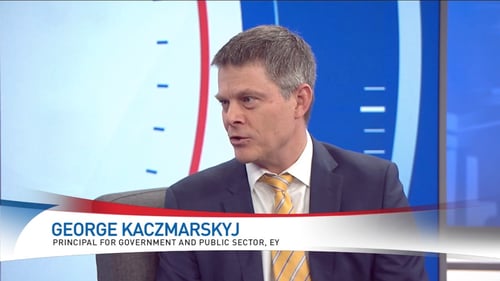 development.
Kaczmarskyj also highlights the value of pre-built integrations, which reduce risk when connecting new applications to complex HR, financial, and operational systems. Looking ahead, he points to artificial intelligence as a game changer, with AI embedded directly into low-code platforms to accelerate requirements gathering, development, testing, and migration—giving agencies more flexibility while reducing long-term vendor lock-in.
Key Takeaways:
- Low-code application platforms are helping federal agencies dramatically speed up modernization by shortening the path from requirements to deployment.
- Built-in standards, consistent user interfaces, and pre-built integrations reduce risk and errors when modernizing complex HR, financial, and operational systems.
- Embedded artificial intelligence in low-code platforms is boosting developer productivity, enabling faster migration, and reducing long-term vendor lock-in for agencies.
Rebuilding Trust and Care: Inside HRSA’s Healthcare Tech Reset
In this segment, HRSA Administrator Tom Engels outlines how the agency is modernizing healthcare delivery while keeping vulnerable patients at the center of every decision. Serving more than 32 million people each year—many in rural and medically underserved communities—HRSA is upgrading technology to expand access, improve coordination, and stretch limited resources. Engels highlights efforts to improve electronic health record interoperability across federally qualified health centers, expand telehealth services, and make advanced tools financially viable for small and rural providers.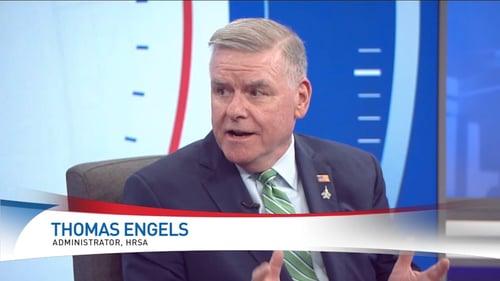
He also details HRSA’s role in advancing administration priorities, including rural healthcare investment, maternal health, and the “Make America Healthy Again” initiative. A major focus is the modernization of the Organ Procurement and Transplantation Network, aimed at restoring integrity, transparency, and trust in organ allocation. Engels emphasizes that technology, including artificial intelligence, is being used to improve grant oversight, increase efficiency, and ensure taxpayer dollars deliver real, measurable health outcomes.
Key Takeaways:
- HRSA’s modernization efforts focus on expanding access to care—especially for rural and underserved communities—through interoperable EHRs, telehealth, and affordable technology.
- Reforms to the Organ Procurement and Transplantation Network are centered on restoring trust, ethics, and transparency in how organs are allocated and managed.
- Artificial intelligence is helping HRSA improve grant oversight, drive efficiency, and ensure federal healthcare dollars deliver stronger, measurable outcomes.