

Original Broadcast: 01/11/2026
On this edition of Fed Gov Today with Francis Rose, federal leaders outline how autonomy, data, and coordination are reshaping government operations—from maritime security to military logistics and executive-branch reform.
The program opens with a deep dive into the Coast Guard’s newly established Program Executive Office for Robotics and Autonomous Systems. Anthony Antognoli, the Coast Guard’s first PEO for autonomy, explains how the service plans to invest roughly $350 million to deploy unmanned and AI-enabled systems spanning undersea, surface, air, and space domains. The effort aligns with the Coast Guard’s Force Design 2028 strategy and the Pentagon’s portfolio management approach, enabling faster fielding, full life-cycle management, and tighter integration with the joint force. Antognoli emphasizes that autonomy will expand operational reach, improve decision-making, and help the Coast Guard meet growing mission demands with constrained resources—marking what he calls the most significant transformation since the advent of aviation.
Next, Doug Noble of KPMG discusses supply chain visibility in a contested military environment. Drawing on his experience at the Defense Logistics Agency, Noble explains why data has become the most critical commodity in military logistics. End-to-end visibility, he says, allows planners to anticipate disruptions, manage risk, and sustain warfighters even as adversaries seek to target supply networks. He also highlights lessons the Pentagon can learn from private-sector responses to global supply chain shocks.
The episode concludes with a conversation with GAO’s Jessica Lucas-Judy, who outlines the “Big Four” executive branch challenges for 2026: federal disaster assistance, cybersecurity and critical infrastructure protection, human capital management, and Postal Service restructuring. She explains how GAO identifies high-risk areas and why coordination and whole-of-government approaches are essential to delivering better outcomes for the public.
From Sea Floor to Space: The Coast Guard’s Autonomy Revolution
The opening segment of Fed Gov Today with Francis Rose focuses on the Coast Guard’s most significant modernization effort in decades: the creation of a new Program Executive Office for Robotics and Autonomous Systems. Anthony Antognoli, the service’s first PEO for autonomy, explains how the Coast Guard plans to invest approximately $350 million to deploy unmanned and AI-enabled systems across the maritime domain—undersea, surface, air, and even space.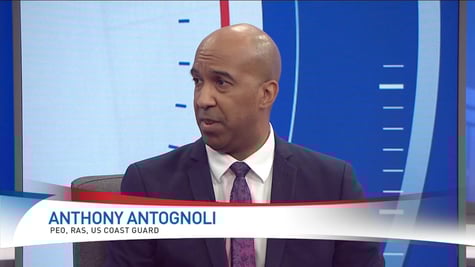
The initiative is a core pillar of the Coast Guard’s Force Design 2028 strategy, aimed at transforming the service into a more agile and capable force as mission demands continue to grow while resources remain constrained. Antognoli describes autonomy as a force multiplier, expanding operational reach, increasing time on scene, and providing operators with greater decision space through integrated sensors and data-driven tools.
For the first time in Coast Guard history, a single, centralized office will manage the full life cycle of autonomous capabilities, from requirements and prototyping to fielding, sustainment, and operator feedback. The structure closely aligns with the Pentagon’s new portfolio management approach, ensuring interoperability with the joint force and seamless integration with Department of Defense systems.
Antognoli calls the shift toward autonomy the biggest transformation of the Coast Guard since the introduction of aviation, fundamentally changing how the service executes all 11 of its statutory missions.
Three Key Takeways:
- The Coast Guard’s creation of a centralized Program Executive Office for Robotics and Autonomous Systems marks its most significant operational transformation since the introduction of aviation.
- By investing roughly $350 million in autonomous and AI-enabled systems, the service aims to expand operational reach and decision-making across all maritime domains with fewer resources.
- Aligning autonomy development with Pentagon portfolio management ensures faster fielding, full life-cycle oversight, and seamless integration with the joint force.
Why Data Is the Pentagon’s Most Powerful Tool
The second segment of Fed Gov Today with Francis Rose examines how supply chain visibility is becoming a decisive factor in military readiness and warfighting success. Doug Noble, managing director for federal advisory at KPMG and former Director of Logistics Operations at the Defense Logistics Agency, explains why data—not fuel, food, or equipment—is now the Pentagon’s most critical asset.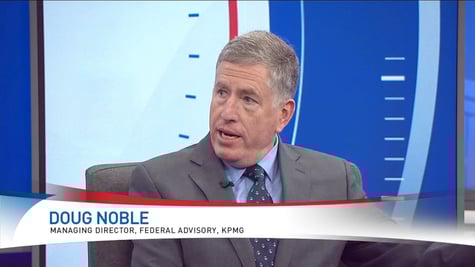
Noble defines supply chain visibility as the ability to see end-to-end across the logistics enterprise, from sub-tier suppliers to the warfighter on the front lines. This includes understanding demand signals, inventory levels, production capacity, transportation options, and storage constraints in real time. In an increasingly contested environment, adversaries are expected to target U.S. supply networks, making resilience and agility essential.
He emphasizes that enhanced data integration allows military planners to anticipate disruptions, rapidly adjust sourcing and transportation strategies, and sustain operations even under attack. Noble also highlights lessons the Department of Defense can draw from the private sector, particularly from how commercial supply chains adapted during COVID-era disruptions and global transportation bottlenecks.
By leveraging data-driven insights and adopting proven commercial practices, Noble argues, the Pentagon can strengthen logistics planning, reduce risk, and ensure the uninterrupted flow of supplies needed to support warfighters in future conflicts.
Three Key Takeways:
- Supply chain visibility has become a critical warfighting enabler, with data now more valuable to military logistics than any single physical commodity.
- End-to-end insight across suppliers, transportation, and inventory allows the Pentagon to anticipate disruptions and adapt quickly in a contested operational environment.
- The Pentagon can strengthen logistics resilience by applying private-sector lessons learned from managing global supply chain shocks and disruptions.
The Big Four Warnings for Government in 2026
The final segment of Fed Gov Today with Francis Rose focuses on the Government Accountability Office’s assessment of the most pressing challenges facing the executive branch in 2026. Jessica Lucas-Judy, Director of Strategic Initiatives at GAO, outlines the “Big Four” high-risk areas highlighted in recent testimony to Congress: federal disaster assistance, cybersecurity and critical infrastructure protection, federal human capital management, and restructuring the U.S. Postal Service.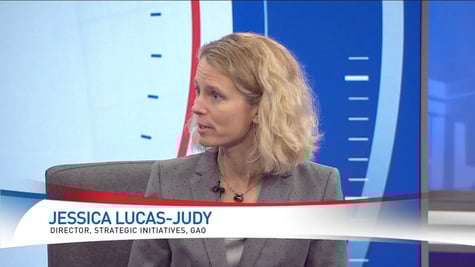
Lucas-Judy explains that while GAO’s High Risk List includes 38 areas, these four were elevated because of their broad impact on the public, significant financial exposure, and the urgent need for reform. She notes that disasters are becoming more frequent and severe, placing increasing strain on a fragmented federal response system involving dozens of agencies. Improving coordination and simplifying access to assistance are key priorities.
The discussion also explores how GAO determines which programs are placed on—or removed from—the High Risk List, focusing on leadership commitment, capacity, funding, data, and measurable progress. Lucas-Judy emphasizes that successful reforms often share common themes, including strong interagency collaboration, clear roles and responsibilities, and transparent communication with Congress and the public.
Rather than prescribing solutions, GAO’s role is to identify risks and outcomes that require attention. Addressing these challenges, Lucas-Judy argues, is critical to improving government performance and delivering better results for the American people.
Three Key Takeaways:
- GAO identified federal disaster assistance, cybersecurity and critical infrastructure protection, human capital management, and Postal Service restructuring as the most urgent executive-branch risks heading into 2026.
- Many of the government’s highest-risk challenges persist because fragmented responsibilities and limited coordination make it difficult to deliver clear, effective services to the public.
- Agencies that successfully reduce risk tend to share strong leadership commitment, better data sharing, and a whole-of-government approach focused on outcomes rather than process.