

Original Broadcast Date: 03/08/2026
Presented by Rancher Government Solutions
This episode of Fed Gov Today, sponsored by Rancher Government Solutions, explores three major forces shaping the future of federal technology and operations: the Army’s expanding push for Modular Open Systems Architecture (MOSA), the Pentagon’s accelerating move toward edge computing, and the budget pressures agencies face as appropriations deadlines approach.
First, Major Domoniqué Hittner Ph.D. of the U.S. Army explains how the service is evolving MOSA from a hardware-focused concept into a software-driven digital engineering ecosystem. The Army is working to unify fragmented engineering data across programs and portfolios, turning it into actionable mission intelligence. By establishing common standards, lifecycle requirements, and strong partnerships with industry and academia, the Army aims to streamline acquisitions and deliver more flexible, interoperable systems to soldiers. Hittner emphasizes that the goal is not just better technology but smarter processes—allowing leaders, acquisition teams, and frontline troops to access reliable data and upgrade systems faster.
Next, Rancher Government Solutions CTO Adam Toy discusses the Pentagon’s push toward the “edge”—bringing computing power and AI capabilities closer to the warfighter. As connectivity becomes less reliable in contested environments, mission-critical applications must operate in air-gapped or disconnected conditions. Toy highlights how modern platforms are designed to simplify deployments, enabling soldiers to launch secure applications with minimal technical expertise while maintaining strict security standards.
Finally, Congressional Budget Office Director Phillip Swagel breaks down the complex fiscal landscape agencies face as fiscal year deadlines, continuing resolutions, and potential shutdowns complicate planning. Despite the uncertainty, Swagel notes the resilience of the federal financial management workforce as it balances immediate funding challenges with long-term mission priorities.
The Army’s Software Revolution: How MOSA Is Changing Military Technology
U.S. Army Maj. Domoniqué Hittner Ph.D. joined Fed Gov Today to discuss how the Army is expanding its use of Modular Open Systems Architecture (MOSA) and building a digital engineering ecosystem to support it. The Army is shifting MOSA beyond hardware and into software and data, allowing engineering information from across programs to be connected and turned into actionable mission intelligence.
Hittner explained that the Army is establishing standards, technology adoption metrics, and lifecycle requirements earlier in the acquisition  process. By defining expectations upfront in policies, contracts, and requests for proposals, the Army aims to create more interoperable and flexible systems while strengthening collaboration with industry and academic partners.
She also emphasized the importance of the Army’s technical workforce, including acquisition experts and engineers who help guide complex technology decisions. Ultimately, the goal is to give leaders and soldiers access to better, more adaptable systems that can evolve with changing missions and deliver faster, smarter capabilities to the warfighter.
Key Takeaways:
- The Army is expanding MOSA from hardware to software through a new digital engineering ecosystem.
- Early standards and lifecycle planning aim to create more flexible, interoperable systems.
- The Army’s technical workforce is key to delivering better technology to soldiers.
Why the Pentagon Is Pushing AI and Computing to the Battlefield Edge
Adam Toy, Chief Technology Officer at Rancher Government Solutions, joined Fed Gov Today to explain why the Pentagon is rapidly moving computing power and AI capabilities to the “edge.” As military operations face increasingly contested and disconnected environments, relying on centralized cloud or data center connectivity is no longer realistic. Instead, mission-critical applications must run closer to the warfighter.
Toy described the edge as a flexible concept that can range from wearable technology and tactical kits to ships, satellites, or even disconnected data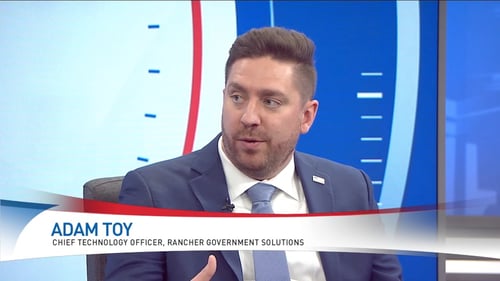 centers. Advances in hardware, GPUs, and compact computing systems are making it possible to run powerful applications in these environments.
One major challenge is simplicity. Soldiers and operators should be able to deploy secure applications without deep technical expertise. Platforms must enable secure, zero-touch deployments even in air-gapped environments. Ultimately, Toy said the goal is to build flexible, secure systems that allow mission applications to run anywhere the mission requires.
Key Takeaways:
- The Pentagon is pushing computing power and AI capabilities closer to the battlefield edge.
- Edge environments require systems that work even in disconnected or air-gapped conditions.
- New platforms aim to make deploying secure applications simple for soldiers in the field.
The Federal Budget Crunch: What Agencies Are Up Against This Year
Phillip Swagel, Director of the Congressional Budget Office, joined Fed Gov Today to discuss the complicated budget environment federal agencies are navigating. With fiscal year appropriations still unfinished, a partial shutdown affecting DHS, and the next budget cycle already beginning, agencies must manage multiple financial timelines at once.
Swagel explained that agencies constantly monitor Capitol Hill as appropriations committees review spending, evaluate programs, and determine funding levels. While some assume the President’s budget proposal has little impact, Swagel noted it still plays an important role by signaling 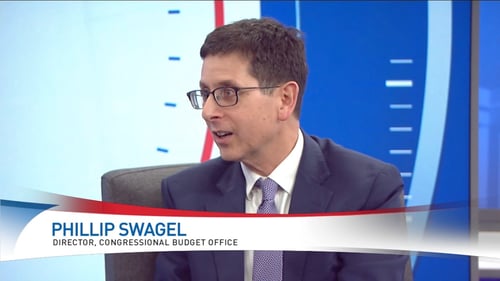 priorities that influence congressional discussions.
For financial management professionals, the biggest challenge is balancing short-term execution with long-term planning. Agencies must ensure employees are paid and programs operate smoothly while also preparing for future priorities and potential funding changes. Swagel praised the resilience of the federal financial management community, which continues adapting despite uncertainty and shifting fiscal conditions.
Key Takeaways:
- Agencies are managing overlapping budget timelines while FY26 appropriations remain unfinished.
- The President’s budget proposal still influences congressional funding priorities.
- Financial management teams must balance day-to-day operations with long-term agency planning.