

Original Broadcast Date: 02/15/2026
Presented by Maximus
This week on Fed Gov Today, the future of naval warfare takes center stage. In an exclusive interview, the Chief of Naval Operations unveils new “Fighting Instructions” to the fleet—deliberately not a strategy or concept, but clear, operational orders for how the Navy will fight and win with the resources it has. Built around four campaign areas—battle ready sailors, a battle ready force, force design for today and tomorrow, and global battle integration—the guidance emphasizes flexibility, tailored force packages, and a high-low mix of platforms to counter peer adversaries. With recruiting and retention at record highs, the Navy is focused on quality of service, infrastructure modernization, combat surge readiness, and a forthcoming Force Design 2045 plan aimed at delivering a larger, more adaptable fleet. Central to that vision: integrating unmanned and autonomous systems to make the Navy “punch above its weight.”
The episode also explores a critical bottleneck in defense innovation: deployment. Industry leaders argue agencies must stop chasing perfection and instead field “80% solutions” that are secure, operational, and rapidly delivered to warfighters. Building security in from the start and maintaining tight feedback loops with end users are key to closing the gap between software factories and mission impact.
Finally, Navy leaders outline the push toward “unmanned dominance,” scaling from dozens to potentially thousands of autonomous systems. Through digital modeling, joint testing, and allied integration, the Navy is redefining air dominance—ensuring manned and unmanned systems fight as one cohesive, interoperable force.
Tailored Offsets and Total Readiness: The Navy’s Plan to Outmatch Any Adversary
At WEST 2026, Admiral Daryl Caudle unveiled new “Fighting Instructions” to the fleet—deliberately framed not as strategy, but as clear, actionable direction for how the Navy must fight and win. Caudle emphasized that the Navy cannot rely on a one-size-fits-all force structure in an era of peer competition and constrained resources. Instead, he is driving a more flexible, tailored approach that blends high-end combat power with scalable options commanders can deploy globally.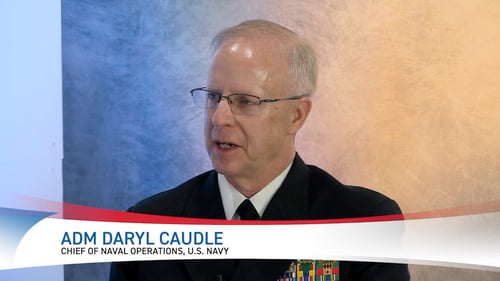
His guidance centers on four priorities: battle-ready sailors, a battle-ready force supported by world-class infrastructure, a future-focused force design, and deeper global integration with joint and allied partners. Caudle highlighted record recruiting and retention while acknowledging readiness gaps that still demand attention.
A key theme: unmanned and autonomous systems will serve as “tailored offsets,” enabling the Navy to punch above its weight and deliver decisive combat power without waiting for a carrier strike group to arrive.
Key Takeaways:
- The Navy must move beyond a one-size-fits-all force and build flexible, tailored packages that can mass combat power where needed while maintaining global presence.
- Readiness starts with battle-ready sailors and world-class infrastructure, ensuring the fleet can surge, sustain operations, and close persistent readiness gaps.
- Integrating unmanned and autonomous systems as “tailored offsets” will allow the Navy to punch above its weight and deliver decisive advantage in future conflicts.
Stop Chasing Perfect: Why 80% Solutions Win the Fight
At WEST 2026, Maximus Vice President Bryan Martz delivered a blunt message to defense leaders: perfection is the enemy of progress. While the services have built powerful software factories, Martz says the real bottleneck isn’t development speed—it’s deployment. Too many programs stall chasing the final 5–10% of requirements, burning time and money while warfighters wait.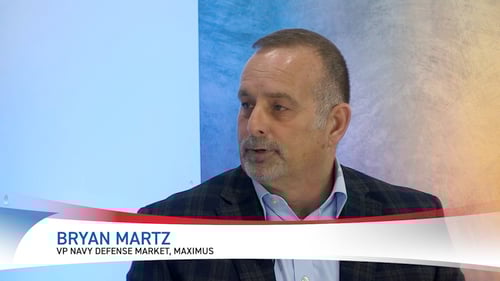
His solution? Field secure, mission-ready capabilities at “80%” and iterate from there. That means baking cybersecurity and ATO requirements into systems from day one, not bolting them on at the end. It also means constant, honest communication between industry, program managers, and operators to ensure tools match evolving mission needs.
Martz, a former operator, warned that systems built in isolation often end up unused. The key to closing the gap between innovation and impact: accelerate delivery, embrace iterative demos, and stay tightly connected to the end user—because operational now beats perfect later.
Key Takeaways:
- Chasing the final 5–10% of perfection delays mission impact, while secure, operational “80% solutions” can deliver value to warfighters immediately.
- Security and ATO requirements must be built into systems from the beginning rather than added at the end to avoid deployment bottlenecks.
- Constant, iterative communication between industry, program managers, and end users is critical to ensuring technology keeps pace with evolving mission needs.
Unmanned Dominance: How the Navy Plans to Overwhelm the Next Fight
Rear Admiral Keith Hash says the future of air dominance won’t be manned or unmanned—it will be both, fully integrated and unstoppable. As the Navy scales from dozens to potentially thousands of autonomous systems, the challenge is no longer access to technology, but interoperability and integration at speed.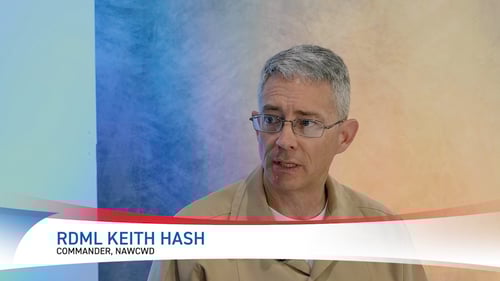
Hash emphasized that dominance means never entering a fair fight. Unmanned systems must operate in contested, cyber-denied, and kinetically hostile environments—and they must work seamlessly alongside manned platforms, joint forces, and allied partners. That requires clear standards, constant iteration with industry, and realistic testing environments both at sea and in advanced digital simulations.
To accelerate learning, the Navy is demanding digital models alongside hardware, enabling thousands—if not millions—of virtual test runs before deployment. The message is clear: unmanned systems aren’t experimental add-ons. They are central to the Navy’s future fight—and interoperability will determine whether they deliver decisive advantage.
Key Takeaways:
- Scaling unmanned systems only delivers advantage if they are fully interoperable with manned platforms, joint forces, and allies in contested environments.
- Requiring digital twins and leveraging virtual testing environments allows the Navy to iterate faster, learn earlier, and field more resilient systems.
- Continuous, hands-on collaboration between government and industry is essential to ensure unmanned platforms meet real-world operational demands and evolving threats.