

Original Broadcast Date: 04/19/2026
Presented by Abnormal AI
This episode of Fed Gov Today dives into two major forces reshaping government: the explosive rise of AI-driven cyber threats and a critical modernization milestone at the Department of Veterans Affairs.
Our conversation with Abnormal AI's John Sourk explores how artificial intelligence is rapidly transforming the cyber battlefield. Federal agencies have doubled their AI use cases in just a year, but attackers are moving even faster—using AI to scale phishing, exploit trust, and bypass traditional defenses. Experts warn that AI has “compressed the attacker advantage,” making cyber threats more sophisticated, personalized, and harder to detect. In response, agencies are shifting toward behavior-based detection, automation, and removing humans from certain decision loops to keep pace. At the same time, leaders are prioritizing tightly scoped, defensive AI deployments to reduce risk and build trust internally.
The second half of the program focuses on the VA’s long-awaited electronic health record (EHR) rollout across four Michigan sites—a major step after years of setbacks. Deputy Secretary Paul Lawrence details how leadership, standardization, staff engagement, and improved vendor performance helped ensure a smooth “go-live.” Unlike earlier failures, this rollout emphasized training, hands-on learning, and listening to frontline staff. Early feedback has been positive, with improved workflows and usability.
Lawrence also highlights broader VA progress, including dramatic reductions in the disability claims backlog and faster processing times. Looking ahead, the VA plans an aggressive multi-year expansion of the EHR system while continuing to modernize services and improve the veteran experience—balancing ambition with lessons learned from past missteps.
Hackers Are Using AI Faster Than Government Can Respond
In this segment, John Sourk of Abnormal AI breaks down how artificial intelligence is fundamentally reshaping the cyber threat landscape—and why federal agencies are scrambling to adapt. The number of AI use cases across government has surged, but adversaries are already ahead, using AI to automate and scale attacks at unprecedented speed. Sourk explains that AI has “compressed the attacker advantage,” making it easier than ever for bad actors to craft sophisticated phishing campaigns, learn system vulnerabilities, and launch targeted intrusions.
One of the most concerning trends is the weaponization of trust. Attackers are increasingly targeting users outside traditional government systems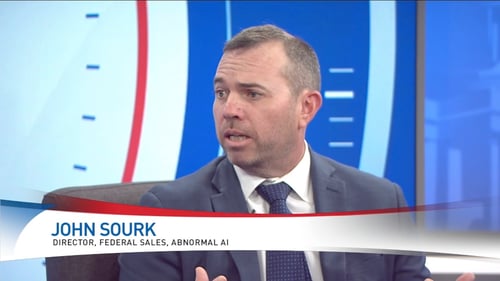 —like personal mobile devices—to capture credentials and gain network access without ever touching secured endpoints. These evolving tactics make traditional defenses less effective.
To counter this, agencies are shifting toward AI-driven defenses that focus on behavioral analysis rather than known threats. Sourk emphasizes the need for faster, cheaper incident response and, in some cases, removing humans from the loop to match machine-speed attacks. He also highlights a growing strategy among CIOs and CISOs: deploying AI in tightly scoped, defensive use cases to minimize risk while building confidence. The future, he suggests, will depend heavily on strong public-private partnerships to stay ahead.
Key Takeaways:
- AI is giving cyber attackers a major speed and scale advantage, making threats more frequent and harder to detect.
- Hackers are increasingly targeting human behavior and trust, especially through mobile devices and credential theft.
- Agencies are turning to AI-driven, behavior-based defenses and automation to keep up with machine-speed attacks.
VA Continues EHR Implementation with Multi-Site Launch
VA Deputy Secretary Paul Lawrence details a major milestone in the Department of Veterans Affairs’ long-troubled electronic health record (EHR) modernization effort. Four sites in Michigan have officially gone live with the new system, marking a turning point after years of setbacks.
Lawrence explains that this rollout succeeds where others struggled by focusing on strong leadership, standardization, and listening to frontline staff. Unlike earlier efforts that over-customized the system, the VA now emphasizes a consistent, enterprise-wide approach. Staff engagement is  also central—leaders spent months gathering feedback and ensuring employees understood how the system would impact their work.
Preparation plays a key role. Employees go through a structured training process that includes simulations, sandbox environments, and hands-on “learning labs,” followed by on-site support during launch. As a result, the transition is smooth, with early feedback highlighting improved workflows and ease of use.
Beyond technology, Lawrence highlights broader operational improvements at the VA, including significant reductions in the disability claims backlog and faster processing times. Looking ahead, the VA plans to expand the system nationwide through 2031, while maintaining a steady, disciplined approach to avoid past mistakes and improve care for veterans.
Key Takeaways:
- VA launched its new electronic health record system at four Michigan sites using a standardized, enterprise-wide approach.
- Extensive staff training, hands-on practice, and on-site support were key to a smooth rollout and positive early feedback.
- The VA plans to expand the system nationwide through 2031 while continuing to improve workflows and veteran services.