

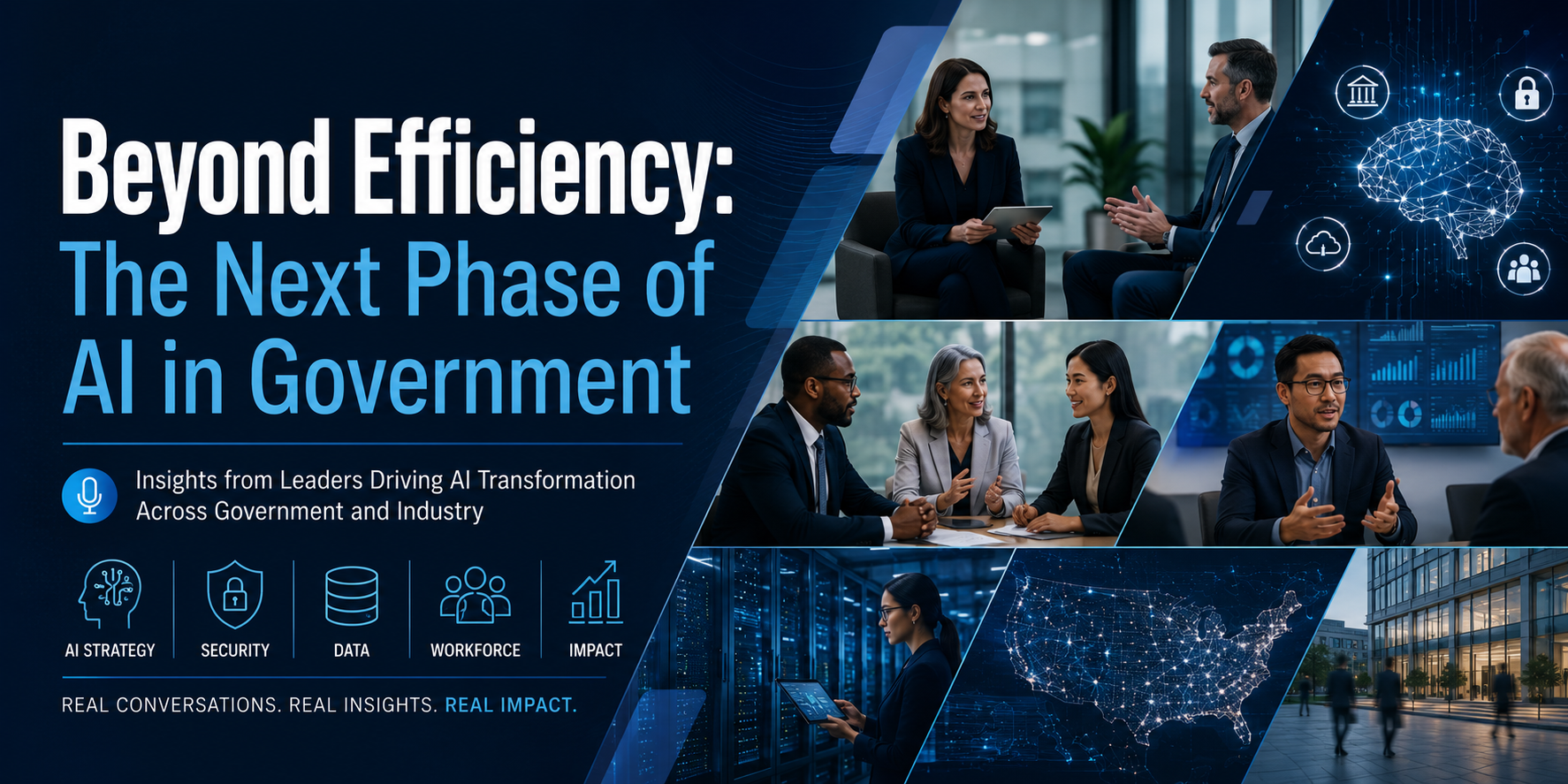
Presented by Carahsoft
The conversation around artificial intelligence in government is changing rapidly.
Just a year ago, much of the discussion centered on experimentation. Agencies were exploring use cases, evaluating large language models, and determining where AI could fit within existing operations. Today, those conversations have evolved. Government leaders are increasingly focused on operationalizing AI, scaling deployments, managing risk, and demonstrating measurable mission outcomes.
That evolution was on full display at the Carahsoft AI for Government Summit 2026, where government and industry leaders gathered to discuss the future of AI adoption across the federal landscape. While efficiency remains an important driver, a broader theme emerged throughout the event: the next phase of AI in government will be defined by trust, governance, cybersecurity, identity management, and value creation.
The organizations that succeed in the AI era will not simply be the ones that deploy the most advanced technology. They will be the organizations that build the confidence, security, and operational frameworks necessary to scale AI responsibly while delivering meaningful outcomes.
Cybersecurity Must Be Embedded Throughout the AI Journey
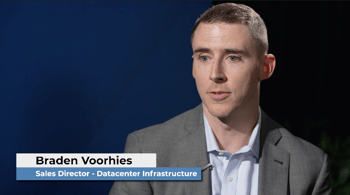 As agencies accelerate their adoption of artificial intelligence, cybersecurity can no longer be treated as a separate initiative. According to Braden Voorhies, Director of Data Center Infrastructure at Carahsoft, AI and cybersecurity must evolve together. Organizations investing in AI inevitably increase their exposure to cyber threats, making security a foundational component of every AI strategy. Voorhies noted that agencies are at different stages of their AI journeys, ranging from early experimentation to building dedicated AI environments, but regardless of where they are, cybersecurity must remain a constant priority. He emphasized that successful AI adoption requires close collaboration between AI and cybersecurity teams to ensure innovation is pursued in a secure and responsible manner. Drawing on Carahsoft's work with technology partners and public sector customers, Voorhies highlighted the importance of protecting the data that powers AI initiatives. As agencies modernize their infrastructure and expand AI capabilities, the ability to secure, manage, recover, and maintain trust in critical data assets will be just as important as the AI technologies themselves. In the years ahead, organizations that integrate cybersecurity into every phase of their AI journey will be better positioned to innovate with confidence while protecting mission-critical information.
Trust Is Becoming the Foundation of AI Adoption
As federal agencies move beyond pilot programs and begin deploying AI across mission environments, trust is becoming one of the most important factors determining success.
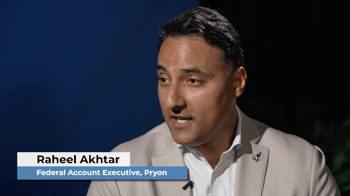 Raheel Akhtar, Federal Account Executive at Pryon, believes trust begins with transparency. While AI copilots, assistants, and agents have demonstrated tremendous potential to improve productivity, their value diminishes quickly if users cannot verify the information they receive.
For government organizations, particularly those operating in acquisition, intelligence, and mission-critical environments, explainability is essential. Users need confidence that AI-generated information is accurate, attributable, and sourced from authoritative data. Akhtar emphasized the growing importance of retrieval-augmented generation architectures that connect AI outputs directly to agency-owned information repositories. By allowing users to trace responses back to original source documents, agencies can establish confidence in AI-generated recommendations while reducing concerns about hallucinations.
The importance of trust extends beyond individual responses and into the broader governance structures supporting AI systems.
📺 Watch Interview
Derek Claiborne, Head of National Security & Intelligence at Scale AI, argued that governance is often misunderstood as a barrier to innovation when, in reality, it is what enables innovation to scale safely. As agencies expand their AI deployments, understanding how data moves through s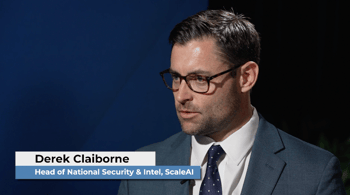 ystems, how models interact with workflows, and how outputs influence decisions becomes increasingly important.
Claiborne noted that testing and evaluation must become a core component of every AI strategy. Organizations need to understand where models perform well, where they drift, where they hallucinate, and how they behave under changing conditions. This becomes even more important as government moves toward agentic AI systems capable of operating with greater autonomy.
Rather than slowing innovation, governance provides the confidence necessary to move faster. Organizations that understand their systems and establish strong guardrails are far more likely to achieve sustainable AI adoption than those focused solely on rapid deployment.
Security and AI Are Becoming Inseparable
Cybersecurity was another recurring theme throughout the summit, particularly as agencies balance the opportunities created by AI with the risks associated with increasingly sophisticated adversaries.
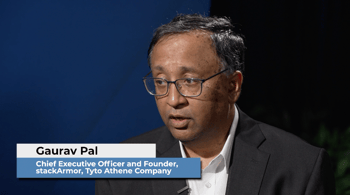 Gaurav Pal, CEO and Founder of stackArmor, described the current environment as one defined by two complementary challenges: securing AI systems and leveraging AI to improve cybersecurity operations.
Organizations are already seeing significant gains from AI-powered tools that help identify vulnerabilities, improve software development processes, and accelerate compliance activities. According to Pal, AI is increasingly acting as an intelligent security advisor that can assist developers in real time, helping them identify potential weaknesses before they become operational risks.
These capabilities are delivering measurable productivity improvements while simultaneously strengthening security outcomes. As agencies continue to modernize legacy environments and accelerate software delivery, AI-enabled security tooling may become one of the most impactful use cases in government.
At the same time, adversaries are leveraging many of the same technologies.
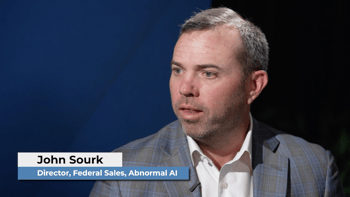 John Sourk, Director of Federal Sales at Abnormal AI, noted that nation-state actors are increasingly using AI throughout the cyber kill chain. Activities that once required days or weeks of preparation—including reconnaissance, target profiling, infrastructure creation, and attack development—can now be accomplished in a matter of minutes.
This acceleration fundamentally changes the defensive landscape. Security teams no longer have the luxury of extended response timelines. Instead, they must identify and respond to threats at machine speed.
Sourk believes behavioral AI will play an increasingly important role in helping agencies meet this challenge. By establishing baselines for normal user, system, and application behavior, AI can identify anomalies that may indicate malicious activity. This allows organizations to focus limited resources on the most significant threats while reducing alert fatigue and improving response effectiveness.
For defense and intelligence organizations, cybersecurity challenges extend beyond traditional enterprise networks.
 Ned Miller, Senior Vice President of Strategic Growth Initiatives at Everfox, highlighted the growing importance of protecting what many organizations now describe as the "decision advantage pipeline." This includes the data sources, models, inference engines, sensors, and communications infrastructure that collectively enable AI-driven decision making.
Whether information is being collected from satellites, autonomous systems, drones, or intelligence platforms, agencies must ensure the integrity of the entire process. Trust in AI outcomes depends on trust in the underlying data and infrastructure supporting those systems.
Miller also pointed to an emerging challenge that will become increasingly important in the years ahead: monitoring autonomous AI agents themselves. As organizations deploy more agentic capabilities, security teams must begin thinking beyond traditional insider threats and consider how autonomous agents operate within enterprise environments. The future of cybersecurity may increasingly involve monitoring not only people, but also the digital entities acting on their behalf.
Infrastructure, Observability, and Control Are Essential to AI Deployment
 AI deployment strategy is not only about selecting the right model or identifying the right use case. It also requires a secure, observable, and well-governed infrastructure foundation. Jay O'Brien, Solutions Architect at Equinix, emphasized that agencies should approach AI deployment through a framework that accounts for security, cost, observability, and network performance. In his view, the network plays a central role because data cannot deliver value if it remains isolated. By enabling private, secure access to cloud-based AI applications with low latency, agencies can better support mission needs while maintaining control over sensitive information. O'Brien also pointed to observability as a critical requirement, giving organizations visibility into who is using AI, what information is being shared, what responses are returned, and whether sensitive data is leaving approved environments. As AI adoption expands, that level of control will be essential for managing data sovereignty, limiting AI sprawl, and helping agencies build strategies that are secure, cost-conscious, and mission-ready.
Identity Will Define the Agentic Future
As AI becomes more autonomous, identity management is taking on new importance.
For years, government modernization efforts have emphasized strong identity and access management practices. The rise of agentic AI is expanding those requirements significantly.
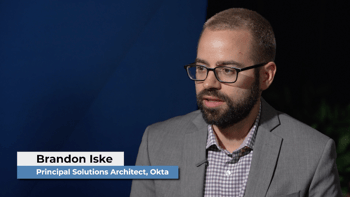 Brandon Iske, Principal Solutions Architect at Okta, believes organizations must begin thinking about AI agents as participants within enterprise ecosystems. These agents may access systems, retrieve information, execute tasks, and interact with applications on behalf of users or missions.
As a result, agencies need visibility into where AI agents exist, what resources they can access, and how they are governed.
Iske explained that many organizations are only beginning to understand the scope of this challenge. Some agents are deployed through approved enterprise platforms, while others may emerge through unmanaged tools or shadow IT environments. Before organizations can govern AI agents, they must first discover them.
Once identified, those agents should be managed using many of the same principles that govern human users. Least-privilege access, authentication, authorization, auditing, and credential management all remain critical in an agentic environment.
The challenge is particularly important because AI agents often rely on application programming interfaces, credentials, and permissions that can become attractive targets for attackers. Organizations that fail to extend identity governance to autonomous systems may unintentionally create new attack surfaces as AI adoption expands.
Identity has long been foundational to cybersecurity. In the AI era, it may become foundational to governance as well.
The Focus Is Shifting From Efficiency to Value
While much of the early discussion around AI focused on efficiency, several summit participants suggested that the conversation is beginning to move toward a more strategic question: how does AI create value?
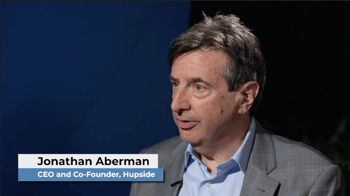 Jonathan Aberman, CEO and Co-Founder of Hupside, described what he calls "signal collapse"—a phenomenon in which organizations become overwhelmed by information but struggle to identify what truly matters.
The challenge facing government today is not a lack of information. It is the ability to determine which insights are meaningful and actionable.
According to Aberman, efficiency gains are only the first phase of AI adoption. Every transformative technology initially proves itself by helping organizations do things faster and cheaper. Eventually, however, the conversation shifts toward differentiation and value creation.
For government, that means improving mission outcomes, enhancing citizen services, strengthening national security, and enabling capabilities that previously did not exist.
Aberman believes AI will ultimately become invisible in much the same way personal computers, cloud computing, and the internet became embedded into daily operations. At that point, organizations will no longer compete based on access to AI technology. Instead, they will compete based on how effectively they use it.
The agencies that derive the greatest value from AI will be those that successfully combine human expertise, creativity, governance, and technology to solve meaningful problems. AI alone is not the differentiator. The differentiator is how organizations apply it.
Operationalizing Trust Will Define Success
The discussions at the AI for Government Summit made one thing clear: government has moved beyond the experimentation phase of AI adoption.
The conversation is now focused on operationalization.
Industry leaders consistently returned to the same themes. Trust must be established through transparency and explainability. Governance enables organizations to scale AI responsibly. Cybersecurity must evolve alongside increasingly sophisticated threats. Identity management must expand to encompass autonomous agents. And ultimately, AI initiatives must create measurable value rather than simply improving efficiency.
The future of AI in government will not be determined by the sophistication of models alone. It will be determined by the organizations that successfully operationalize trust.
Those agencies that can build secure, governed, transparent, and mission-focused AI ecosystems will be best positioned to unlock the full potential of artificial intelligence while delivering better outcomes for citizens, warfighters, analysts, and public servants alike.
As AI continues its transition from emerging technology to enterprise capability, that may prove to be the most important lesson of all.