

Presented by Appian
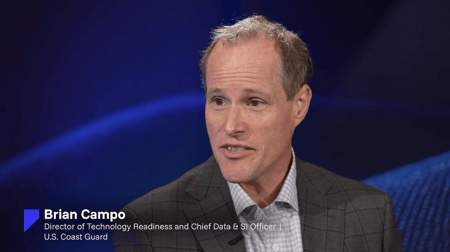
For Brian Campo, Director of Technology Readiness and Chief Data & SI Officer, U.S. Coast Guard, the measure of digital transformation is time returned to the people carrying out Coast Guard missions. Better technology should reduce administrative friction and give operators more opportunity to focus on the work they joined the service to do.
In a Fed Gov Today Spotlight recorded at Appian Government, Campo describes “minutes on mission” as a guiding measure across his technology responsibilities.
The approach begins with listening to the workforce. Campo describes digital transformation roadshows designed to reach Coast Guard districts and learn how personnel use technology, where it creates difficulty, and what would help them work more effectively.
Those conversations connect enterprise decisions to operational experience. A patrol may be followed by hours of administrative tasks, including transferring handwritten notes into another system. Reducing that repeated effort can create a direct benefit for crews.
 Campo also connects digital transformation with the Coast Guard’s Force Design work. Technology supports organizational priorities and operational outcomes across a service with diverse responsibilities, from maritime security to vessel inspections and environmental protection.
That variety makes the operator’s perspective particularly important. A common enterprise foundation must support people performing different missions in different environments. Campo says the workforce helps identify gaps and explain where existing tools introduce friction.
Connectivity is one part of that foundation. He describes an effort to extend connectivity across capital cutters, improving both mission support and the ability of personnel to stay connected while away from home.
More reliable connections also change how teams can design applications. Instead of assuming a system must always operate in isolation, developers can consider intermittent connectivity and ways to synchronize information when a connection returns.
Campo offers a boarding form as an example. Personnel can complete a digital record during an interaction even when disconnected. Once connectivity becomes available, the information can move into supporting systems.
That design can reduce the need to repeat paperwork after returning from the mission. It also gives users a more consistent experience across connected and disconnected conditions.
Connectivity brings security responsibilities as well as benefits. Campo acknowledges that a broader connected footprint creates challenges for cyber defense. At the same time, access to logs and real-time information can improve visibility into what is happening across systems.
AI adds another set of requirements. Campo emphasizes evaluating what a capability does, understanding the information it uses, and examining the provenance of that data. Responsible deployment depends on knowing whether the system is meeting its intended goals.
He also wants the relevant evaluation and governance information available to operators. People need context to assess what an AI tool presents and determine whether they have enough information to make a decision.
Accountability remains with the human. Campo makes clear that using AI does not transfer the responsibility for mission decisions to the technology.
The interview ties modernization to a concrete operational purpose: remove avoidable work, improve access to useful information, and keep people in control. Technology succeeds when those changes return more time to the mission.
3 Key Takeaways
- Use time returned to operators as a practical measure of digital transformation.
- Design tools around actual workflows and intermittent connectivity.
- Make AI evaluation and data governance visible enough to support accountable human decisions.