

Presented by Appian
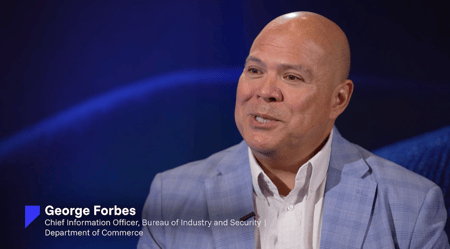
Modernization can stall when organizations assume that familiar processes are the right ones. George Forbes, Chief Information Officer, Bureau of Industry and Security, Department of Commerce, says leaders need to challenge that assumption, examine how work actually happens, and judge technology by the outcomes it helps people achieve.
In a Fed Gov Today Spotlight recorded at Appian Government, Forbes combines a call for deliberate experimentation with a willingness to question established habits. His message focuses on understanding real workflows before deciding how to improve them.
He begins with an analogy about zebras staying safely within a herd. In an organization, remaining with the pack can feel comfortable, but it can also prevent improvement. Forbes encourages leaders to try different approaches thoughtfully, with planning and an understanding of the risks.
One place to start is process analysis. Leaders often make decisions based on their own experience of how work is performed. That experience can be valuable, but it may not represent the many variations employees encounter today.
 Forbes describes using process mining and tools such as Appian to see those variations. Data can reveal that the path leaders consider typical accounts for less activity than expected. A change aimed at that assumed path might therefore have a smaller effect than intended.
The point is to supplement experience with evidence. Understanding actual behavior can help organizations direct effort toward the parts of a process where improvement will matter most.
Culture also shapes modernization. Forbes argues that people are more likely to adopt a different approach when it makes their work easier and reduces friction. Telling employees to change is less effective than giving them a clear reason to do so.
He highlights how temporary solutions can gradually become permanent. A pilot introduces a workaround, another team adopts it, and subsequent employees inherit it as the normal method. Over time, a series of improvised connections becomes the system.
Recognizing that history creates an opportunity to reconsider the process. Teams should ask whether a step still serves a purpose or survives mainly because someone has always done it that way.
Forbes also advocates considering commercial services for routine functions. Government does not necessarily need to build every capability itself, particularly where industry already offers established solutions.
He describes an as-a-service model as a way to reduce the burden of managing technical debt and keeping systems current. Agencies should focus on the work they need to accomplish while making deliberate decisions about which technology responsibilities to retain.
That leads to a different conversation about success. Instead of beginning with a detailed technology prescription, Forbes prefers to ask what result the customer needs. Efficiency, throughput, or another mission measure can provide a clearer target than a list of components.
Technical requirements still exist, but the user’s central concern is whether the service achieves its purpose. Evidence about real workflows, incentives for adoption, thoughtful use of commercial capabilities, and explicit outcomes can help agencies make changes that improve performance rather than preserve inherited complexity.
3 Key Takeaways
- Use process data to test assumptions about how work actually happens.
- Challenge temporary workarounds and habits that have become permanent operating methods.
- Define success through mission outcomes and consider commercial services where they fit the need.