

Presented by Appian
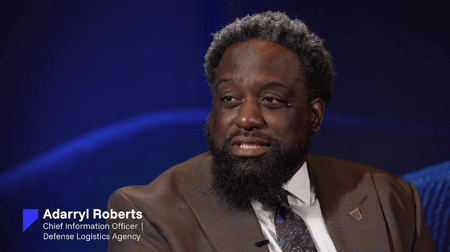
In a Fed Gov Today Spotlight recorded at Appian Government, Robert describes AI as a force multiplier that should support people while reducing the administrative work surrounding important decisions.
DLA’s earlier digital transformation work focused on technical debt, enterprise resource planning systems, and automation. Those foundations remain important, but Robert says the next stage involves becoming more predictive and improving decision advantage.
 Enterprise systems play a central role because they support the transactions behind distribution and disposition. Robert describes working with providers on capabilities designed around AI, including a progression from recommendations toward actions carried out with human oversight.
That shift requires attention to the workforce before implementation. Employees may see technology that resembles human behavior and wonder what it means for their roles. Robert says DLA is working with human resources to rethink jobs so employees can concentrate on critical thinking while reducing administrative burdens.
Training therefore extends beyond technical proficiency. Asking useful questions, engaging effectively, and evaluating recommendations become important skills. Employees also need experience working with AI to build appropriate trust in what it produces.
Robert compares that process to introducing a new person into an office. Colleagues do not automatically trust a newcomer’s recommendations; confidence develops through interaction and evidence. AI adoption has a similar cultural dimension.
Earlier automation work helped prepare DLA for that transition. Automation required understanding processes, making them repeatable, and deciding what to do when something went wrong. Those same disciplines support governance and oversight for AI.
Robert cautions that applying new tools to a poor process can simply produce poor results faster. Business process redesign remains part of the work.
Measurement must also reflect the mission. He points to demand planning and forecasting, where DLA has set an accuracy goal of at least 85 percent. The purpose is to buy the right supplies for the military services when they need them.
That target provides a way to evaluate progress as pilots scale. Robert describes it as a goal the agency is working toward, connecting technical performance to a logistics outcome.
Interoperability is another priority. DLA serves multiple organizations, so its own information is only part of what it needs. Robert emphasizes common logistics data standards and consistent implementation across the organizations exchanging information.
He also sees speed as evidence of progress. More usable data, available sooner, can help teams respond at the pace the mission requires. Partnerships with industry remain important to improving development and maintaining those connections.
The broader message is that AI belongs within an operating strategy. Workforce preparation, sound processes, governance, measurable goals, and interoperable information all contribute to whether a capability improves logistics support. Modernization succeeds when those elements work together to give employees better options and the services more reliable mission support when it matters.
3 Key Takeaways
- DLA sees AI as a workforce multiplier supporting better logistics decisions.
- Process redesign, governance, and workforce preparation are foundations for useful AI.
- Forecasting goals and interoperable data connect technology adoption to measurable mission performance.