

Presented by HII Mission Technologies
Capt. Randy Cruz, Commanding Officer of the U.S. Naval Research Laboratory, says the defense community should think more broadly about autonomy. Much of the public conversation focuses on autonomous systems in combat: unmanned vehicles, robotic weapons, and the fight itself. Cruz says autonomy can also solve less visible but highly consequential problems in readiness, sustainment, inspection, and fleet availability.
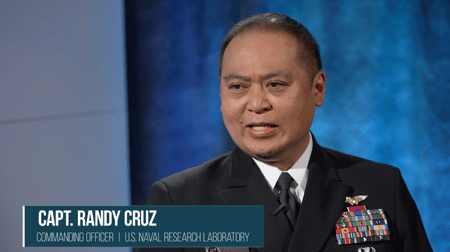 His example is ship ballast tank inspection. Traditionally, ships may need to spend days or weeks undergoing inspections before returning to sea. Tanks may need to be emptied, environments made safe, and personnel sent inside to determine whether repairs are required. Cruz says autonomous systems, imagery, and algorithms can help inspect those spaces more efficiently. Instead of taking a ship out of action for extended inspection cycles, the Navy can more quickly determine whether the vessel needs repair or is ready to return to the mission.
That example captures a larger philosophy at the Naval Research Laboratory. Cruz says NRL’s scientists start with the problem, not the technology. The goal is not to search for places to use autonomy because autonomy is exciting. The goal is to understand what is slowing the mission, where the pain point exists, and what technology can solve it. Autonomy may be part of the answer. So may artificial intelligence, advanced sensors, cyber tools, quantum sensing, resilient networks, or undersea technologies.
Cruz says the laboratory’s work is aligned with broader Navy priorities, including the CNO’s fighting instructions and the department’s critical technology areas. He describes NRL’s portfolio as spanning from seabed to space, plus cyber and quantum. That range matters because the future fight will not be confined to one domain. Maritime operations will depend on space, cyber, communications, sensing, and the ability to move trusted data across multiple environments.
One of the most important areas ahead is resilient networking. Cruz says modern operations generate and depend on enormous amounts of data. That information may move across different networks, constellations, platforms, and sensors. But more data is not automatically better. The Navy must know whether the information is accurate, relevant, and available at the moment a decision maker needs it.
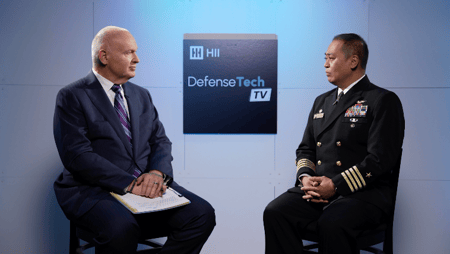 Cruz emphasizes the importance of the “observe” portion of the OODA loop. If the data feeding the decision cycle is wrong, delayed, or unavailable, the rest of the process suffers. That is why NRL is focused on high assurance computing systems, alternative positioning, navigation, and timing solutions, quantum sensing, and other technologies that strengthen the Navy’s ability to trust and use information.
The key point is that autonomy is not just about replacing people in high-risk combat missions. It is also about making the force more ready, more available, and more informed. If autonomous inspection systems can return ships to sea faster, they directly support combat power. If resilient networks can move trusted data to the right people at the right time, they support decision advantage. Cruz’s message is that the future of naval technology will be measured not by how advanced a tool looks, but by how directly it solves operational problems.
This interview was recorded on location at DefenseTech Live presented by HII Mission Technologies. Click Here for more insightful interviews from the event.