

Presented by HII Mission Technologies
Bryan Clark, Senior Fellow at Hudson Institute, says the autonomy conversation has entered a more practical phase. For years, defense leaders debated whether autonomous systems were ready, which systems to buy, and how much money should be invested. Clark says those questions are still important, but they are no longer the center of gravity. The bigger challenge now is operational: how does the Navy deploy autonomous systems into the fleet and use them to solve real military problems?
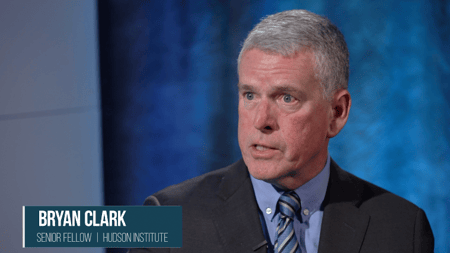 Clark says the Navy cannot treat autonomy as a giant integration problem across the entire force all at once. That would be like “boiling the ocean.” Instead, he points to the concept of tailored forces. These are smaller, mission-focused force packages that combine autonomous systems with a limited number of manned platforms for command, control, support, or specialized functions. The advantage is that each package can be designed around a specific operational problem rather than trying to transform the entire Navy in one move.
That approach reflects the growing pull from operational commanders. Clark points to commanders in the Indo-Pacific and allied countries such as Japan and Australia that are looking at autonomous systems for reach, persistence, defense, and deterrence. The technology is also being pushed forward by industry investment and rapid development across the unmanned systems market.
But Clark says the missing middle has been force generation. The military has established systems for generating ready submarines, surface ships, aircraft, and other traditional capabilities. It knows how to train, equip, certify, and deploy those forces. The question now is what that model looks like for robotic and autonomous systems. Who develops the concepts? Who runs the experimentation? Who trains the operators? Who makes sure these systems actually get delivered to the field?
Clark says senior Navy leaders have recognized this gap. The next step is assigning ownership and accountability. That does not mean punishing people when something goes wrong. It means empowering leaders to take charge of the development, deployment, and sustainment of autonomous force packages. Without that ownership, systems may be developed but never reach the forward locations where they are most needed.
He also identifies contracting as a major obstacle. The department has made progress on acquisition reform, but contracting can still move too slowly. Clark says government and industry often see the same problem: a decision to acquire something may happen quickly, but getting the contract in place and money moving can take too long. That delay undercuts the entire goal of moving faster.
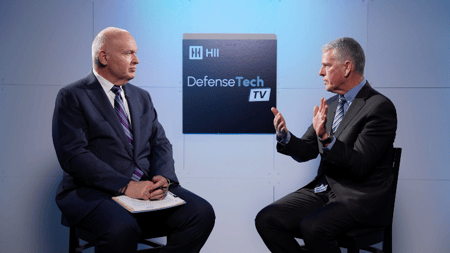 Open architecture is another critical issue. Autonomous systems must be able to work with each other and with manned platforms. That requires published interfaces, government-owned software interfaces, and enforcement at the program level. Clark says industry can provide interfaces, but government program managers must demand and enforce them.
The bottom line is that autonomy will not become operational just because technology exists. It requires force generation, training, contracting, open architecture, and accountability. Clark’s message is that the Navy’s next challenge is turning experimentation into deployable capability.
This interview was recorded on location at DefenseTech Live presented by HII Mission Technologies. Click Here for more insightful interviews from the event.