

Presented by HII Mission Technologies
Grant Hagen, President of Warfare Systems for HII Mission Technologies, says the defense technology conversation must keep the warfighter at the center. Autonomy and artificial intelligence can sound abstract, but their real value is measured by how they expand the ability of people in the field to see, decide, and act.
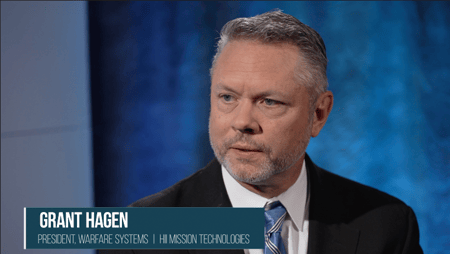 Hagen describes a future in which one operator may control or supervise a wide range of unmanned systems. A warfighter could work with unmanned underwater vehicles, unmanned surface platforms, robotic ground systems, aerial systems, and sensors deployed across the battlespace. Each of those systems extends reach. Each collects data. Each creates new options. Together, they can give one person access to a much wider operating picture than was possible in the past.
But Hagen also points to the risk: operator overload. More unmanned systems mean more sensors, and more sensors mean more data. Without help, the human operator can quickly become overwhelmed. That is where AI becomes essential. Hagen says artificial intelligence can help make sense of petabytes of information, identify what matters, and prioritize the most important signals for the user.
The role of the human changes in that model. Instead of directing every individual action, the warfighter becomes more of a strategic supervisor. The operator sets priorities, evaluates recommendations, and decides where to focus attention. Autonomous systems can then carry out tasks within that framework. That does not remove the human from the mission. It allows the human to operate at a higher level.
For that to work, the infrastructure underneath must be reliable and largely invisible to the user. Hagen says the warfighter should not have to think about how systems connect or how data moves from one platform to another. The architecture should allow systems from different providers to work together, share data, and feed a broader system that presents information in a way the warfighter can use.
That is why interoperability and open interfaces are so important. Hagen points to the broader discussion around modular open systems architecture and the need to expose APIs and interfaces. If Company A builds one system and Company B builds another, those systems still need to work together on the battlefield. The department cannot afford isolated platforms that create new silos.
 Hagen says industry must also help prevent vendor lock. Interoperability needs to be built into requirements from the beginning, not added later after a closed system has already taken shape. If the government waits too long, it can become dependent on a single vendor or architecture, limiting flexibility and slowing modernization.
HII’s perspective, Hagen says, is shaped by its history as an integrator. Shipbuilding has always required bringing together systems from many providers and making them work as one. That same mindset is now essential across autonomy, AI, data, and modern warfare systems.
The larger message is that speed to the warfighter is not just about buying technology faster. It is about designing systems that can be integrated, upgraded, and used effectively by people under pressure. AI and autonomy will be valuable only if they help the warfighter manage complexity rather than add to it.
This interview was recorded on location at DefenseTech Live presented by HII Mission Technologies. Click Here for more insightful interviews from the event.