

Presented by HII Mission Technologies
George Dougherty, author of Beast in the Machine and former Director of Innovation for C3 and Battle Management at the Air Force, says recent conflicts are exposing a new reality for U.S. defense leaders. Low-cost, smart, lethal robotic weapons are giving adversaries and smaller actors new ways to challenge advanced militaries. The United States may still hold overwhelming conventional advantages, but the gap is narrowing in ways that should create urgency.
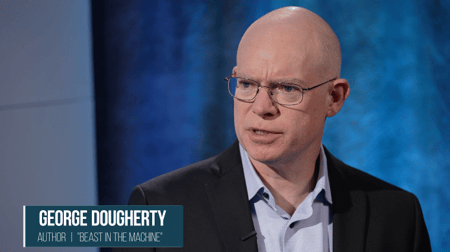 Dougherty points to Iran, the Houthis, and Ukraine as examples of this shift. In Iran’s case, he says the conflict has shown why the defense community is paying so much attention to autonomy, AI, and robotics. Iran and its proxy network have seized on a first wave of robotic military capability that is cheap, accessible, and dangerous. These systems do not need to be as sophisticated as U.S. platforms to be strategically meaningful. They only need to impose costs, complicate operations, and create enough risk to change decision making.
The Houthis are especially important to Dougherty’s argument. He notes that the U.S. Navy has described recent operations against the Houthis as some of the most intense naval combat since World War II. That is striking because the Houthis are not a near-peer military power. They are a militia group operating from western Yemen. Yet with drones, missiles, and other relatively accessible systems, they have been able to challenge advanced naval forces in ways that would have seemed unlikely in an earlier era.
That is the warning. If a non-state or proxy force can use low-cost robotic and missile systems to stress the U.S. Navy, then larger powers will study and scale those lessons. Dougherty says the United States cannot assume its traditional advantages will automatically hold. Adversaries do not need to match the United States platform for platform. They may only need to produce enough cheap, lethal systems to make U.S. operations more expensive and politically difficult.
Francis Rose frames the issue as a question of endurance. Iran may not be trying to defeat the United States in a conventional sense. Instead, it may be trying to stay in the fight long enough to wear down U.S. will, force, or resources. Dougherty agrees and broadens the point. Some adversaries may believe they can absorb more punishment than the United States is willing to sustain. They may calculate that they can “out suffer” the United States and still remain standing.
 For defense leaders, that changes the meaning of military advantage. The first wave of robotic weapons is about the commoditization of lethality. Precision, reach, and destructive power are becoming available to more actors at lower cost. That does not mean the United States has lost its advantage, but it does mean the country must move faster to adapt.
Dougherty says leaders must think beyond simply adding drones or unmanned systems to existing formations. The deeper question is how autonomy, AI, and robotics reshape the design of military power itself. The U.S. response cannot be limited to matching cheap systems with cheap systems. It must involve new operational concepts, faster adaptation, and a willingness to rethink how future advantage is created.
His message is urgent: robotic weapons are changing the cost curve of conflict. The United States must recognize that shift now, before adversaries turn a narrow tactical disruption into a broader strategic advantage.
This interview was recorded on location at DefenseTech Live presented by HII Mission Technologies. Click Here for more insightful interviews from the event.