

Presented by HII Mission Technologies
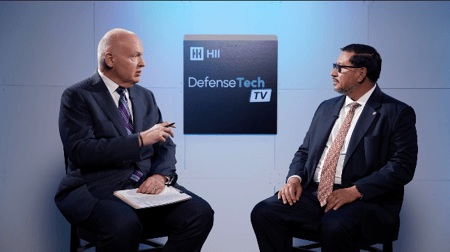
Art DeLeon, Director of Strategic Spectrum Policy for the Department of the Navy CIO, says spectrum must be treated as a maneuver space. In modern defense operations, spectrum is not a technical back-office issue. It is the invisible backbone of communications, electronic warfare, unmanned systems, sensors, and connected operations. If the force cannot access and manage spectrum effectively, it cannot move information at the speed the mission requires.
 DeLeon says the traditional spectrum model is built around static frequency assignments. A user may reserve a frequency for 24 hours and use it only briefly during that period. That approach made sense in a different era, but it does not match the demands of modern military operations. Today’s force needs dynamic, automated access that can adapt to changing mission conditions, geography, and network demand.
He argues that the department does not simply have a frequency problem. It has a bandwidth problem. The issue is not only whether a specific user has access to a specific channel. The larger question is how the force can make the most effective use of available bandwidth and allow networks to determine the best path for delivering information.
That requires a cultural shift. DeLeon says legacy rules and assumptions often reinforce the idea that a portion of spectrum belongs to a particular service, platform, or mission area. That mindset can limit sharing and prevent the department from using spectrum as flexibly as modern technology allows. He says future operations require a move toward spectrum-on-demand, supported by automation and open architectures.
The goal is a seamless experience for the warfighter. DeLeon compares it to the way modern commercial users move through cellular and Wi-Fi environments. If a user is provisioned and authenticated, the system connects them. The defense world needs a similar model across installations, overseas environments, and tactical settings. Authorized systems should be able to connect without waiting on slow manual processes.
That vision becomes even more important as unmanned systems, distributed sensors, and joint operations grow. Forces will need to move data, video, targeting information, command messages, and electronic warfare effects across complex environments. Static processes will not keep pace. Spectrum access must become more automated, more flexible, and more aligned with operational maneuver.
 DeLeon also highlights the international dimension. The Navy coordinates with many countries, each with its own rules and expectations for communications inside its borders. That makes standards and interfaces critical. If the department can shift from discrete frequency assignments toward wider bandwidth network-enabled capabilities, it can create more resilient and effective global communications.
The takeaway is that speed to the warfighter depends on more than platforms and software. It depends on the underlying ability to connect. Spectrum is the space through which much of modern warfare moves. Treating it as static, scarce, and manually assigned will slow the force down. Treating it as maneuver space creates the possibility of faster, more resilient, and more adaptive operations.
This interview was recorded on location at DefenseTech Live presented by HII Mission Technologies. Click Here for more insightful interviews from the event.