

Presented by HII Mission Technologies
Gen. Gene Renuart, USAF (Ret.), former Commander of NORAD and U.S. Northern Command, says the Department of Defense must confront the tension between speed and institutional inertia. Leaders across the department talk about getting capability to the warfighter faster, but traditional acquisition processes often move too slowly for the pace of modern threats.
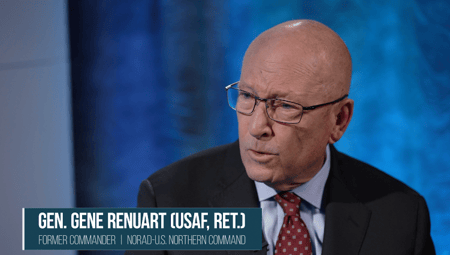 Renuart says a full overhaul of the acquisition system may be too large a challenge to solve quickly. But the department has tools it can use more aggressively. He points to Other Transaction Authority as one example. These kinds of flexible mechanisms can help the department target funding toward specific capabilities, deliverables, and timelines that better match urgent operational needs.
The discussion becomes especially timely in the context of unmanned systems. Renuart notes that unmanned technologies are already being used in ways that would have seemed unconventional not long ago. He points to an example of an unmanned maritime vessel supporting combat search and rescue, showing that unmanned systems can contribute far beyond traditional surveillance or strike missions.
Still, Renuart emphasizes that human judgment remains essential. He describes himself as a traditionalist in the sense that commanders must still coordinate capabilities, understand inputs, and exercise authority. Unmanned vehicles, space systems, optical systems, and other sensors may feed the picture, but commanders need tools that help them act on that information.
The integration challenge is growing. Renuart says legacy systems such as Link 16 were once designed to tie communications systems together, but the number of inputs has expanded dramatically. Commanders now face more data, more sensors, more networks, and more demands on decision making. He suggests the force needs something far beyond the old model — joking that if Link 16 is overloaded, the military may need “Link 42.”
 Artificial intelligence can help. Renuart says AI can separate useful information from noise and bring forward decision-quality data for the warfighter. That capability must reach from major command centers down to the tactical edge, where an individual soldier or platoon may need over-the-horizon information delivered through mobile devices, satellite communications, or unmanned video.
The homeland defense mission adds another layer of difficulty. Renuart says the NORAD and NORTHCOM commander faces a uniquely complex environment: space to subsurface, the Arctic to the southern border, peer threats, transnational criminal organizations, migration challenges, cyber threats, and critical infrastructure protection. Integrating unmanned systems into that environment requires clear, legal, and flexible rules of engagement.
For homeland defense, technology cannot be separated from law, policy, and relationships with allies. NORAD’s binational structure means U.S. and Canadian authorities both matter. Commanders must move quickly, but they must also protect innocent life, comply with legal authorities, and preserve trust with partners.
Renuart’s message is that speed is necessary, but speed must be paired with integration and disciplined command authority. The department needs faster acquisition pathways, better information tools, and clearer frameworks for using unmanned systems in complex missions. In the homeland defense environment, those issues are not theoretical. They are central to protecting the nation.
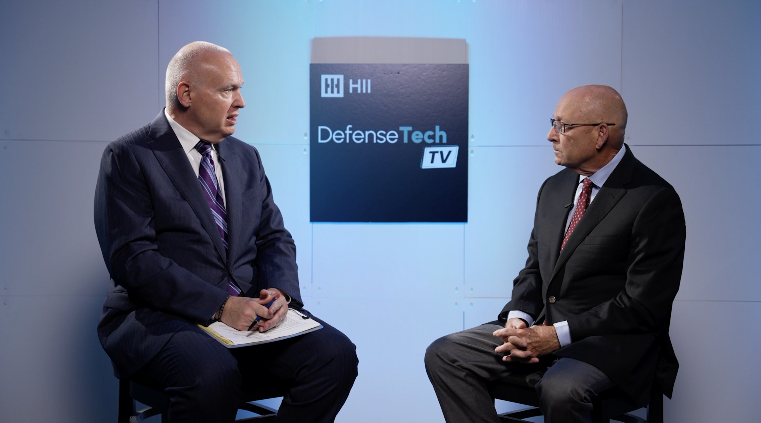
This interview was recorded on location at DefenseTech Live presented by HII Mission Technologies. Click Here for more insightful interviews from the event.