

Presented by MongoDB & Carahsoft
Government agencies have to modernize systems while continuing to deliver services and support operations. That makes their work different from building a prototype with no existing dependencies. Devin Dickerson, Principal Technologist at MongoDB, said successful modernization requires close attention to the connections between systems and the people responsible for them.
Speaking with Fed Gov Today at the Google Public Sector Summit, Dickerson recalled his early experience as an integration lead for a military electronic health record deployed into theater. Multiple components and product teams had to work together to create a longitudinal record for service members.
The individual components were not always the source of the hardest problems. Difficulties emerged when teams exchanged designs, systems communicated, or software moved between different operating environments. Dickerson described those interfaces as the places where complexity accumulated. Improving individual products would not necessarily solve the integration problem.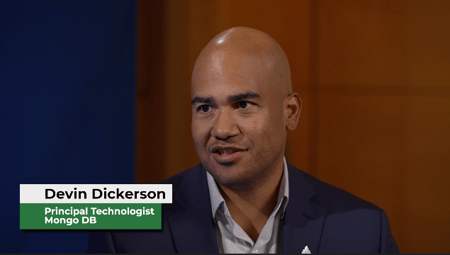 That experience informs his emphasis on platform thinking. A platform can absorb common operational complexity so developers can concentrate on the application and the mission it supports. Agencies evaluating modernization options should consider how a technology reduces the burden across a broader system, he said.
Data structures are part of that equation. Application developers often work with objects, while relational databases organize information into tables and columns. Moving between those representations can introduce additional transformation work. Dickerson said MongoDB’s document approach aligns with the JSON structures developers commonly use, reducing one of those translation requirements.
The larger point is that data should fit the work an agency needs to perform. A choice that simplifies one component can still create complications elsewhere. Evaluating the complete path from information storage to application behavior helps reveal those tradeoffs before they become operational obstacles.
AI agents bring the issue into sharper focus. Dickerson said organizations have moved beyond rewarding a demonstration simply because it connects to a powerful model. They now need evidence of mission value and a return on their investment. An agency’s distinctive contribution often comes from its own data.
That information gives an AI application context specific to the organization’s work. Allowing an agent to act on it introduces additional requirements, including tool connections, security, and governance. Agencies must decide which capabilities should be provided through common platforms and which responsibilities belong with individual teams.
Deployment flexibility also matters. Dickerson pointed to workloads that remain on premises or operate in disconnected environments alongside agencies moving into cloud services. A consistent data approach across those settings can help organizations pursue modernization at a broader level. During the interview, he also described FedRAMP High authorization for MongoDB Atlas for Government as forthcoming.
Across the discussion, Dickerson returned to the operational setting in which government technology has to work. Modernization succeeds when teams reduce integration burdens, connect relevant mission information, and preserve the services already running. Evaluating those relationships gives agencies a more useful basis for selecting technology than the appeal of an isolated demonstration. It also keeps the mission itself at the center of decisions about the next generation of AI applications.