

Presented Knox & Carahsoft
An AI agent that takes action using an employee’s credentials creates an immediate accountability problem. If something goes wrong, an agency needs to distinguish the employee’s decision from the agent’s behavior. Hemant Baidwan, CISO at Knox Systems, Inc., said that question deserves greater attention as organizations expand their use of agentic AI.
In an interview with Fed Gov Today at the Google Public Sector Summit, Baidwan described how agents complicate established identity practices. Security teams have long distinguished human identities from machine identities and service accounts. Agents add software capable of carrying out work across multiple environments on a person’s behalf.
That behavior requires agencies to examine how identity management represents the agent and its actions. When an agent downloads software, installs something, or changes a system using a person’s account, traditional records may not make the distinction clear. Baidwan urged CIOs and CISOs to ask whether they can see and manage that activity.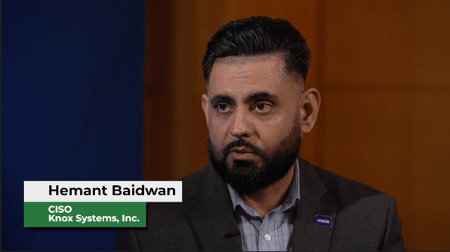 Workflow definition is part of the answer. Before deploying an agent, an organization should establish the work it is expected to perform and the limits surrounding that work, he said. A strong framework gives the agent a defined place within a process and helps security teams understand whether its behavior matches the intended task.
Baidwan also warned that competitive pressure can encourage organizations to move faster than their controls. Hearing about another agency’s successful deployment can create urgency to adopt similar capabilities. Cybersecurity teams need enough visibility to evaluate the additional risk as implementation proceeds.
The workforce benefits can be substantial when the work is properly scoped. Drawing on his experience with AI initiatives at the Department of Homeland Security, Baidwan described using the technology to analyze large volumes of information and support demanding policy work. He also identified procurement activities as potential candidates for assistance within established processes.
Cybersecurity operations offer another application. Analysts face large volumes of alerts and must determine which indicate a real threat. Baidwan said AI can help examine that information, distinguish useful signals, and focus employee attention on issues that matter.
He connected that need to adversaries’ use of AI. Attackers can combine weaknesses that appear relatively minor in isolation, including vulnerabilities and identity misconfigurations, into a viable attack path. Understanding those relationships requires defenders to consider how separate findings interact across an environment.
Baidwan also discussed Knox’s landing zone partnership with Palantir FedStart. He described its purpose as helping bring technology to government securely while giving authorizing officials, cybersecurity teams, and other decision makers information about the associated risks. Faster procurement alone does not answer those operational questions.
Across the conversation, the practical requirement was visibility into how new capabilities behave. AI can support employees and help defenders manage information at a scale manual processes struggle to match. Realizing those benefits requires agencies to define agent responsibilities, understand the identities involved, and maintain a clear view of the actions taken within their environments. Those foundations make the technology’s contribution easier to evaluate and its risks easier to manage.