

Original Broadcast Date: 6/12/2026
Sponsored by: Verkada Federal
As cryptocurrency-enabled fraud continues to evolve, the U.S. Secret Service is expanding its work with federal agencies and private sector partners to identify criminal organizations, recover stolen funds, and support victims.
During an interview on Fed Gov Today, Josh Fuerst, ATSAIC, US Secret Service, explains how the agency contributes to a Department of Justice strike force focused on fraud operations originating primarily in Southeast Asia.
Although many people associate the Secret Service with protective operations, Fuerst says the agency has long played a role in safeguarding the nation's financial infrastructure. That responsibility makes it a key contributor to investigations involving cryptocurrency and financial fraud.
Working alongside the Department of Justice and the FBI, the Secret Service focuses on tracing cryptocurrency transactions, identifying financial networks, and recovering money stolen from U.S. victims.
"The financial part of it," Fuerst says, is where the Secret Service brings its expertise, following cryptocurrency across the blockchain, identifying where funds leave the digital ecosystem, and helping identify the individuals responsible.
While cryptocurrency is often viewed as anonymous, Fuerst explains that blockchain technology also provides investigators with a public record of transactions.
Investigators may not immediately know who controls a cryptocurrency wallet, but they can follow the movement of funds from one transaction to the next. The challenge becomes identifying the people attempting to convert those digital assets into traditional financial systems through exchanges or banks.
Many of those investigations extend well beyond U.S. borders.
Fuerst says the strike force primarily focuses on criminal organizations operating in Laos, Myanmar, and Cambodia. Those investigations require investigators to trace cryptocurrency transactions across multiple jurisdictions while identifying domestic money mules, money-laundering organizations, and the individuals ultimately receiving stolen funds.
Much of the money laundering activity, he explains, is tied to broader criminal networks, making cross-agency collaboration especially important.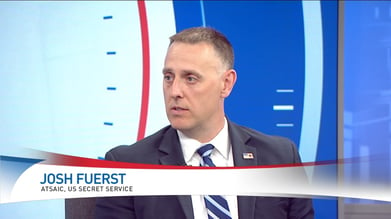
Another challenge involves the nature of the fraud itself.
Many of the schemes involve what investigators refer to as "pig butchering," in which criminals spend weeks or months building relationships with victims before persuading them to send money.
While some scams involve romance, Fuerst says others are built around friendship and companionship. Criminal organizations carefully study how to establish trust before convincing victims to transfer their savings, retirement funds, or money intended for major life expenses.
"These crimes are so difficult because it's such a personal criminal defrauding," Fuerst says.
Supporting victims is an important part of every investigation before investigators begin tracing financial transactions and identifying those responsible.
The strike force also reflects a broader effort to coordinate expertise across government.
Fuerst explains that the initiative brings together the Secret Service, the FBI, the Department of Justice, and other federal partners to integrate investigative specialties. The Secret Service contributes financial investigative expertise, while the FBI supports intelligence efforts and investigations involving human trafficking and broader national security concerns.
Rather than working independently, teams collaborate by country, combining resources to identify high-level perpetrators, seize assets, and expose criminal organizations.
That collaboration extends beyond government.
Fuerst says investigators are also working closely with cryptocurrency exchanges, telecommunications providers, internet service providers, social media companies, and other private sector organizations that play a role in how fraud schemes operate.
Bringing those organizations together creates what he describes as a whole-of-government and whole-of-country approach to combating financial fraud.
Technology is also changing how investigations are conducted.
Fuerst says blockchain tracing tools have become significantly faster than earlier investigative methods, allowing investigators to analyze cryptocurrency transactions more efficiently.
Artificial intelligence is beginning to play an important role as well.
Investigators collect enormous amounts of financial and investigative data throughout these cases. AI is now helping organize and analyze that information, allowing investigators to identify connections that would otherwise require substantial manual effort.
Drawing on nearly two decades with the Secret Service, Fuerst says he has watched financial crime evolve from counterfeit currency and traditional bank fraud to today's cryptocurrency-based schemes.
As financial systems continue to change, he says investigative methods must continue to evolve as well.
For Fuerst, success depends on combining technology, investigative expertise, and broad collaboration to disrupt criminal organizations, recover stolen funds, and better protect victims from increasingly sophisticated financial fraud.