

Original Broadcast Date: 10/04/2026
The Department of Transportation is changing more than its technology infrastructure. It is also changing how the department thinks about building and delivering technology.
Pavan Pidugu, outgoing chief digital and information officer at DOT, says the department moves away from a fragmented IT structure and toward an enterprise approach built around products and outcomes.
When the transformation begins, Pidugu says DOT has nine different IT departments operating within smaller segments of the organization.
DOT consolidates those organizations under a single structure to gain efficiencies and create a larger group focused on building products.
That organizational change supports a broader shift from projects to products.
Pidugu says technology organizations can produce enormous amounts of code, but that work has little value if it never becomes a usable product. DOT therefore focuses less on measuring outputs and more on whether its technology produces meaningful outcomes.
That requires changing the technology itself, the organization responsible for delivering it and the culture surrounding it.
Pidugu says DOT finds cases where different parts of the department are pursuing redundant or repetitive technology efforts. He points to AI as one example, with multiple modes working on similar use cases.
Instead of repeatedly building the same capabilities in separate silos, DOT brings common requirements together.
The idea is to build once and use multiple times.
Individual operating modes can still have unique requirements. Those specialized capabilities can be added on top of a shared foundation rather than requiring an entirely separate technology project.
The transition creates cultural challenges.
Program offices can be reluctant to give up ownership of systems they have traditionally controlled. Pidugu says DOT addresses that concern by separating ownership of the mission requirements from ownership of technology execution.
Business and program organizations continue to determine what a system needs to accomplish and help shape its roadmap. IT takes responsibility for executing the technology work in the product-centric model.
Pidugu says that approach can also save taxpayer money because the department is no longer running the same type of application project multiple different ways.
Infrastructure modernization is another major piece of the transformation.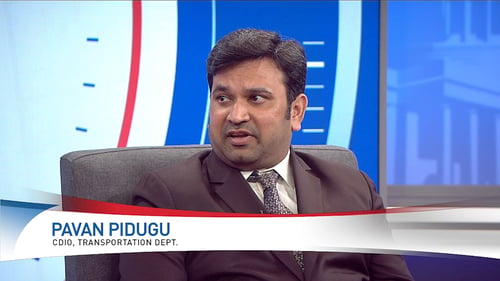
Pidugu says DOT begins his tenure heavily dependent on its own data centers. The department undertakes an effort to migrate 90% of its data center infrastructure into cloud hosting.
The goal is not simply to change where DOT technology runs.
Pidugu wants to free resources currently devoted to operating infrastructure and redirect them toward products that more directly support the department’s mission.
DOT’s mission, he says, is not to run data centers. Its mission is to help ensure the transportation sector is safe.
Technology resources should therefore be focused on advancing that safety mission.
Pidugu’s experience as a bureau-level CIO helps shape his approach to department-wide IT.
At the Federal Motor Carrier Safety Administration, he says his team has only about 30 to 32 people while facing significant legacy technology that needs modernization. The organization also depends on infrastructure and cybersecurity teams that face their own staffing limitations.
That experience helps convince Pidugu that DOT needs a more centralized IT model.
Staffing remains one area where he wishes the department could have moved faster.
As his tenure comes to an end, Pidugu says DOT’s Office of the CIO still has a significant number of vacancies. Filling those positions more quickly could have allowed the organization to build faster.
He does see new technical talent beginning to arrive, including engineers entering the department through newer workforce efforts.
Pidugu also explains why the word “digital” matters in his title as chief digital and information officer.
He draws a distinction between digitization and digital transformation.
Turning a paper form into an electronic form is digitization. Digital transformation goes further by examining the entire underlying process, redesigning it and making it simpler and more seamless.
That distinction captures the broader change Pidugu says DOT is pursuing.
The department is not simply replacing old infrastructure with newer technology. It is consolidating its IT organization, eliminating unnecessary duplication, creating reusable technology foundations and reconsidering how technology supports the mission.
For Pidugu, the measure of success is ultimately not how much technology DOT produces.
It is what that technology allows the department to accomplish.