

Original Broadcast Date: 8/9/2026
Modernization takes center stage in this edition of Fed Gov Today, with conversations focused on improving customer service, strengthening cloud security, and increasing accountability in federal financial management.
Jonathan Witter, Director of DFAS, discusses the agency's effort to reorganize around customer needs by consolidating business lines, modernizing technology, and applying artificial intelligence to improve both employee productivity and mission performance. He explains how streamlining operations has already reduced customer service requests while creating opportunities to standardize workflows, expand digital services, and strengthen trust in DFAS products and services.
From the FedRAMP Summit, Congressman James Walkinshaw, D-VA, shares his perspective on the program's next phase as Congress prepares for reauthorization. He highlights progress made through automation and process improvements while emphasizing the importance of technical expertise, workforce capacity, and reducing duplication between FedRAMP authorizations and agency approval processes.
Irv Dennis, Acting CFO at HUD, outlines how the department is using AI to improve oversight of federal grant funding. By collecting supporting grant documentation through a new digital process, HUD aims to analyze spending more efficiently, identify potential fraud, waste, and abuse, and provide agencies with faster compliance insights. Dennis also explains how pilot programs and collaboration with grantees are shaping the department's phased implementation approach.
Together, the conversations explore how agencies are modernizing core operations by combining technology, organizational change, and data-driven decision-making to improve services and strengthen government performance.
Jonathan Witter on Modernizing DFAS Through Customer Experience and AI
Jonathan Witter, Director of DFAS, discusses how the agency is reorganizing around customer experience by consolidating business lines, modernizing technology, and standardizing operations. He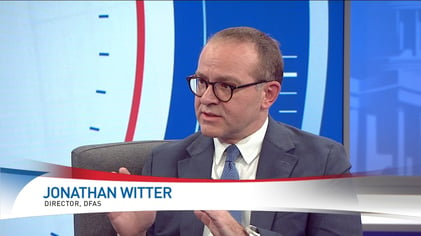 explains how bringing previously separate organizations together allows DFAS to streamline workflows, reduce customer service tickets, and improve support for military members, retirees, civilians, and the defense industrial base. Witter also outlines the agency's AI-first strategy, which focuses on increasing both employee productivity and mission performance while maintaining customer trust. He shares examples of AI accelerating software development, improving financial analysis, strengthening cybersecurity, and reducing customer identification times in service centers. Looking ahead, Witter describes ongoing efforts to modernize legacy technology, migrate systems to cloud-ready environments, and prepare the workforce with the skills needed to support DFAS' long-term transformation.
Three Key Takeaways
- DFAS is consolidating business lines to improve customer service, standardize operations, and increase efficiency across the organization.
- The agency applies AI to improve employee productivity, strengthen mission delivery, and enhance cybersecurity while building customer trust.
- Modernizing legacy systems, expanding digital services, and investing in workforce training remain central priorities for DFAS
Congressman James Walkinshaw on FedRAMP Reauthorization and the Next Phase of Cloud Security
Congressman James Walkinshaw, D-VA, discusses the progress of FedRAMP as Congress prepares to consider reauthorizing the program. He points to recent automation and process improvements that have helped streamline assessments while reducing backlogs. Walkinshaw says reauthorization presents an opportunity to strengthen collaboration between Congress, the FedRAMP Program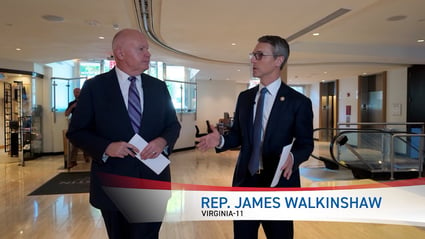
Management Office, and industry to address emerging challenges. He also highlights the need for agencies to maintain the technical expertise and staffing required to process authorizations efficiently. While recognizing advances in reusing FedRAMP certifications across agencies, he notes that some companies still encounter duplicative work during agency authorization processes and says narrowing that gap remains an important priority.
Three Key Takeaways
- FedRAMP reauthorization offers an opportunity to build on recent modernization efforts and
strengthen collaboration with industry - Agency staffing and technical expertise remain important factors in keeping cloud security authorizations moving efficiently.
- Reducing duplicate work between FedRAMP certifications and agency authorizations continues to be a key objective.
Irv Dennis on Using AI to Strengthen HUD Grant Oversight
Irv Dennis, Acting CFO at HUD, explains how the department is modernizing grant oversight by using AI and data analysis to improve visibility into how grant funds are spent. Through a new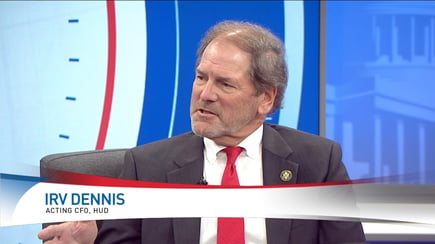
process, grantees will submit supporting documentation that is analyzed using AI, OCR technology, and a centralized data lake. Dennis says the initiative will help HUD identify potential fraud, waste, and abuse more quickly while improving compliance and operational efficiency. He also discusses the importance of managing business process changes alongside technology implementation, noting that pilot programs demonstrated the approach could minimize burdens on grantees. As HUD rolls out the program in phases, Dennis says the department will continue refining processes while using data to strengthen financial oversight and improve grant management.
Three Key Takeaways
- HUD is using AI, OCR, and data analytics to improve oversight of grant spending and identify potential fraud, waste, and abuse.
- The department is pairing new technology with business process changes to support implementation across grant programs.
- Pilot programs showed th e new reporting process can improve compliance while minimizing additional work for grantees.