

Original Broadcast Date: 08/16/2026
Presented by Billington Cybersecurity
The General Services Administration’s OneGov initiative is entering its second year with more than $1 billion in savings and an ambitious goal to change how the federal government buys technology. Kyra Stewart, Director of the IT Vendor Management Office at GSA’s Federal Acquisition Service, says the initiative gives government and industry an opportunity to rethink IT procurement and make the process more efficient for everyone involved.
Stewart describes OneGov as a “once-in-a-career opportunity” for people across the federal IT acquisition ecosystem. As artificial intelligence and other emerging technologies change what agencies need, she says government and industry have an opportunity to improve collaboration, aggregate demand and identify cost-saving opportunities.
The objective is to streamline the acquisition process while bringing mission-focused IT solutions to organizations across the federal government.
One year into the initiative, Stewart says the results show a strong start. OneGov realizes more than $1 billion in savings, with 70 government organizations participating and more than 3 million users accessing various IT and AI platforms through OneGov opportunities. She describes the first year as both challenging and rewarding, while emphasizing that GSA sees opportunities to accomplish even more in year two.
A major piece of the OneGov strategy is aggregating demand and establishing more consistent terms and conditions for common technology purchases.
Stewart says the idea of aggregated demand is not new to the federal government, pointing to category management as an existing example. What makes the current moment different, she says, is the alignment of administration priorities, policy and leadership perspectives with an opportunity to act on ideas that have existed for some time.
Agencies have different missions and many responsibilities competing for their attention. OneGov aims to take some common IT spending areas and allow agencies to delegate that acquisition responsibility to GSA. GSA can then work with original equipment manufacturers to establish optimized contracts, including terms, conditions and pricing that agencies can use for common IT software.
For Stewart, that approach is also about giving agencies time back. Rather than devoting resources to common technology purchases, agencies can concentrate on their unique mission challenges and pursue specialized IT solutions when necessary.
The same efficiency can benefit industry.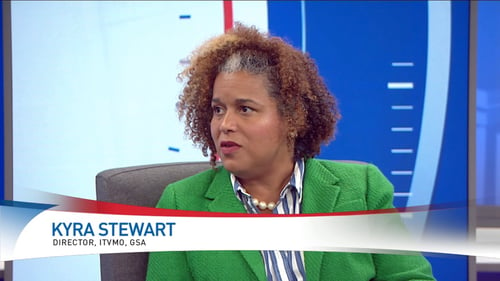
Stewart says companies can face the administrative burden of entering into hundreds of contracts for the same products. By centralizing contracts at GSA, OneGov aims to reduce repeated negotiations and administrative processes. But Stewart stresses that the model does not mean eliminating resellers, integrators or other partners that already play important roles in federal acquisition.
Instead, GSA wants to “right size” those relationships. Under the approach Stewart describes, the direct contract sits with the original equipment manufacturer, helping ensure that issues such as cybersecurity risk can be discussed directly with the entity holding the contract. Resellers, integrators and other partners remain involved, but their roles can extend beyond simply serving as a middle party in a transaction.
The financial results are another major part of OneGov’s first year. Stewart calls the $1 billion savings figure an ambitious goal that GSA is excited to achieve and says the agency continues working toward significant savings over the next several fiscal years.
AI plays a major role in those opportunities. Stewart says OneGov offers give agencies opportunities to introduce AI across their federal footprint and explore how the technology can support their work. At the same time, she acknowledges that the highly discounted $1 deals associated with some AI offerings are not sustainable over the long term.
GSA is therefore working with industry partners on a path that makes business sense for companies while allowing government to strategically use the technology. Stewart says the initial savings give agencies an opportunity to explore AI, learn from its use and determine where it can improve government outcomes.
That evolution leads toward what Stewart calls “OneGov 2.0” deals, with GSA and industry looking for arrangements that continue providing significant savings while creating a sustainable model for the future.
Ultimately, Stewart says OneGov is also changing how federal employees spend their time. By allowing GSA to handle common purchases such as workplace productivity tools and AI, agencies can return their attention to the specialized mission needs only they can address.
One year in, OneGov is moving beyond its initial savings and toward a broader transformation of federal IT acquisition—one built around centralized purchasing, standardized agreements, stronger industry relationships and giving agencies more time to focus on their missions.