

Original Broadcast Date: 07/12/2026
Chris Mufarrige, Director of the Federal Trade Commission's Bureau of Consumer Protection, explains that impersonation scams have become one of the bureau's greatest concerns. Criminals are posing as banks, student loan servicers, mortgage relief providers, travel companies, and health insurance organizations in an effort to convince consumers to hand over sensitive information or money.
"The scammers and fraudsters are very creative," Mufarrige says, noting that they continually develop new ways to target consumers.
That evolving landscape drives much of the bureau's work, from identifying emerging threats to investigating fraud and educating the public.
Data reveals where fraud is headed
One of the bureau's most valuable resources is Consumer Sentinel, a system that collects fraud data from government agencies as well as reports submitted directly by consumers through ReportFraud.ftc.gov.
Rather than reacting to isolated incidents, the bureau uses this information to identify broader patterns developing across the marketplace.
Mufarrige says Consumer Sentinel helps investigators recognize that impersonation scams have become a growing trend. By understanding where fraud is increasing, the bureau can focus resources on the most pressing threats.
The data does not stand alone, however. It serves as the starting point for investigations that seek to determine which cases warrant enforcement action.
Investigators follow the evidence
Behind every fraud trend is a team working to determine how scammers operate.
Mufarrige explains that investigators conduct undercover activities to engage directly with suspected scammers and better understand their tactics. Those efforts help uncover evidence that can support enforcement actions.
The bureau also maintains a technology lab where investigators analyze fraudulent activity and study how scammers interact with consumers.
When the FTC obtains temporary restraining orders against alleged fraudsters, investigators also assist with asset seizures designed to recover funds that can ultimately support consumer redress.
Together, those responsibilities extend well beyond simply reviewing complaints. Investigators help transform consumer reports into actionable cases.
AI is helping speed the process
Like many organizations across government, the FTC is exploring how artificial intelligence can improve operations.
Mufarrige says the bureau is already seeing promising results from using AI to reduce the time required to digest large volumes of fraud data.
While the organization continues evaluating multiple pilot programs, the objective remains straightforward: identify the AI capabilities that best help investigators analyze information faster.
For now, the bureau continues exploring different approaches before determining which tools will become part of its long-term workflow.
Education is another line of defense
Enforcement alone cannot stop every scam.
Mufarrige says consumer education plays an important role in helping people recognize fraud before becoming victims.
The bureau monitors emerging impersonation tactics and incorporates those findings into educational materials designed to alert consumers about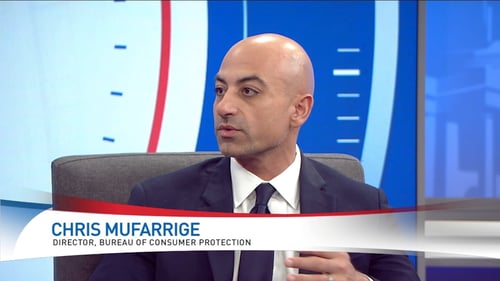 current threats.
Many scams now originate through online search advertising and social media. Someone searching for travel accommodations or health insurance, for example, may unknowingly click on an advertisement purchased by a scammer posing as a legitimate company.
By identifying those trends early, the bureau hopes to equip consumers with information that helps them recognize suspicious activity before engaging with fraudulent actors.
Litigation remains a key enforcement tool
When investigators gather sufficient evidence, the FTC has several enforcement options available.
Mufarrige says the bureau frequently seeks temporary restraining orders against suspected scammers and also pursues traditional litigation through lawsuits.
Those legal actions aim to stop fraudulent activity and secure financial redress for consumers whenever possible.
Some challenges remain difficult
Although the bureau continues expanding its investigative capabilities, some fraud remains particularly challenging.
Mufarrige points to overseas telemarketing scams as one of the biggest ongoing concerns. Because many operations originate outside U.S. jurisdiction, enforcement becomes significantly more complicated.
Robocalls also continue presenting persistent challenges despite years of enforcement efforts.
Those issues highlight the reality that fraud continues evolving alongside technology and communication platforms.
Success depends on skilled investigators
As fraud schemes become more sophisticated, the bureau depends on employees who can recognize patterns hidden within large amounts of information.
Mufarrige says attention to detail is one of the most important qualities for investigators. Understanding trends, interpreting data, and determining which cases deserve enforcement attention all contribute to building effective investigations.
Selecting the right cases ultimately allows the bureau to maximize its resources while pursuing the greatest impact against fraud.
Reporting fraud helps everyone
For consumers who believe they have encountered a scam, Mufarrige encourages taking action.
Individuals can submit reports through ReportFraud.ftc.gov, helping the bureau identify emerging fraud trends and strengthen Consumer Sentinel's nationwide data.
Victims of identity theft can also use the FTC's identity theft reporting portal, and depending on the circumstances, local law enforcement may also play an important role.
Each report contributes to a larger picture that helps investigators detect new fraud patterns and better protect consumers.
Throughout the conversation, Mufarrige emphasizes that fighting fraud requires a combination of quality data, skilled investigators, public awareness, and evolving technology. As scammers continue adapting their tactics, the FTC is working to adapt just as quickly—using data, education, investigations, and AI to stay one step ahead.