

Original Broadcast Date: 10/18/2026
Sponsored by: Accenture Federal Services
The Pentagon is seeing growing demand for advanced nuclear technologies, and Mike Smith, Nuclear Portfolio Lead for Operational Energy Innovation at the Pentagon, says the conversation around nuclear power looks dramatically different than it did just two years ago.
During an interview on Fed Gov Today, Smith discusses how military interest in nuclear microreactors is creating new opportunities for research, development and investment.
He says much of that demand is currently coming from the Army and Air Force, where programs are exploring how advanced nuclear systems could support military energy requirements.
Two efforts are particularly important. The Army is advancing Project Janus, while the Air Force is moving forward with its ANPI program.
Smith says those initiatives are creating clearer opportunities for his office to support emerging nuclear technologies.
Rather than developing entire reactor systems, his team focuses on investments that help reduce technical risks associated with the technologies those systems require.
Reducing the risks of nuclear innovation
Smith explains that the advanced nuclear reactor market is still developing, particularly in the microreactor sector.
That creates uncertainty around the materials, components and technologies needed to support future systems.
His office works to address some of those challenges through early-stage investments.
Those investments can involve reactor materials, fuel-related technologies, subsystems and other capabilities that contribute to the broader nuclear ecosystem.
Smith says the goal is to identify technologies that could benefit multiple vendors working with military organizations.
The work involves both financial and technical risk.
His office focuses on technologies generally in the middle stages of technology readiness, around levels four through six.
At that stage, technologies may show promise but still require substantial testing and development before they can support operational applications.
Smith emphasizes that not every investment is expected to succeed.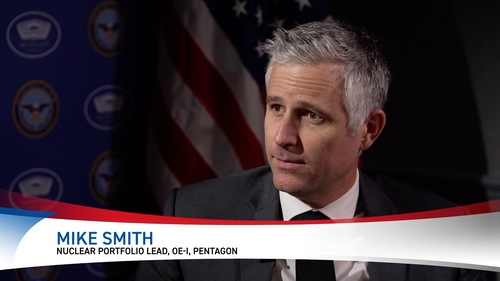
In some cases, a technology may appear promising but ultimately prove economically or scientifically impractical.
That outcome can still provide useful information.
By identifying limitations early, his office can help military partners and industry avoid pursuing approaches that are unlikely to deliver the intended benefits.
Smith says sharing those findings is part of reducing risk for the services.
Why military demand matters
The emergence of formal Army and Air Force programs is changing how Smith's office approaches investments.
Before those programs existed, his team faced greater uncertainty about which military organizations might eventually use the technologies it was developing.
Now, programs like Project Janus and ANPI provide a clearer demand signal.
Smith says that improves his office's confidence when evaluating potential investments and opportunities to transition technologies.
He explains that his organization can operate in either a technology-push or technology-pull environment.
In some cases, the office identifies promising capabilities and looks for potential military applications.
In others, a military requirement creates demand for specific technologies.
Having established programs helps connect research investments with potential future customers.
Smith is careful not to speak on behalf of the services about their specific motivations for pursuing nuclear power.
However, he identifies energy resilience, long-duration power and energy independence as important benefits nuclear technologies can offer.
He also notes that individual programs and their industry partners ultimately determine which technologies they adopt.
Bringing warfighters into nuclear research
For Smith, developing promising technology is only part of the challenge.
The Pentagon also needs to understand whether a capability can work in an operational environment.
That is why his office incorporates warfighter feedback into research and development.
Smith says his team carefully designs statements of work to establish what each investment needs to demonstrate.
Those requirements can include advancing technology readiness, building confidence in performance and showing how a capability could support military needs.
Some demonstrations take place primarily in laboratories.
Others are designed to resemble field conditions as closely as possible.
Smith says incorporating operational input early can influence the final design of a technology.
Sometimes, that feedback involves surprisingly simple considerations.
He recalls examples where warfighters recommend changing the placement of a handle or lifting point on equipment.
Those details may seem minor, but they can affect whether a system is practical to move, handle or deploy.
For nuclear technologies, Smith says operational considerations can have particularly significant design implications.
Scientists and engineers may focus primarily on technical performance, while military personnel identify practical requirements that are less obvious during early development.
His office uses that feedback to improve subsequent phases of research.
A changing environment for nuclear power
Smith says growing military interest is only one factor behind the changing nuclear landscape.
He also points to executive orders issued in 2025, national science and technology direction, and language in the fiscal year 2026 National Defense Authorization Act.
Together, those developments are encouraging greater coordination and interest in nuclear technologies across government.
Smith says the difference is especially noticeable in conversations with potential military customers.
A few years ago, his office sometimes struggled to generate interest when presenting possible nuclear applications.
Today, he sees substantially greater openness to exploring those capabilities.
That shift creates new opportunities for his team to connect early-stage research with military requirements.
As the Army and Air Force continue pursuing advanced nuclear programs, Smith says his office remains focused on identifying promising technologies, reducing development risks and helping potential customers understand what those technologies can deliver.
For Smith, the growing interest represents an important change in how the Pentagon considers nuclear power as part of its future operational energy capabilities.