Presented by Digital Science
Artificial intelligence is giving federal research organizations new ways to move from ideas to discoveries faster, analyze the impact of their investments and identify emerging opportunities across the global research landscape. In AI & Research: In Depth, presented by Digital Science, leaders from NASA OIG, DARPA and Digital Science examine how AI is changing research, oversight and workforce expectations—and why human judgment, strong data, effective governance and research security remain essential to mission success.
Compressing the Research Lifecycle: Turning Data and AI Into Mission Impact
Artificial intelligence is helping federal research organizations shorten the path from an idea to an invention while gaining a clearer picture of the results their investments produce. Steve Leicht, Chief Executive Officer of Digital Science, joins Francis Rose to discuss how agencies can use AI, connected data and human expertise to improve decisions throughout the research lifecycle.
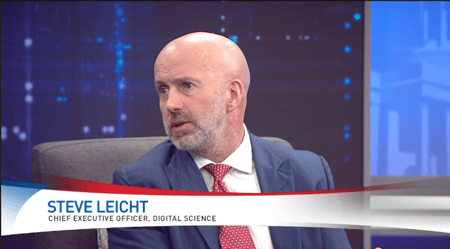 Leicht says many research organizations already conduct activities such as gap analysis, trend detection, white-space analysis and horizon scanning. The larger opportunity is to apply those capabilities systematically across an agency’s entire research portfolio. An analysis that once required a four- to six-month consulting project can now be performed across thousands of grants, researchers and outcomes. Agencies can examine whether federally funded research led to additional investment, publications, intellectual property, new companies, economic growth or improvements in health and other mission areas.
That visibility gives government leaders an unprecedented ability to demonstrate the return on federal research investments. But Leicht emphasizes that AI does not eliminate the need for people. The strongest research and development applications continue to keep humans in the loop, particularly when decisions require subject-matter expertise or determine which proposals receive funding. That role becomes even more important as generative AI makes it easier to produce grant applications, increasing the volume of material agencies must assess without a corresponding increase in staff.
Research security is another central challenge. Agencies must understand their researchers’ affiliations, collaborations and potential conflicts to ensure federal funding does not inadvertently support strategic competitors or adversaries. Leicht argues that individual internet searches and other manual processes are no longer sufficient. Organizations need reliable, connected datasets that allow them to evaluate risks systematically across researchers, institutions and portfolios.
Preparing for the next stage of AI adoption will require sustained investment in governance, workforce education and data infrastructure. Agencies should develop internal expertise while also working with outside specialists who can help them keep pace with rapidly changing technology. Leicht’s message is that today’s AI capabilities will continue to improve, making adaptability an institutional requirement. Agencies that combine high-quality data, informed governance and human judgment will be best positioned to accelerate research, protect their investments and connect scientific activity to measurable mission outcomes.
Faster Discovery, Stronger Oversight: How AI Is Transforming Federal Research
Artificial intelligence is allowing federal organizations to examine more information, identify important signals earlier and accelerate parts of the research lifecycle that previously required weeks or months. Robert Steinau, Senior Official Performing the Duties of the Inspector General at NASA OIG; Dr. Michael Koeris, Director of DARPA’s Biotechnologies Office; and Dr. Shirley Han, Head of Research Analytics at Digital Science, join Francis Rose to discuss how those capabilities are changing research, oversight and workforce expectations.
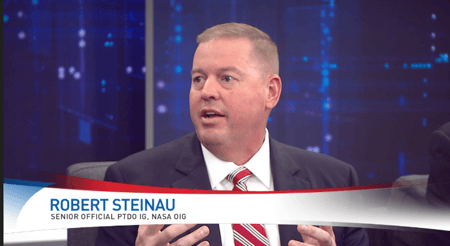 At NASA OIG, AI is helping investigators make better use of the enormous volumes of data generated through government grants, contracts and programs. Steinau explains that the goal is to connect information and identify potential leads faster. Rather than manually reviewing one contract at a time, investigators can examine hundreds of contracts or multiple datasets simultaneously and flag activity that may warrant closer scrutiny.
A flag generated by AI is not a final finding. Steinau compares it to a hotline complaint or a lead received from another law enforcement organization: it gives investigators a place to begin. A human must review the underlying facts, determine whether additional action is appropriate and conduct the investigation. AI nevertheless allows NASA OIG to become more proactive, reducing the time required to find potential fraud, research-security issues and other risks.
DARPA approaches AI through its mission of creating technological surprise for the United States while preventing surprise from competitors. Koeris says the agency must understand scientific and technological activity across the world—not only in the United States or China. AI can synthesize developments across a rapidly changing global landscape, identify trends and help DARPA anticipate capabilities that could emerge years in the future.
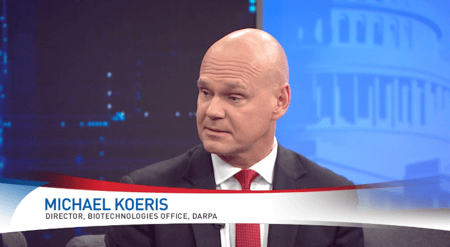 AI is also helping DARPA accelerate its own internal processes. Speed is a major advantage in technological competition, but the agency must continue to meet contracting, compliance and stewardship requirements. Certain steps are required by law, and researchers need sufficient time to develop thoughtful proposals. The objective is therefore to compress the portions of the process that can safely move faster while preserving the deliberate review and human accountability that cannot be removed.
The rapid growth of AI-assisted proposals creates another challenge. Koeris says DARPA is receiving several times more proposals than it once did, in part because AI makes them easier to produce. The government’s capacity to use AI in evaluating that material has not advanced at the same rate. That imbalance can strain a lean workforce and make it harder to give every proposal appropriate consideration. Agencies need processes and tools that can manage the increased volume without disadvantaging applicants or compromising review quality.
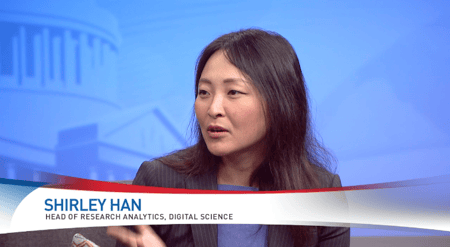
Han explains that AI can help funding organizations determine whether a proposal represents an incremental advance or a genuinely novel, potentially paradigm-shifting idea. However, the results depend on how the system is trained and what the organization instructs it to value. If an AI tool learns primarily from past funding decisions, it may reinforce existing preferences and favor proposals resembling work that has already received support. Agencies seeking breakthrough research must explicitly build novelty, innovation and their institutional principles into the frameworks used to guide AI.
 These changes are redefining the contribution of the federal research workforce. Work that once centered on collecting, cleaning and organizing large datasets is shifting toward interpreting results, understanding their implications and determining what action an agency should take. Employees still need to perform rigorous analysis, but managers can now expect some products to be completed much faster. NASA OIG and DARPA are increasingly looking for workers who arrive with AI skills, while also training existing staff to use the technology appropriately.
Not every part of the research lifecycle can or should be compressed. At DARPA, program concepts still require internal debate, leadership review and a structured process for soliciting and evaluating proposals. Security constraints can also limit which commercial AI capabilities are available inside government environments, creating a gap between the highly integrated tools people use privately and those available for official work.
The panelists agree that agencies should actively expand their use of AI while maintaining appropriate safeguards. Leaders must clearly define how their organizations make decisions, which values guide those decisions and where human accountability must remain. AI can amplify an agency’s current practices, including inconsistencies or biases embedded within them. The strongest results will come from combining faster analysis with sound governance, secure implementation, workforce adaptability and informed human oversight.