Original Broadcast Date: 6/12/2026
Sponsored by: Verkada Federal
Federal agencies are rethinking what perimeter security looks like as missions expand beyond traditional fences and fixed infrastructure.
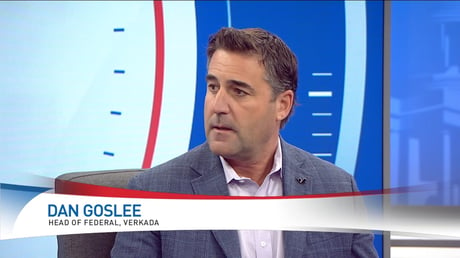
During an interview on Fed Gov Today, Dan Goslee, Head of Federal at Verkada, explains how AI-enabled technologies are helping agencies build what he describes as a "virtual perimeter" that extends security awareness across large installations, critical infrastructure, and temporary operational environments.
Rather than relying solely on physical barriers or traditional surveillance systems, Goslee says agencies are increasingly seeking ways to detect potential threats farther from the assets they protect.
"It means a lot of different things," Goslee says when describing the concept of a virtual perimeter. Whether protecting military bases, national parks, schools, or other expansive facilities, the objective remains the same: extending security farther outward to better protect people and critical assets.
A key part of that strategy is deploying artificial intelligence directly at the edge.
Traditional security cameras, Goslee explains, often provide video but lack the intelligence needed to recognize potential threats in real time. By combining AI with edge-based devices, agencies can monitor areas where permanent infrastructure or large security teams may not be practical.
Those devices allow organizations to establish digital security zones around sensitive locations. If someone enters one of those zones, security personnel can receive immediate notifications without continuously monitoring video feeds.
Goslee says this approach becomes especially valuable when protecting expansive environments where running power, communications, or surveillance infrastructure would be costly or impractical.
He points to large-scale missions involving critical infrastructure as examples of where virtual perimeters provide additional operational awareness. Along beaches, fence lines, or open terrain, AI-enabled devices help identify activity while reducing the need for constant human observation.
The same technology also supports large public events.
Goslee describes recent efforts assisting military air shows that attracted hundreds of thousands of attendees. Because Verkada's platform operates in the cloud, information could be shared across participating organizations, including military personnel and local law enforcement.
Rather than operating separate security systems, multiple agencies were able to access shared information as they responded to evolving situations.
During one event, Goslee says AI-supported monitoring helped identify suspicious activity near military assets, enabling local law enforcement to investigate quickly.
He emphasizes that the technology is designed to alert responders to suspicious behavior rather than continuously track individuals.
Cloud-native architecture plays an important role in enabling that collaboration.
Historically, many organizations relied on separate security platforms that limited information sharing. Goslee says moving security systems to the cloud allows authorized users to access information from mobile phones, patrol vehicles, command centers, or other connected devices without depending on large on-premises infrastructure.
Because deployments require less hardware, agencies can establish operational capabilities much more quickly.
Goslee describes portable "fly-away" security kits that can be connected through available communications, including satellite connectivity, allowing organizations to establish perimeter awareness in approximately 20 minutes.
 Once deployed, personnel located elsewhere can immediately monitor activity occurring at the operational edge.
That flexibility becomes increasingly valuable for military organizations or emergency operations that require rapid deployment into unfamiliar environments.
While technology continues to evolve, Goslee says many agencies still face another challenge: aging security infrastructure.
After working with federal customers for several years, he says many organizations continue to rely on systems that are expensive to maintain and increasingly difficult to support.
As maintenance costs rise, agencies are beginning to evaluate modernization from both operational and financial perspectives.
Instead of simply replacing existing equipment, many organizations are asking broader questions about the total cost of ownership and whether cloud-based systems provide a more sustainable long-term approach.
According to Goslee, advances in cloud technology have made modernization significantly more achievable than in previous years.
Without requiring extensive server infrastructure or traditional video management systems, agencies can deploy new capabilities more efficiently while improving collaboration across organizations.
For agencies that protect military installations, public venues, or other large operational environments, Goslee says virtual perimeters represent more than just a new technology.
They reflect a different approach to security—one that combines AI, cloud connectivity, and rapid deployment to improve situational awareness and provide security personnel with more timely information about potential threats.
As agencies continue modernizing physical security operations, he suggests that extending visibility beyond the traditional perimeter will remain an important part of protecting people, infrastructure, and mission-critical assets.