Original Broadcast Date: 08/16/2026
Presented by Billington Cybersecurity
Artificial intelligence is changing the cybersecurity landscape for government agencies, creating new risks while also giving cyber professionals new tools to strengthen their defenses. Billington Cybersecurity President Troy Schneider says government leaders increasingly have to think about AI from both sides of the equation as they prepare for an evolving threat environment.
Schneider says much of the public conversation around AI and cybersecurity focuses on the threat. Stories about advanced AI models, hacking capabilities and the ways bad actors could use the technology are increasingly appearing in the headlines. Those concerns are real, he says, and government agencies are paying attention to how AI could affect the threats they face.
But that is only one side of the story.
Schneider says AI can also become an important defensive resource for government cybersecurity teams. Agencies can use the technology to examine their systems for vulnerabilities and help develop patches more quickly. That creates an opportunity for cyber professionals to use AI to improve their own defenses even as they prepare for adversaries to use the same technology against them.
That two-sided challenge is one of the themes Schneider says will be part of the conversation at the Billington Cybersecurity Summit.
At the same time, the cybersecurity environment is becoming increasingly global. Schneider describes cyber as an international team effort because attacks do not depend on the physical location of the attacker. Threats can originate from anywhere, which means defensive efforts and information sharing increasingly have to cross national borders as well.
Schneider points to cooperation involving key U.S. companies, the federal government and allied partners as an example of that approach. He says the Five Eyes nations, NATO allies and a broader group of countries are looking for ways to collaborate.
An important part of that cooperation is building relationships before an incident occurs. Schneider says senior officials need one-to-one relationships, while personnel throughout their organizations need to know who they can work with and who they should contact before something goes wrong. In a global cyber environment, those connections become part of the broader defensive strategy.
Another major concern is the cybersecurity of critical infrastructure.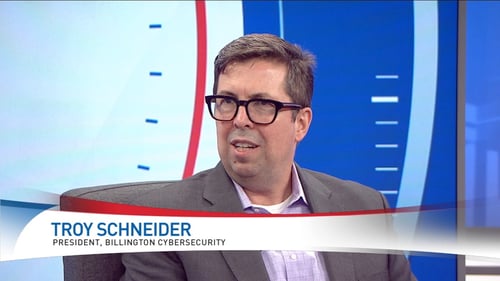
Schneider says experts have warned about threats to critical infrastructure for years, but recent incidents increasingly demonstrate what those risks can mean. He points to previous concerns involving actors from China gaining access to telecommunications, water, electricity and other critical infrastructure systems. He also discusses reports involving municipal water systems as evidence of why government cyber leaders continue to focus on the issue.
The potential consequences make critical infrastructure cybersecurity different from many other cyber incidents.
A successful attack is not necessarily limited to compromising a website or temporarily preventing someone from using an ATM. Schneider notes that attacks involving water infrastructure could affect whether water is available or potentially impact the treatment and chemical mixture involved in water systems. Those possibilities create real-world risks that concern officials at the Cybersecurity and Infrastructure Security Agency and other government organizations.
Part of the challenge comes from the technology behind those systems.
Schneider explains that much of the operational technology supporting critical infrastructure was not originally designed with modern cybersecurity requirements in mind. In some cases, the systems were not even designed with internet connectivity in mind. As those technologies become connected, government and infrastructure operators have to address security weaknesses in systems that may lack protections expected from even basic computer systems 10 or 15 years ago.
Together, AI, international cooperation and critical infrastructure illustrate how the government cybersecurity mission continues to evolve. AI gives adversaries new possibilities, but it also gives defenders new capabilities. Global threats make collaboration and information sharing increasingly important, while vulnerabilities in critical infrastructure show how cyber incidents can have consequences in the physical world.
For Schneider, those challenges reinforce the importance of preparing before an attack happens. Government cyber professionals are operating in an environment where the technology, threats and defensive tools are all changing, making collaboration and the effective use of emerging capabilities increasingly central to protecting government systems and critical infrastructure.