Original Broadcast Date: 02/15/2026
Presented by Maximus
At WEST 2026, Bryan Martz, Vice President at Maximus, focuses on a challenge he sees across the defense community: innovation is moving fast, but deployment is not keeping pace.
Martz acknowledges that the services are doing a strong job standing up software factories and accelerating development. The ability to build code and prototype solutions has improved significantly. But he says the real bottleneck appears when organizations try to move those capabilities from the lab to the field—particularly to edge devices where warfighters operate.
“The gap right now,” he explains, is getting authorized, secure capabilities deployed quickly and effectively.
A major reason for that gap, in his view, is the pursuit of perfection. Drawing on more than 40 years of experience—half in uniform and half in industry—Martz says he has seen too many programs struggle while trying to complete the final five to ten percent of requirements. That last stretch often consumes disproportionate time and resources, even when the capability is already mission ready.
Instead, he advocates for delivering solutions that are “80% there”—secure, operational, and usable today.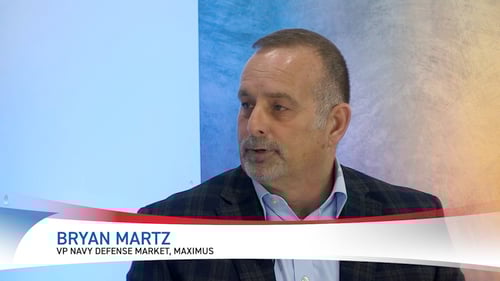
Martz says he consistently hears the same message from program managers and operational leaders: give them something that works now. Waiting to perfect every specification delays impact. In fast-moving mission environments, speed matters. An 80% solution in the hands of a warfighter today can deliver more value than a flawless system that arrives too late.
Security, he stresses, must be built in from the beginning. Organizations cannot wait until the final stages of development to think about Authority to Operate (ATO) requirements. If cybersecurity and compliance are not baked into the architecture from day one, the deployment process slows dramatically at the eleventh hour. Building security into the full lifecycle helps ensure capabilities move forward without unnecessary friction.
Another key factor is communication—especially with end users. Martz speaks from experience as a former operator. He recalls the frustration of finally receiving a system only to discover that the mission has evolved and the tool no longer fits. In those cases, the system risks sitting unused because it does not meet current operational needs.
To prevent that outcome, he encourages ongoing dialogue between industry, program managers, and operators. Iterative demonstrations and continuous feedback loops help ensure that what is being built still aligns with what the mission requires. Requirements are not static, and development processes must reflect that reality.
Martz also highlights the importance of enabling infrastructure, such as platform-as-a-service environments that allow agencies to deploy capabilities quickly and securely to the edge. Even when development moves quickly, organizations need the right frameworks in place to push those tools out efficiently.
When he attends events like WEST, Martz says he tries to listen more than he talks. Over time, he has learned that arriving with a fixed agenda limits understanding. The user community’s needs may not always match expectations. By staying flexible and open, industry partners can better identify where existing capabilities might help solve emerging challenges.
Throughout the conversation, Martz returns to a central idea: operational impact should take priority over technical perfection. Deliver something secure and functional. Get it into the field. Learn from it. Improve it.