Presented by Dell Federal & Carahsoft
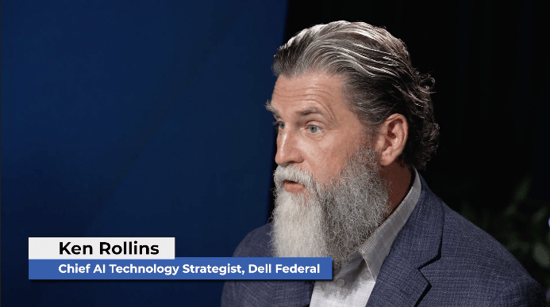
Ken Rollins, Chief AI Technology Strategist at Dell Federal, discussed the critical role infrastructure plays in helping agencies move artificial intelligence from experimentation into operational environments. As organizations seek to scale AI, success depends on building secure, trusted, and flexible foundations capable of supporting evolving mission requirements.
Rollins explained that many agencies have successfully completed initial pilots and demonstrations but now face the challenge of operationalizing AI across the enterprise. Achieving that goal requires more than access to powerful models. Organizations must establish the infrastructure, governance, security controls, and data management practices necessary to support sustainable adoption.
 Trust remains one of the most important considerations. Agencies must be confident that AI systems are producing accurate, reliable, and explainable results before integrating them into mission-critical workflows. Strong governance and oversight mechanisms help ensure those outcomes.
Workforce readiness is equally important. Employees need the knowledge and skills required to effectively leverage AI tools while understanding the limitations and risks associated with emerging technologies. Agencies that invest in training will be better positioned to maximize the value of their AI investments.
Rollins also highlighted the need for scalable architectures capable of supporting future innovation. As AI workloads grow more sophisticated, agencies will require infrastructure that can evolve alongside mission requirements while maintaining security and performance.
The organizations that succeed in the AI era, Rollins suggested, will be those that build trusted foundations today while remaining flexible enough to adapt to tomorrow's opportunities.
Key Takeaways
• Infrastructure is essential for scaling AI from pilot projects to enterprise operations.
• Trust, governance, and explainability are critical for mission adoption.
• Workforce readiness and flexible architectures support long-term AI success.