Presented by OpenAI & Carahsoft
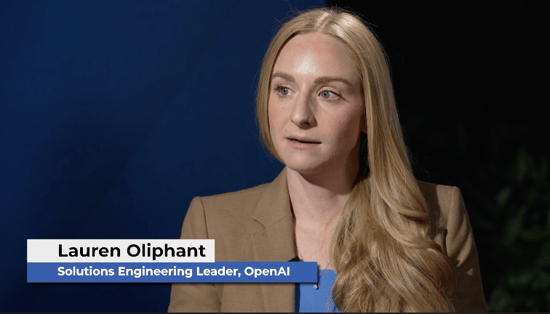
Lauren Oliphant, Solutions Engineering Leader at OpenAI, believes government organizations must move beyond treating artificial intelligence as a productivity enhancement and instead rethink how entire workflows are designed. As agencies mature their AI strategies, the focus is shifting from isolated tools toward enterprise-wide operational transformation.
Oliphant noted that many organizations initially adopted AI to help employees draft documents, summarize information, or automate administrative tasks. While valuable, those use cases only scratch the surface of AI's potential. The greater opportunity lies in redesigning business processes around AI-enabled workflows that fundamentally improve how work gets done.
 Data remains one of the largest obstacles to achieving this vision. Agencies often struggle with fragmented systems, outdated information, inconsistent governance, and legacy platforms that make integration difficult. Without clean, trusted, and accessible data, AI systems cannot deliver reliable results.
Another challenge involves information access and security. AI dramatically increases the ability to surface and analyze information, requiring agencies to carefully evaluate permissions, governance structures, and access controls. Leaders must ensure users can benefit from AI without exposing sensitive information.
Oliphant warned that agencies risk creating fragmented ecosystems filled with overlapping bots, agents, and tools if they fail to establish strategic frameworks. Organizations should instead focus on designing shared capabilities that support the highest-impact workflows while encouraging collaboration across teams.
Intentional design, she argued, will help agencies avoid duplication, reduce complexity, and maximize the long-term value of their AI investments.
Key Takeaways
• AI should be used to redesign workflows rather than simply automate existing tasks.
• Data quality and governance remain major barriers to enterprise AI adoption.
• Strategic planning helps prevent fragmented AI ecosystems and duplicate efforts.