Presented by Carahsoft
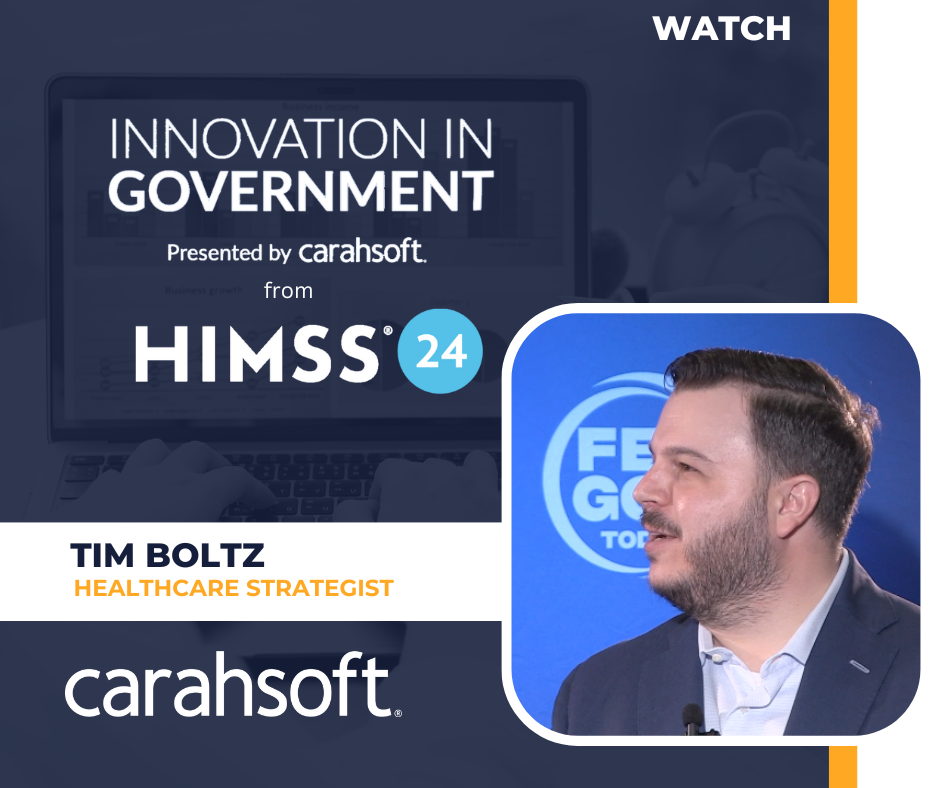
Electronic health records are no longer simply digital replacements for paper charts. According to Tim Boltz, Director and Healthcare Program Executive at Carahsoft, EHRs are now the critical foundation for the next generation of healthcare innovation, particularly as artificial intelligence becomes more deeply embedded in clinical workflows. While EHR adoption has been widespread for years, Boltz argues that their true potential is only now being realized as healthcare organizations begin to leverage data in more intelligent, meaningful ways.
Boltz emphasizes that AI is only as powerful as the data it consumes, making EHRs the backbone of modern healthcare transformation. High-quality, structured, and accessible data enables AI tools to deliver insights that improve treatment plans, personalize care, and support better outcomes. Without reliable EHR data, even the most advanced AI models fall short. This reality places renewed importance on interoperability, consistency, and data governance across healthcare systems.
 One of Boltz’s central themes is the need to remove technology as a barrier between clinicians and patients. He reflects on how earlier generations of EHRs often required physicians to spend significant time entering data during patient visits, shifting attention away from care and contributing to burnout. New capabilities, such as ambient clinical documentation, are reversing that trend. By passively capturing conversations between clinicians and patients and translating them into structured EHR entries, AI enables providers to focus on listening, diagnosing, and treating rather than typing.
Boltz describes this shift as foundational to restoring the human element of care. Ambient listening tools not only reduce administrative burden but also improve accuracy and completeness of clinical records. When combined with emerging large language models, these capabilities open the door to more personalized medicine, allowing care plans to reflect individual patient histories, preferences, and needs. Over time, Boltz sees these advances contributing to improved health equity and increased life expectancy.
Cybersecurity and privacy remain inseparable from this progress. As healthcare organizations expand data lakes and deploy AI models, Boltz stresses the importance of zero trust architectures, strong access controls, and clear governance. Sensitive health data must be protected while remaining accessible to authorized clinicians and care teams. Inconsistent practices or weak governance, he warns, create opportunities for bad actors and ransomware attacks.
Boltz also points to the federal government’s role in encouraging secure and responsible adoption of AI, particularly through incentives that support rural and underserved providers. Many of these organizations face resource constraints that make modernization challenging. Clear guidance, best practices, and targeted funding can help ensure innovation reaches the communities that need it most.
Ultimately, Boltz envisions a future where EHRs operate quietly in the background, enabling smarter care without disrupting the clinician-patient relationship. AI, built on a strong EHR foundation, has the potential to transform healthcare delivery, but only if it is deployed thoughtfully, securely, and with people—not technology—at the center.