Presented by Unite Us & Carahsoft
Healthcare transformation increasingly depends on the ability to connect clinical data with broader sources of information that influence patient outcomes. Dr. Stephen Ondra, Vice President at MITRE’s Center for Transforming Health and Director of the Health FFRDC, explains that EHRs are now part of an expansive health data ecosystem that includes wearables, pharmacy data, and community-based information.
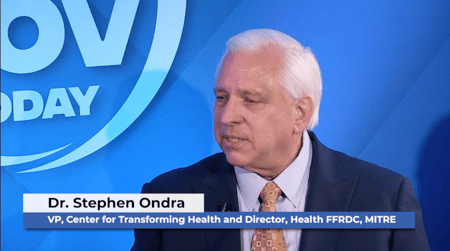 Dr. Ondra emphasizes that AI enables both operational and clinical advances. Operationally, tools such as ambient documentation free clinicians from data entry, allowing them to focus on care. Clinically, AI makes it possible to analyze vast datasets that would be impractical using traditional research methods. This opens new pathways for designing clinical trials, identifying appropriate patients for treatments, and accelerating medical discovery.
A central concern, however, is responsible AI governance. Unlike traditional medical devices, AI systems evolve over time as they ingest new data. Dr. Ondra stresses the need for lifecycle oversight to ensure tools continue to perform as intended and do not introduce unintended risks. Trust in AI depends not only on initial validation but on continuous monitoring and assessment.
Cybersecurity is another critical dimension. Dr. Ondra highlights emerging threats unique to AI, including the risk of data poisoning, where bad actors introduce corrupted data to influence model behavior. He also points to cascading failures, where disruptions in one system ripple across the healthcare ecosystem, underscoring the need for resilience and early detection.
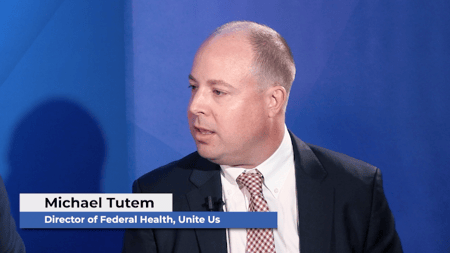 Michael Tutem, Director of Federal Health at Unite Us, brings a community-level perspective to the conversation. Unite Us was founded to support veterans transitioning to civilian life by connecting healthcare providers with social service organizations. Tutem emphasizes that most health outcomes are driven by social determinants such as housing, food security, and access to services.
By enabling secure data sharing and coordination, platforms like Unite Us allow providers to proactively identify needs and intervene before challenges become crises. Tutem argues that balancing data sharing and privacy is essential to building trust while improving outcomes. When healthcare and community organizations collaborate effectively, whole-person care becomes achievable at scale.
Together, Dr. Ondra and Tutem illustrate how integrating clinical, social, and community data—supported by responsible AI—can transform care delivery while maintaining trust and accountability.