Presented by Carahsoft
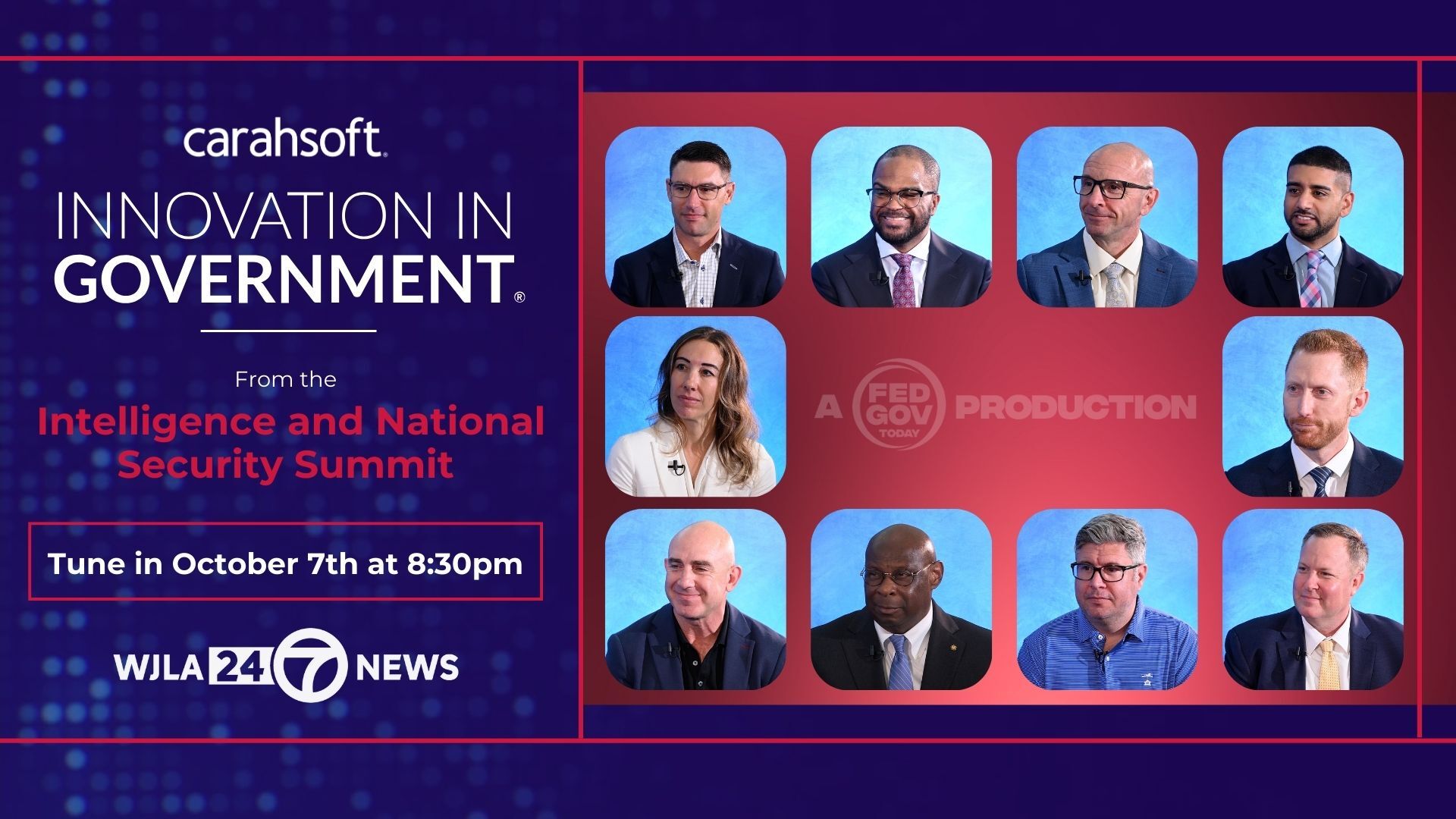
From zero trust and artificial intelligence assurance to data-centric modernization and cyber intelligence, leaders from across the intelligence and defense communities are rethinking how technology supports the mission. Recorded at DoDIIS 2026, these conversations explore how government and industry are moving beyond collaboration toward deeper integration—while keeping security, trust, workforce readiness and operational outcomes at the center.
From Collaboration to Integration: Building the Next Generation of Government Technology
 Michael Shrader, Vice President of Intelligence and Innovative Solutions at Carahsoft, explains why the relationship between government and industry is evolving from collaboration to integration. Collaboration often centers on exchanging ideas, sharing best practices and discussing potential outcomes. Integration goes further: commercial systems are brought directly into government architectures, companies work alongside agencies on implementation, and both sides organize around concrete mission results.
Shrader says global competition is accelerating that shift. U.S. adversaries are moving quickly not only because of advances in technology and computing power, but also because of the way their governments and industries work together. That reality is pushing federal leaders to acknowledge more openly that commercial companies may be ahead in important areas and that government needs industry’s capabilities to solve its hardest problems.
Effective integration begins with how products are designed. Open architectures allow agencies to add or replace modular capabilities without rebuilding an entire environment. Secure-by-design products make it easier to introduce technology into sensitive networks because security is embedded at the architectural level. Those technical attributes must be matched by a culture of trust: government must be willing to learn from industry, and industry must understand and support government missions.
Artificial intelligence makes modularity particularly important. No single company is likely to supply every component of a complex AI architecture. Open systems allow agencies to combine specialized technologies, insert new capabilities as they emerge and automate parts of the intelligence process. Shrader says early results are validating that approach by accelerating analysis, data fusion and the broader intelligence cycle. He adds that these lessons extend beyond the intelligence community to civilian agencies, state and local governments, education and commercial organizations.
Key Takeaways
- Government-industry relationships are moving from best-practice sharing to the direct integration of commercial capabilities into mission architectures.
- Open architectures and secure-by-design products make it possible to add specialized technologies quickly while protecting sensitive environments.
- Modular systems can accelerate data fusion, analysis and decision-making across the intelligence community and the wider public sector.
📺 Watch Interview
Securing Data—and AI Agents—Through Zero Trust at NGA
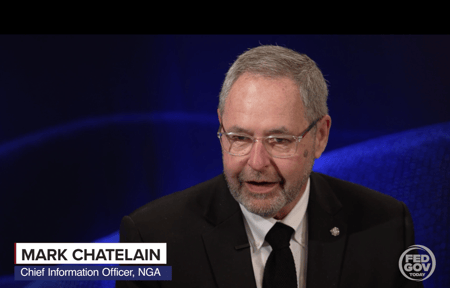 Mark Chatelain, Chief Information Officer at the National Geospatial-Intelligence Agency, discusses how NGA is applying zero trust principles as the agency processes and shares growing volumes of information. The foundation is knowing what data the agency has, tagging it appropriately and ensuring that only users with both authorization and a need to know can access it.
That identity-centered approach must now extend beyond people. As NGA introduces agentic AI, autonomous software agents will interact with systems and information in ways that resemble human users. Chatelain says those agents require credentials, defined permissions and access decisions of their own. Before an AI capability enters the enterprise, NGA wants to understand its purpose, intended behavior and access to personal or mission data. Responsible-use policies established by the chief AI officer provide a governance framework for those decisions.
NGA is progressing toward intelligence community zero trust targets, including basic and then advanced maturity. Because the agency has identified its systems and data, the next step is applying the appropriate controls throughout the environment. Chatelain notes that the threat continues to evolve, including the possibility that quantum computing could undermine current encryption. Preparing for post-quantum security is therefore part of maintaining a healthy long-term defensive posture.
People remain central to the strategy. Chatelain identifies workforce training as one of his most significant concerns because employees need to understand AI, cybersecurity and the risks of exposing sensitive information. NGA has established prompt-writing training to help employees use AI effectively and responsibly. The larger lesson is that secure adoption requires technology controls, governance and a workforce capable of making sound judgments about rapidly changing tools.
Key Takeaways
- NGA is applying zero trust controls to data, human users, applications and increasingly to agentic AI identities.
- Responsible AI adoption requires clarity about an agent’s purpose, behavior, permissions and access to sensitive information.
- Workforce education—including prompt-writing and cybersecurity awareness—is as important as the technology itself
Modernizing DIA for Connectivity, Security and Decision Speed
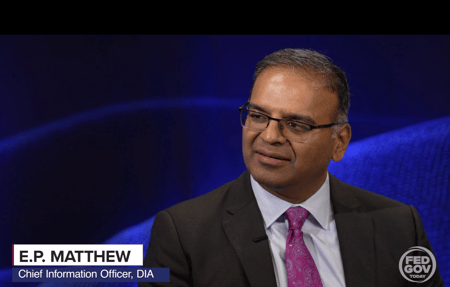 E.P. Matthew, Chief Information Officer at the Defense Intelligence Agency, outlines a modernization strategy built around preserving command and control in contested environments. Because adversaries are focused on disrupting, degrading or denying command and control, DIA must ensure that its technology can maintain connectivity, protect intelligence and deliver capabilities at the pace the mission demands.
Matthew describes four priorities. The first is resilient connectivity: without it, even advanced devices and applications become unusable. The second is content security, ensuring that intelligence reaches the correct warfighter with the right entitlements. The third is accelerating capability delivery. Commercial users can install a new application in minutes, while government delivery can take years—an unsustainable gap when AI models and other technologies change within months. The fourth is content discovery, supported by a data environment in which information is tagged, cataloged, encrypted and governed by entitlements.
The modernization effort must also account for AI-driven cyber risk. Matthew warns that autonomous agents could identify and exploit vulnerabilities at a speed and scale beyond human attackers. Agencies therefore need governance and identity controls that give agents access to what they require without allowing them to move beyond their assigned purpose.
Together, these priorities reflect a mission-centered view of IT. Modernization is not simply a refresh of infrastructure. It is a way to keep DIA’s intelligence available, discoverable and secure under pressure while closing the gap between commercial innovation cycles and government deployment. The outcome is a more resilient digital environment capable of supporting warfighters and preserving military advantage as both technology and threats accelerate.
Key Takeaways
- DIA modernization prioritizes resilient connectivity, content security, faster capability delivery and improved content discovery.
- Data must be tagged, cataloged, encrypted and governed by entitlements so analysts can find relevant intelligence quickly.
- AI agents create a new cyber risk that requires governance and tightly bounded access before deployment.
Turning Data Visibility and Classification Into Mission Advantage
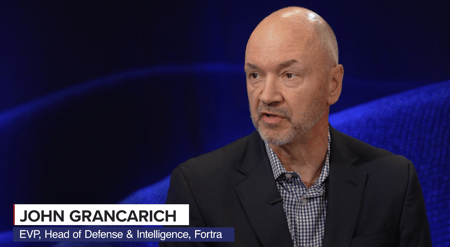 John Grancarich, Executive Vice President and Head of Defense & Intelligence at Fortra, explains how intelligence organizations can turn a growing volume of data into faster, better decisions. Information now arrives from sensors, operational systems, decision networks and many other sources. The first requirement is visibility: agencies need to know what information exists across environments that have historically been siloed.
Once data is visible, classification becomes the backbone of secure collaboration. Organizations must understand the sensitivity of information and apply the markings that determine how it may be shared. Grancarich says classification remains an area of substantial demand because it influences every downstream step—from protection and transfer to curation and access.
The goal is not simply to collect and label more information. Agencies need to identify which elements matter for a particular decision and bring structured and unstructured sources together into a coherent view. That holistic approach allows an operational team to use the most relevant data at the moment it is needed instead of navigating disconnected systems or relying on point solutions that do not work together.
Grancarich describes an interoperable model that connects discovery, classification, protection and data transfer. Together, those capabilities help organizations maintain control while enabling information to move securely. Curation then reduces the volume to the data most useful for the mission. The result is a foundation for secure collaboration and greater decision speed: leaders gain a fuller picture, analysts spend less time locating and reconciling information, and teams can act with confidence based on data whose sensitivity and relevance are understood.
Key Takeaways
- Visibility across siloed sources is the first step toward using defense and intelligence data effectively.
- Data classification is the backbone of secure collaboration because it governs protection, sharing and downstream curation.
- Interoperability across discovery, classification, protection and transfer can turn fragmented information into a mission-ready view.
Building Trust, Assurance and AI Fluency at DIA
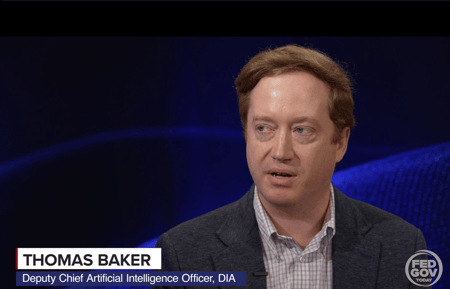 Thomas Baker, Deputy Chief Artificial Intelligence Officer at the Defense Intelligence Agency, says trust is the central requirement for deploying AI across the mission. DIA cannot accelerate AI-enabled capabilities without a corresponding investment in security, red teaming, testing, evaluation, verification and validation. Senior leaders do not need to trust every individual output automatically; they need confidence in the system of controls, review and accountability surrounding the technology.
Baker compares that model to how an agency develops a junior analyst. Leaders do not send a new employee’s first draft directly to the Secretary of Defense. They trust the doctrine, procedures and layers of review that shape the analyst’s work. AI needs an equivalent assurance environment—one that makes risks visible and gives leaders confidence to authorize responsible use.
The workforce remains decisive. As AI reduces the time and effort required for research, writing and other forms of execution, the most valuable skills become subject-matter expertise, critical thinking, asking the right questions and judging whether an answer is useful. DIA is therefore focused on AI fluency rather than narrow proficiency with one tool. Employees should understand what AI can do, where it can fail and how much of a workflow they are comfortable assigning to it.
Adoption cannot be sustained through mandates alone. Baker favors making approved tools easy to use, sharing examples from employees who have achieved meaningful results and allowing comfort levels to develop. Some users will adopt quickly and may need more skepticism; others will wait until the technology is well established. A responsible strategy accommodates that curve while building trust through real mission value.
Key Takeaways
- AI adoption must be matched by assurance, including security, red teaming, testing and validation.
- Subject-matter expertise, critical thinking and judgment become more valuable as AI lowers the cost of execution.
- Sustainable adoption comes from trustworthy systems, easy-to-use tools and demonstrated mission value—not mandates alone.
Moving From Data Overload to Actionable Intelligence at Mission Speed
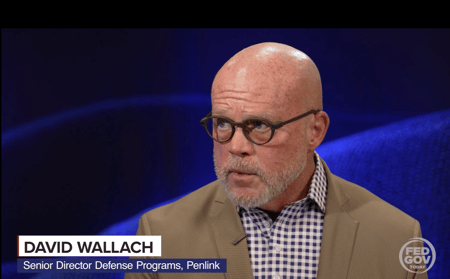 David Wallach, Senior Director of Defense Programs at Penlink, examines how advanced analytics and AI can help intelligence organizations convert overwhelming volumes of data into timely, actionable insight. The most encouraging shift, he says, is the emphasis on mission outcomes rather than technology for its own sake. Tools matter when they help users see relationships sooner, corroborate findings and deliver intelligence to the people who can act on it.
Trust remains essential as systems become more advanced. Actionable intelligence cannot come from an unexplained black box. Analysts and decision-makers need to trace findings back to the underlying information, examine potential connections and corroborate results. That transparency strengthens confidence without eliminating the human review that high-consequence decisions require.
The urgency is heightened by adversaries using similar technologies without the same bureaucratic barriers between adoption and execution. Wallach argues that government must streamline the path from emerging capability to operational use so it can move at the speed of the mission. Removing unnecessary friction does not mean removing safeguards; it means making accreditation, integration and review responsive to rapidly changing technology.
The real promise is not simply doing the same work faster. AI can reveal connections analysts could not see before and compress work that once required a week into minutes. That time savings can create room for reflection and validation before intelligence reaches a commander or operator. Success is measured by whether the information arrives early enough to change an outcome and protect lives—not by the speed of the algorithm alone.
Key Takeaways
- Emerging technology should be evaluated by mission outcomes, not novelty or processing speed alone.
- Actionable intelligence requires traceability, corroboration and human review rather than black-box conclusions.
- Automation can compress analysis and create more time for judgment, validation and delivery to operators.
USTRANSCOM’s Shift From Systems to Data-Driven Mission Decisions
P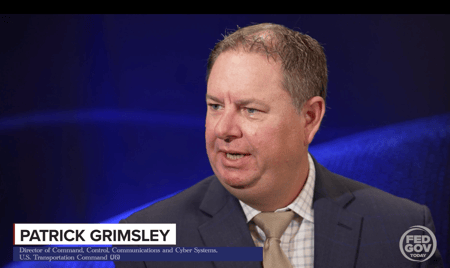 atrick Grimsley, Director of Command, Control, Communications and Cyber Systems for U.S. Transportation Command (J6), describes a strategic shift from managing individual legacy systems to organizing technology around data and mission decisions. USTRANSCOM’s global mobility mission spans planning, ordering, shipping, tracking and payment, with a single mission thread potentially touching dozens of systems. The commander, however, needs a clear view of risk to mission, force and strategy—not a tour of the underlying applications.
That requires business process reengineering as well as technical modernization. Many systems were built two decades ago and reflect processes that may no longer fit current operations. Grimsley says the command is examining the data feeds and processes across those systems so it can turn raw data into information leaders can use to set the globe and the theater.
The department already has abundant data, much of it unstructured. Government should pair mission experts who understand that information with leading commercial, academic and laboratory talent. AI can then help encode expert knowledge, automate repetitive work and become a force multiplier. Grimsley tells his team to “embrace your inner laziness”—using AI to reduce unnecessary effort while still applying thought and understanding.
Success includes quantitative measures such as technology cost savings and qualitative operational outcomes such as reducing planning from eight or nine hours to three or four. Cybersecurity must be built in from the beginning, particularly as agentic AI and AI-assisted software development introduce new risk. USTRANSCOM’s end state is faster, more resilient decision support that allows people and technology to concentrate on moving forces and resources where they are needed.
Key Takeaways
- USTRANSCOM is moving from a system-based view to a data approach organized around mission risk and commander decisions.
- Business process reengineering is necessary because modernizing outdated processes can preserve the wrong way of working.
- AI should automate repetitive work and amplify mission experts, while cybersecurity is engineered into systems from the start.
Connecting Data Silos to Drive Faster, AI-Enabled Decisions
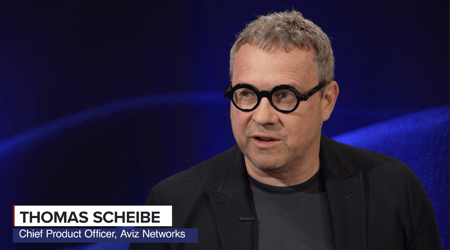 Thomas Scheibe, Chief Product Officer at Aviz Networks, discusses how intelligence organizations can use AI to make better decisions faster and move decision authority closer to where action occurs. Agencies operate many legacy tools and data sources, while AI models are increasing the speed at which vulnerabilities can be discovered. Capabilities such as a network copilot can examine an installed base, identify risk factors and notifications, and recommend action with a human in the loop.
Scheibe emphasizes outcomes over products. AI is a tool for achieving a mission result, not a solution by itself. Its value depends on trusted existing data. Organizations should know where their data resides, maintain consistent access, identify overlap and improve fidelity before expecting AI to produce deterministic, useful decisions.
Modernization does not necessarily require discarding legacy systems or their data. The more immediate problem is that valuable information often remains divided across organizational and technical silos. Agencies can modernize how they access that data and layer AI-enabled capabilities above existing sources to connect the silos and accelerate decisions.
Governance remains essential. Faster access does not eliminate ownership, permissions or controls. Agencies can retain user-based access rules even when AI agents help employees work across data sources. The objective is to connect information without surrendering control, giving authorized decision-makers timely access to the data they need.
Key Takeaways
- AI can help agencies identify risks and make faster decisions closer to the operational edge while keeping a human in the loop.
- Useful AI outcomes depend on knowing where data resides, improving its fidelity and connecting information across silos.
- Modernization can preserve valuable legacy data while improving access and enforcing user-based governance across AI-enabled workflows.
Delivering Cyber Intelligence at Mission Speed
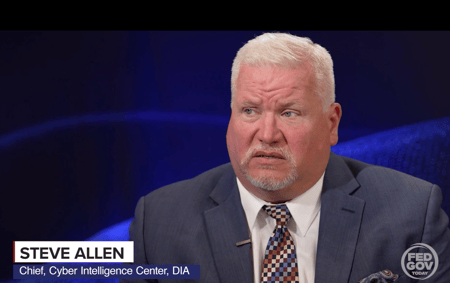 Steve Allen, Chief of the Cyber Intelligence Center at the Defense Intelligence Agency, explains how DIA is adding cyber information to its foundational military intelligence mission. Foundational military intelligence includes the order of battle, the military and civilian infrastructure supporting foreign forces, and foreign military acquisition systems. By layering cyber information onto that baseline, DIA helps commands prepare to prevent conflict or win decisively if conflict occurs.
The work requires continuous baselining because cyber conditions are highly temporal. Firmware, addresses and configurations can change quickly, while crises frequently emerge in unexpected locations. DIA’s global overwatch mission therefore depends on building the best available picture before a crisis so analysts are not starting cold when events escalate.
The larger challenge is exploiting an overwhelming volume of cyber data. Analysts once asked for more information; today the volume of malicious activity is beyond what any human team can process. Allen sees AI, machine learning and automation as essential for reducing the noise and prioritizing what analysts need to examine. Discovery is useful, but curation—determining what matters now, later or not at all—offers the greatest value.
Automation cannot replace analytic rigor. Models must be understandable rather than black boxes, and quality assurance must give leaders confidence in how an assessment was produced. Analysts with deep problem-set knowledge must ask the right questions, evaluate outputs and remain in the loop for consequential decisions such as targeting. The objective is a human-machine team that combines machine scale with human context, rigor and accountability.
Key Takeaways
- DIA layers cyber information onto foundational military intelligence to support plans, operations and global crisis readiness.
- AI and automation are necessary to reduce cyber noise and curate information at a scale no human team can manage alone.
- Analytic rigor, explainability and a human in the loop remain essential for trusted, high-consequence intelligence.