Presented by Denodo & Carahsoft
Achieving interoperability across distributed government agencies while maintaining organizational autonomy is a central challenge in DoD modernization. Terry Dorsey, Evangelist and Data Architect for Denodo, argues that the most effective strategy to bridge these communication gaps is "centralizing meaning and doing it in such a way that the consumer is agnostic". By creating an abstracted, governed core of data semantics—defining components and relationships—the DoD can establish a universal language that allows completely agnostic consumers to access information without disrupting their specific organizational structures. This approach perfectly positions agencies to take advantage of modern technologies down the road.
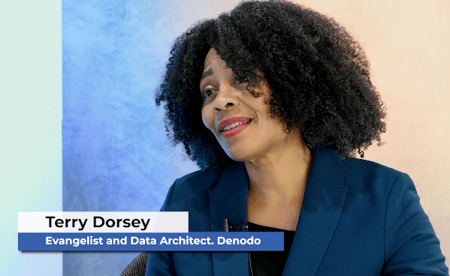 Dorsey emphasizes that government agencies can learn valuable lessons from the commercial sector. Because commercial entities have monetary incentives to move fast, they "fail fast" and learn rapid lessons. Conversely, the commercial sector could learn from the government's rigorous planning and strategy prior to movement. Crucially, any modernization effort must avoid focusing solely on the technology itself. "I think that aligning it with business objectives for what you want outside of that transformation helps greatly," Dorsey states, noting that modernization must translate into actual business or mission outcomes.
This outcome-driven mindset is especially critical when approaching generative AI. Dorsey cautions that generative AI operates fundamentally differently than traditional artificial intelligence. Traditional AI relied heavily on highly structured data where the inputs and outcomes were strictly understood. In contrast, generative AI models require organizations to change how they model information. "When it comes to generative AI, it's more around, how do I package knowledge so that I can drive intent, understand intent and drive and drive outcomes based off of that," Dorsey explains. Agencies cannot simply stage data sets the way they used to; they must take an entirely new approach to data packaging to successfully harness generative AI.
This interview appeared in the program Innovation in Government at WEST 2026