Presented by Carahsoft
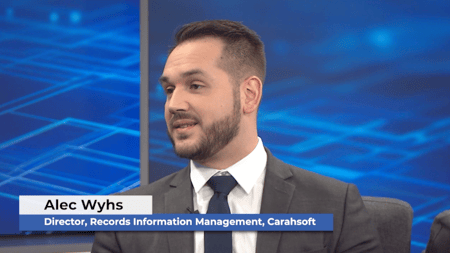 Alec Wyhs emphasized that artificial intelligence has become a forcing function for change. AI systems rely on large volumes of high-quality data, and federal records represent some of the richest datasets agencies possess. Historically, records were viewed as static artifacts—files stored for compliance or archival purposes. Today, those same records are increasingly seen as living data assets that can support analytics, automation, and decision-making. Whys noted that agencies must move beyond artificial distinctions between records and other forms of data and instead manage records as part of the broader data lifecycle.
That shift, however, requires changes not just in technology but also in mindset. Nate Hughes explained that information governance must be driven from the top. Successful records and data programs depend on executive leadership and enterprise-wide alignment. CIOs, CDOs, records officers, legal teams, and mission leaders all play a role in ensuring information is managed consistently. Without that alignment, agencies risk creating fragmented systems where data quality suffers and trust erodes.
Hughes stressed that metadata, tagging, and governance frameworks are not new ideas. What has changed is their importance. As agencies look to apply AI to records, inconsistencies in how information is categorized or described can undermine the reliability of AI outputs. Treating all information—records, data, documents, and even legacy paper—with a consistent governance approach ensures that AI systems are working with trustworthy inputs.
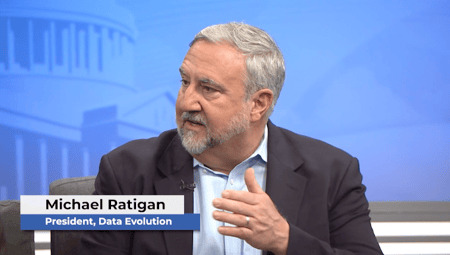
 Michael Ratigan highlighted how AI is helping to break down long-standing silos across government. Functions such as FOIA, privacy, records management, and information governance have historically operated independently, often with separate budgets and tools. Advances in AI now make it possible to manage these functions at an enterprise level. Automated classification, tagging, and redaction allow agencies to handle increasing volumes of information without relying solely on manual processes.
Ratigan described AI as a force multiplier that enables a relatively small group of professionals to manage vast information repositories. Automation allows technology to handle routine tasks, freeing knowledge workers to focus on judgment, oversight, and complex decision-making. At the same time, AI-driven access improves internal efficiency while making information more accessible to constituents, all while maintaining governance and privacy controls.
A recurring theme throughout the discussion was trust. As agencies rely more heavily on data to make decisions, confidence in that data becomes paramount. Hughes cautioned that without strong governance, agencies risk building AI systems on poorly managed information. The result may be faster access to data, but not necessarily better outcomes. The goal, he argued, is not just accessibility but usability—data that tells a reliable story and supports informed decisions.
Wyhs echoed that concern, noting that agencies have historically relied either on small teams of records professionals or on individual employees managing their own information. Both approaches introduce risk and inconsistency. AI offers an opportunity to standardize records management practices across organizations, but only if agencies invest in the right strategies and governance models.
 Together, the conversation painted a picture of records management at a turning point. Records are no longer peripheral to digital transformation. They are central to how government leverages data, deploys AI, and delivers services. Agencies that embrace this shift will be better positioned to unlock the full value of their information while maintaining compliance, transparency, and trust.
Key Takeaways
-
Records must be managed as data assets to support AI and analytics initiatives.
-
Strong information governance requires executive leadership and enterprise alignment.
-
AI can automate records processes while improving trust, efficiency, and access.