

Original Broadcast Date: 06\07\2026
Presented by SolarWinds & Carahsoft
This episode of Fed Gov Today explores how federal leaders are accelerating technology modernization across defense, cybersecurity, and healthcare.
The program opens with Gabe Chiulli, CTO of the U.S. Army’s Enterprise Cloud Management Agency, discussing the Army’s continued modernization efforts. He highlights major initiatives such as Project Aria and Operation Jailbreak, emphasizing the importance of maintaining momentum during leadership transitions. Chuli explains how the Army is adapting cybersecurity strategies to address emerging AI-enabled threats and is working to dramatically shorten the time it takes industry partners to bring innovative technologies into Army environments. He also describes the Army’s push to deliver artificial intelligence capabilities directly to warfighters operating in denied or disconnected environments. Through Project Aria’s “Model Armory,” the Army aims to make AI as accessible and easy to use as standard military equipment.
Next, Brian Chamberlain of SolarWinds explains why zero trust is much more than a cybersecurity requirement. He describes it as a fundamental shift in how agencies think about security, moving from assuming threats may already exist inside networks to focusing solely on perimeter defenses. Chamberlain stresses the importance of observability, identifying mission-critical systems, protecting legacy technologies, and taking a phased approach to modernization while aligning budgets with organizational priorities.
The episode concludes with an interview with Captain Heather Dimeris of the Health Resources and Services Administration, who discusses the growing impact of telehealth. She highlights how telehealth expands access to quality care, particularly in rural communities, and shares examples of patients receiving specialized support that would otherwise be unavailable. Dimeris emphasizes sustainability, broadband access, collaboration among federal partners, and the integration of virtual and in-person care to improve long-term health outcomes for patients nationwide.
The Army’s AI Weapons Locker: How Warfighters Could Soon Deploy AI Anywhere, Anytime
Army’s Gabe Chiulli outlines how the service is accelerating modernization while preparing for a future in which artificial intelligence is available from the enterprise level to the tactical edge. He emphasizes continuity across major initiatives such as Project Aria and Operation Jailbreak, ensuring modernization efforts continue without disruption despite leadership transitions.
Chiulli explains that cybersecurity remains a top priority, particularly as AI introduces new threat vectors. The Army is shifting toward a more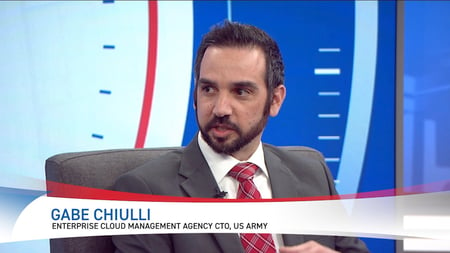 technical understanding of cyber threats while working to streamline the way industry partners integrate technology into Army environments. One of his goals is reducing onboarding timelines from months to weeks so innovative capabilities can reach soldiers faster.
A major focus is enabling AI in denied, disconnected, intermittent, and limited environments. Through Project Aria and its emerging “Model Armory” capability, the Army aims to make AI as easy for a warfighter to access as checking out equipment from an arms room. The goal is to simplify deployment, eliminate technical barriers, and put mission-focused AI tools directly into soldiers' hands wherever they operate.
Key Takeaways
- The Army is building a distributed AI architecture that brings AI capabilities from enterprise systems directly to warfighters at the tactical edge.
- Army leaders want to dramatically reduce technology onboarding timelines so industry innovations can reach soldiers in weeks rather than months.
- The new “Model Armory” concept is designed to make AI tools simple, accessible, and mission-ready even in disconnected battlefield environments.
How Zero Trust Is Reshaping Federal IT Strategy
Brian Chamberlain of SolarWinds explains that zero trust is far more than a cybersecurity framework—it represents a fundamental shift in how agencies operate and manage risk. Instead of assuming networks are secure once users are inside, organizations must now operate under the assumption that adversaries may already be present within their environments.
Chamberlain says one of the biggest challenges agencies face is implementing zero trust across complex environments that include both modern and legacy systems. Many mission-critical capabilities still rely on older technologies that were not designed with today’s security and visibility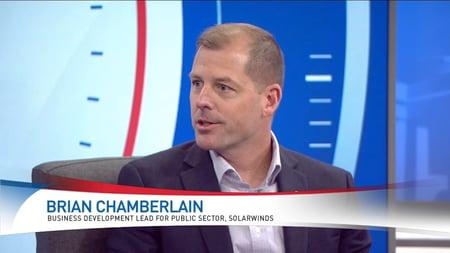 requirements in mind. To address this, he recommends beginning with observability to gain a complete understanding of all assets, dependencies, and critical systems across the network.
He also stresses that zero trust is not an overnight transformation. Agencies should take a phased approach that prioritizes mission-critical functions, protects legacy systems through measures such as microsegmentation, and aligns budget decisions with modernization goals. Success requires leadership engagement, cross-organizational collaboration, and a long-term strategy that balances security, operational continuity, and mission outcomes.
Key Takeaways
- Zero trust requires agencies to assume that threats may already exist within their networks and to design operations accordingly.
- Observability is the foundation of a successful zero trust strategy because agencies must first understand what systems and assets they have.
- A phased modernization approach helps agencies secure legacy systems while reducing risk and maintaining mission continuity.
From Rural Clinics to Remote Recovery: How Telehealth Is Transforming American Healthcare
CAPT Heather Dimeris, Director of the Office for the Advancement of Telehealth at HRSA, discusses the rapid evolution of telehealth and its growing role in expanding access to quality healthcare nationwide. She explains that telehealth has matured significantly over the past six years and is now an essential component of a more integrated healthcare system that combines virtual and in-person care.
Dimeris emphasizes that sustainable telehealth programs require more than technology. Healthcare organizations must build telehealth into their workflows, secure long-term funding models, and foster adoption among both providers and patients. She notes that successful programs treat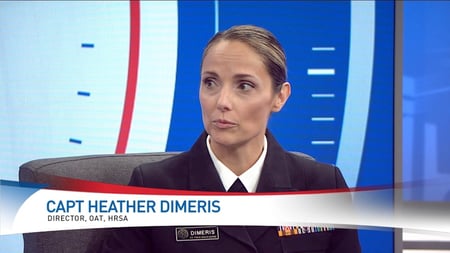 telehealth as a core business function rather than a temporary solution.
She also highlights the profound impact telehealth can have in rural and frontier communities, where access to specialists is often limited. Through telehealth, patients can connect with experts who may be hundreds of miles away, improving outcomes and reducing barriers to care. Dimeris points to strong partnerships across federal agencies, including efforts to expand broadband access, as critical enablers of telehealth’s continued growth and success.
Key Takeaways
- Telehealth works best when it is fully integrated into healthcare workflows and supported by sustainable funding and operational models.
- Rural communities benefit significantly from telehealth because it connects patients and local providers with specialists who may not be available nearby.
- Expanding broadband access and strengthening partnerships across federal agencies are essential to improving healthcare access through telehealth.